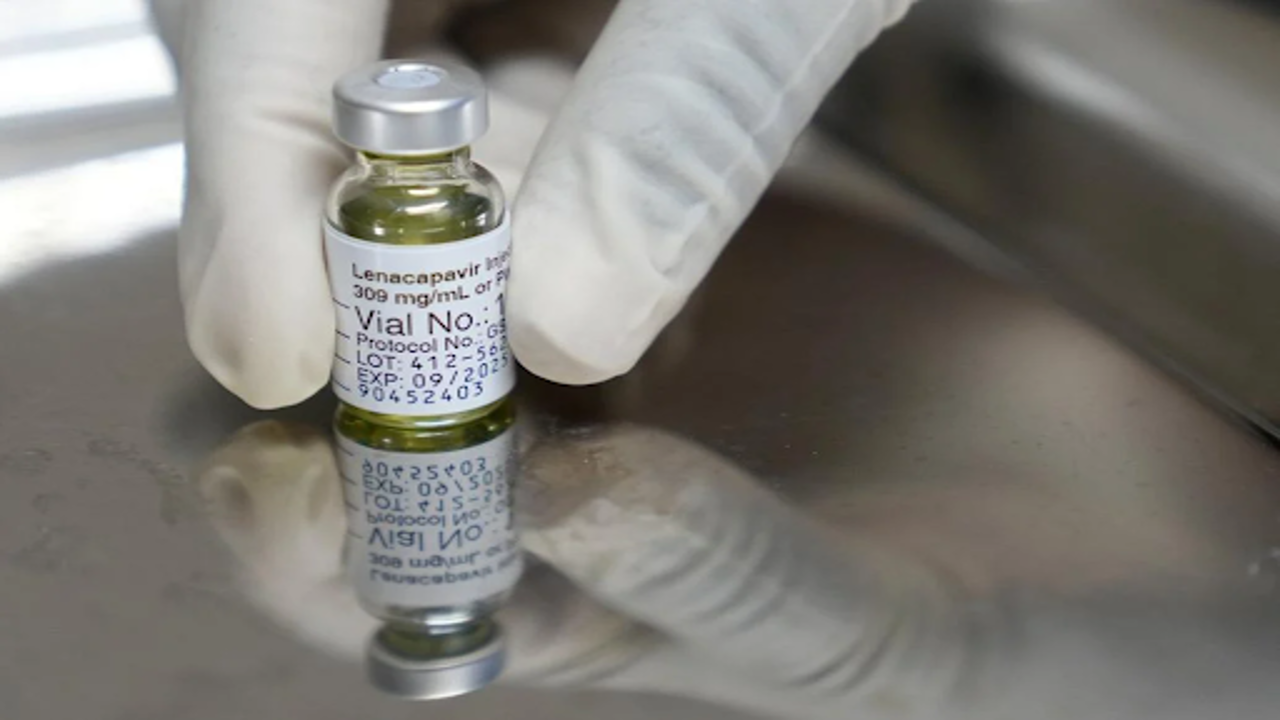
A pharmacist holds a vial of lenacapavir, the new HIV prevention injectable drug, at the Desmond Tutu Health Foundation's Masiphumelele Research Site, in Cape Town, South Africa, Tuesday, July 23, 2024, which was one of the sites for Gilead's lenacapavir drug trial. (AP Photo/Nardus Engelbrecht,via The Canadian Press)
A new drug has been hailed as a potential breakthrough in the fight against AIDS, with some experts calling it the closest the world has come to an effective vaccine against HIV. The drug, a twice-yearly shot, has shown 100% effectiveness in preventing HIV infections in women and nearly the same success in men, according to a recent study.
The drug's maker, Gilead, announced plans to allow generic versions of the medication to be sold in 120 countries with high rates of HIV, primarily in Africa, Southeast Asia, and the Caribbean. However, Latin America, where HIV rates are rising, has been excluded from this deal, raising concerns that this could be a missed opportunity to curb the disease in the region.
Winnie Byanyima, executive director of UNAIDS, praised the drug as an unprecedented advancement in prevention. She emphasized that for the global fight against AIDS to succeed, it is crucial that the drug be made accessible in countries where people are at high risk.
UNAIDS also reported that AIDS-related deaths dropped to 630,000 last year, the lowest figure since 2004, suggesting the world may be at a turning point in the battle against the disease. With the new medication, experts believe there is a real chance to end the epidemic.
The drug, named lenacapavir and sold under the brand name Sunlenca in countries like the U.S., Canada, and parts of Europe, is currently used to treat HIV infections. Gilead plans to seek approval for its use in HIV prevention soon. While there are other prevention methods, such as condoms and daily pills, the bi-annual shot offers a more accessible option, especially for marginalized groups such as sex workers, gay men, and young women.
Luis Ruvalcaba, a 32-year-old from Guadalajara, Mexico, participated in the study and said he felt hesitant to ask for daily prevention pills out of fear of discrimination as a gay man. The new shots, however, could make a significant difference for people in similar situations. “Twice a year at the clinic, and then they’re protected,” Byanyima noted.
Dr. Alma Minerva Pérez, who worked on the study in Guadalajara, highlighted the stigma surrounding HIV prevention in Latin America, making it harder for some people to seek care. Whether the shots will become widely available in Mexico is still uncertain, with health officials not yet commenting on plans to provide the drug through the public system.
The exclusion of Latin American countries from the generic drug deal has sparked outrage. Byanyima called it "unconscionable" to deny access to this potentially life-saving medication, especially as HIV rates continue to rise in the region. Gilead has stated that it is working on improving access to the drug for people in need, particularly in the hardest-hit areas.
In a letter sent Thursday, 15 advocacy groups from countries like Peru, Argentina, and Colombia urged Gilead to make the generic versions of Sunlenca available in Latin America, pointing to the rising infection rates and the lack of access to new prevention tools. Experts say the drug could be produced for as little as $40 per treatment once generic production ramps up.
Dr. Chris Beyrer, a global health expert, acknowledged that the drug could be a game-changer in high-risk areas but also stressed that the increasing HIV rates in Latin American countries represent a public health emergency.
Hannya Danielle Torres, a 30-year-old trans woman and artist involved in the Sunlenca study in Mexico, expressed hope that the government would find a way to make the shots accessible to those who need them most. "Mexico may have some of the richest people in the world, but it also has some of the most vulnerable," she said.
Other companies, such as Viiv Healthcare, have similarly excluded much of Latin America from their own HIV prevention efforts, further compounding concerns about access in the region. Experts are now calling on countries like Brazil and Mexico to issue compulsory licenses, which would allow them to produce generic versions of the drug without the drugmaker’s consent, as a measure to ensure more widespread access during this health crisis.
Dr. Salim Abdool Karim, an AIDS expert from South Africa, praised Sunlenca for its effectiveness in preventing HIV but emphasized the challenge of ensuring it reaches everyone who needs it. "The missing piece in the puzzle now is how we get it to everyone who needs it," he said.