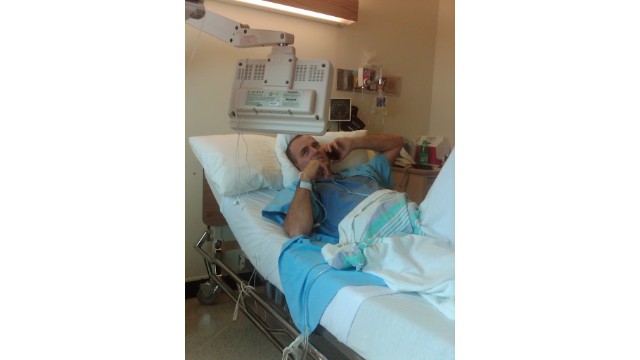
Robby Spring is seen receiving treatment for breast cancer. (Image courtesy of Robby Spring)
The number of new breast cancer cases in Canada has reached an all-time high in 2024, according to the Canadian Cancer Society. This alarming trend has sparked concern among doctors and survivors alike.
A Family’s Heartbreaking Battle
Robby Spring, a breast cancer survivor from Toronto, knows firsthand the devastating impact of the disease. Diagnosed at just 35, she faced an aggressive form of cancer that required chemotherapy. Her journey became even more painful when, just two months earlier, her 43-year-old sister was diagnosed with the same disease. Their mother had also battled breast cancer five years prior.
The news was overwhelming. “I just didn’t want to call my mom,” Spring recalled. “How could I tell her that both her daughters had cancer at the same time?”
Alarming Surge in Cases
Spring’s experience mirrors a nationwide rise in breast cancer cases. In 2019, excluding Quebec, nearly 21,000 new cases were reported across Canada. By 2024, that number had soared to 30,800.
Kimberly Carson, CEO of Breast Cancer Canada, attributes the increase to multiple factors. The COVID-19 pandemic led to delayed diagnoses, which has now resulted in a surge of detected cases. Additionally, advancements in screening have improved detection rates, leading to a higher reported incidence of breast cancer.
At North York General Hospital in Toronto, the impact is clear. In 2019, the hospital saw 1,155 new breast cancer cases. By 2023, that number had jumped to 3,076—a staggering 166% increase.
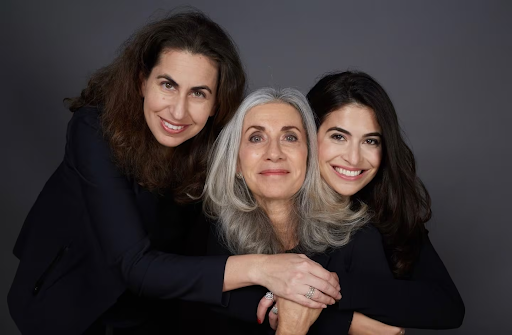
The Spring family poses for a portrait. (Image courtesy of Robby Spring)
Younger Women at Higher Risk
Dr. Brian Pinchuk, a surgical oncologist at North York General, has noticed a shift in the patient demographic. “We’re seeing a lot of younger patients,” he said. “The highest number of newly diagnosed cases are in women under 50.”
Recognizing the urgency, several provinces have lowered the eligible age for mammograms. Women in Ontario, British Columbia, Saskatchewan, and Atlantic Canada can now request screenings starting at age 40. Alberta and Manitoba have set the age at 45, while Quebec is currently reviewing its policy.
Despite these changes, Spring, now 37, still wouldn’t qualify for routine screening under current guidelines. She emphasizes the importance of early detection, especially for younger women. “The younger you are, the more aggressive the cancer can be. Catching it early is crucial,” she said.
The Future of Screening and Treatment
With expanded screening options, the number of detected cases is expected to rise further. However, Carson sees this as a positive development. Early diagnosis leads to better patient outcomes and reduces the strain on the healthcare system. “When cancer is caught early, treatment is less invasive, and the overall burden on the system is lower,” she explained.
Spring also highlights the challenges faced by women with dense breast tissue. “My mammogram was clear, but an ultrasound found a 1.5-centimetre tumour that turned out to be cancer,” she shared. Both she and her sister underwent treatment simultaneously.
As breast cancer cases in Canada climb, experts stress the importance of awareness, early screening, and access to timely medical care. For many women, these measures could mean the difference between life and death.