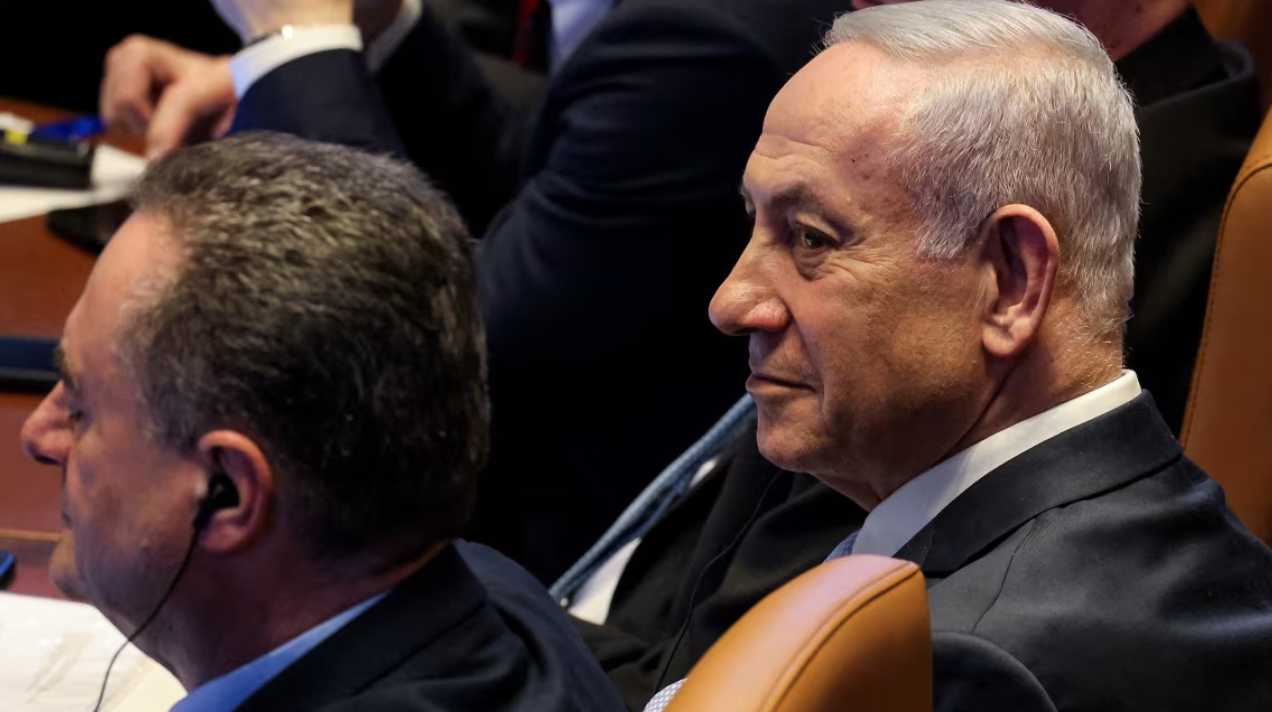
Israel's Prime Minister Benjamin Netanyahu and Defense Minister Israel Katz (left) attend the address of Argentina's president to a session of the Israeli parliament in Jerusalem on June 11, 2025.
Israeli Prime Minister Benjamin Netanyahu prepares to meet U.S. President Donald Trump at the White House on Monday.
The meeting comes at a pivotal time, as Netanyahu faces mounting pressure over Gaza and a new ceasefire proposal begins to take shape.
Trump made his expectations clear earlier this week, stating, “We’re looking for it to happen next week,” referring to a ceasefire in Gaza. As both leaders prepare to discuss regional tensions, their shared military efforts in Iran may offer a moment of celebration, but Gaza remains the dominant topic.
Netanyahu Weighs Gaza Ceasefire vs Continued War
Netanyahu faces a crucial choice: pursue a ceasefire or intensify the war in Gaza. His government has not yet reached a final decision, although top-level meetings have been held throughout the week.
A military official stated Israel has achieved much of its war objectives. However, targeting Hamas has become more difficult as its leadership hides. The Israel Defense Forces (IDF) now controls around 60% of Gaza, but the toll has been devastating—over 56,000 Palestinians killed, with millions displaced.
Despite this, some Israeli officials believe diplomacy may now be more effective than continued bombardment. The military has even recommended exploring a political path to bring closure to the conflict.
A Nation Divided on Strategy
Opinions inside Netanyahu’s coalition are sharply divided. Far-right leaders demand a hardline approach.
Finance Minister Bezalel Smotrich firmly stated, “No agreements. No partners. No mediators. Only a clear outcome: the destruction of Hamas.”
In contrast, others urge flexibility to secure the release of the remaining 50 hostages held by Hamas.
Minister of Welfare Ya’akov Margi emphasized urgency: “We are over 600 days late. Everything must be done to bring everyone back.”
Margi even expressed openness to negotiations, hinting that ending the war should be considered.
Ceasefire Proposal from Qatar Gains Momentum
Adding to the diplomatic momentum, Qatari officials submitted a new 60-day ceasefire proposal to both Hamas and Israel on Tuesday. This effort, backed by the Trump administration, aims to pause the violence and secure a hostage-prisoner exchange.
The proposal was finalized after months of secret negotiations led by Trump’s envoy, Steve Witkoff. It arrives just days after Qatar helped broker a truce between Iran and Israel following joint U.S.-Israeli strikes on Iran’s nuclear facilities.
While Hamas previously rejected a similar deal, the new version reportedly addresses many of their concerns. A source familiar with the discussions noted that Hamas may be showing more flexibility this time.
Still, key hurdles remain. Hamas demands a permanent ceasefire and insists on staying in power, conditions Israel refuses. Whether a 60-day truce will be enough remains uncertain.
Private Security Firms Tapped for Humanitarian Zones
In a notable development, Israeli officials recently contacted private security companies to explore operations around humanitarian sites in Gaza. Though the use of private forces has been discussed before, the timing—right as ceasefire talks reached their final phase—suggests Israel may be preparing for a post-conflict scenario.
This could signal a shift in strategy, where military control transitions to humanitarian stabilization under international or private oversight.
Netanyahu’s Political Future on the Line
Retired Major General Israel Ziv warned, “Netanyahu has reached a crossroads, and he must make a choice.”
One path could use Israel’s recent military gains to broker a regional agreement that might even restore relations with Syria and Lebanon. The other path involves continued warfare and possibly a full conquest of Gaza—an option that could satisfy the far-right but prolong suffering and global backlash.
Over the weekend, Netanyahu hinted at a more flexible stance.
He prioritized rescuing hostages while also aiming to “solve the Gaza issue” and defeat Hamas. It marked a shift from his earlier stance, where Hamas’ destruction was the top goal, above the return of hostages.
A Defining Moment Approaches
As Netanyahu prepares to meet Trump, all eyes are on whether this new ceasefire proposal can bridge gaps and bring an end to the war in Gaza. The decision made in the coming days could redefine Israel’s military strategy, reshape its government, and impact regional stability for years to come.