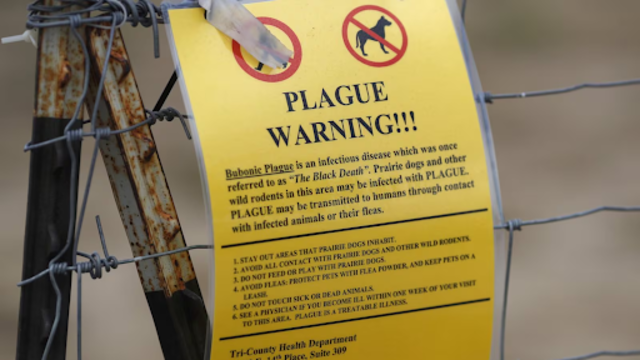
A sign warning of bubonic plague is displayed at a parking lot near the Rocky Mountain Arsenal Wildlife Refuge in Commerce City, Colo., Aug. 10, 2019. (AP Photo)
A northern Arizona resident has died from pneumonic plague, marking the first fatal case in the region since 2007. Health officials confirmed the death on Friday, urging locals to be cautious as investigations continue.
Plague may sound like a thing of the past, but it hasn’t disappeared. In fact, the U.S. sees an average of seven cases a year, mostly in western states like Arizona, New Mexico, and Colorado. While it’s rare and treatable with antibiotics today, certain forms can still be dangerous—especially pneumonic plague, the most severe type.
What We Know So Far
The victim was a resident of Coconino County, home to the city of Flagstaff. Local health officials did not share further personal details, but confirmed this was the first pneumonic plague death in nearly two decades.
This form of the plague infects the lungs and spreads easily through coughs or close contact. It’s also the deadliest. Without prompt treatment, it can become life-threatening in just a day or two.
How the Plague Spreads
Plague is a bacterial infection most commonly passed from rodents—like prairie dogs or rats—to humans through flea bites. It can also spread via contact with infected animals or their bodily fluids.
There are three types of plague:
- Bubonic plague, the most common, causes swollen lymph nodes.
- Septicemic plague affects the blood and organs.
- Pneumonic plague attacks the lungs and spreads through the air.
According to the CDC, most U.S. cases happen in rural areas of the Southwest and West Coast. States like northern Arizona, northern New Mexico, southern Colorado, and parts of California are known hotspots.
Health Officials Urge Caution
Authorities are asking residents in the area to be extra careful. Avoid handling sick or dead animals, and keep pets away from wild rodents. If you see animals acting strangely, report them to local wildlife officials.
If caught early, plague can be treated with antibiotics. But time is critical—symptoms can worsen quickly. Anyone experiencing fever, chest pain, or coughing after exposure to wild animals or fleas should seek medical help immediately.
While cases remain rare, health officials say awareness and early treatment are key to staying safe.