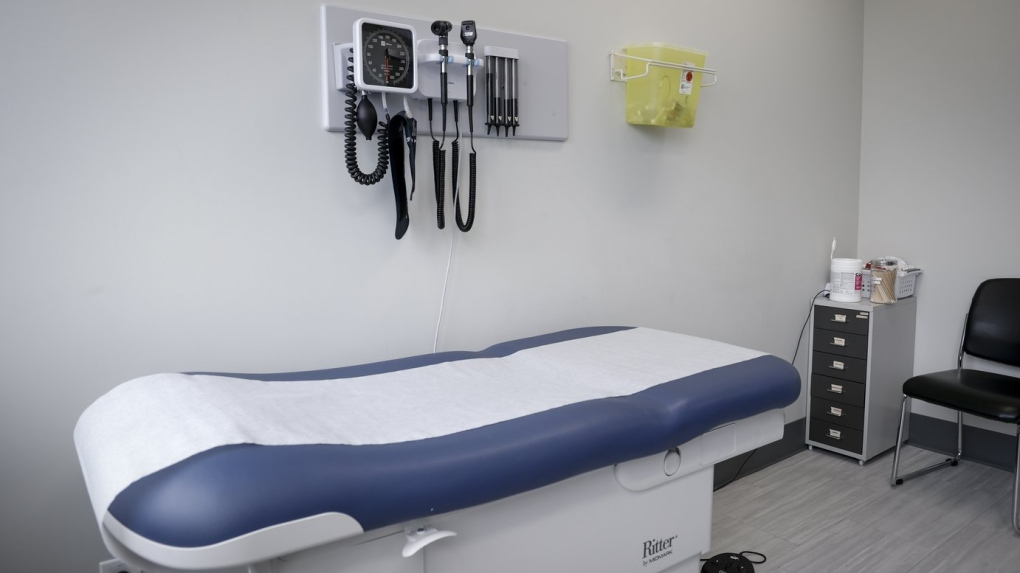
A view of an examination room in a health clinic in Calgary on Friday, July 14, 2023, as captured by Jeff McIntosh for THE CANADIAN PRESS.
A recent survey conducted by Leger suggests that the majority of Canadians harbour pessimistic views about the future improvement of healthcare in their respective provinces. This sentiment persists despite the federal government's initiation of health accords with various provinces, a strategy intended to mitigate the healthcare crisis unfolding nationwide. Nearly a year ago, the federal government proposed a substantial $196-billion health accord to the provinces, aiming to bolster health funding and address the escalating shortage of healthcare professionals.
Over an extended period, healthcare practitioners, including doctors and nurses, have consistently raised alarms about the perilous scarcity of healthcare workers. This shortage has manifested in understaffed emergency rooms and an overall deficiency in primary care services throughout the healthcare system. Despite the financial pledges and collaborative efforts between federal and provincial authorities, a mere 17 percent of survey respondents expressed optimism about the likelihood of healthcare improving over the next two years.
Several provinces, including Alberta, British Columbia, Prince Edward Island, Nova Scotia, and the Northwest Territories, have entered into individual agreements with the federal government. These agreements are designed to augment federal health funding and address specific vulnerabilities within their respective healthcare systems. Nevertheless, the survey, conducted by Leger through a web survey of 1,536 Canadian adults, revealed that 70 percent of respondents harbor concerns about the accessibility and quality of medical care for themselves or their family members.
The apprehension is notably pronounced in Atlantic Canada, where a staggering 87 percent of respondents worry about their ability to access necessary healthcare. Moreover, residents of Atlantic Canada and Quebec are more inclined to view their health systems unfavorably, with 66 percent and 51 percent respectively rating them as poor or very poor. In contrast, 46 percent of respondents in Alberta and 40 percent in British Columbia expressed satisfaction with their healthcare systems.
When prompted to associate words with Canada's healthcare systems, respondents frequently chose terms such as "long waits" (66 percent), "stressed" (42 percent), and "failing" (40 percent). Concerning the shortage of healthcare workers, 67 percent attributed it to poor working conditions and long hours in hospitals. Additionally, 40 percent attributed the problem to healthcare funding cuts, while another 40 percent blamed retirements during the COVID-19 pandemic.
Notably, all provinces, except Quebec, have tentatively agreed to Ottawa's deal. Provinces have until March to finalize individualized agreements with Ottawa to access the allocated funding. Despite these efforts, the prevailing sentiment among Canadians remains skeptical about the imminent improvement of healthcare in the country.
In summary, a recent survey by Leger reveals that despite federal initiatives and financial commitments to address the healthcare crisis, a majority of Canadians remain skeptical about the prospects of improvement in their provincial healthcare systems.