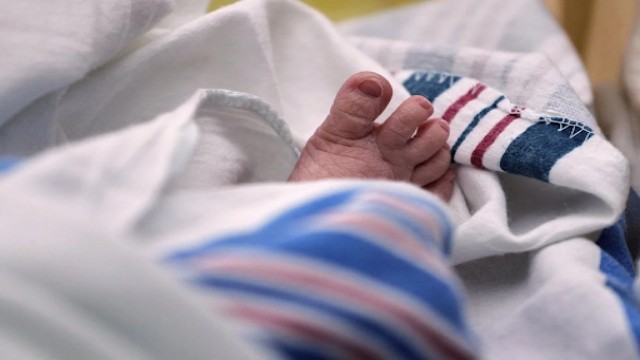
A newborn's tiny toes are pictured at a hospital in McAllen, Texas. (AP Photo/Eric Gay, File)
The number of children born to women in the United States hit a record low in 2024, according to new data from the Centers for Disease Control and Prevention (CDC). The latest figures show that, on average, American women had fewer than 1.6 children each — far below the 2.1 children needed to maintain the population without immigration.
This shift marks a steady decline in the nation’s birth rate that’s been happening for nearly 20 years. Once one of the few industrialized nations with a replacement-level fertility rate, the U.S. now finds itself aligned with countries in Western Europe, where similar demographic patterns have long been the norm.
Experts point to delayed parenthood and shifting personal choices as leading reasons behind the drop. More women are choosing to have children later in life, or opting not to have them at all — a trend that continues to shape the nation’s population growth.
How Did We Get Here?
The U.S. birth rate has seen dramatic changes over the past century. Back in the early 1960s, the average woman had 3.5 children. But that number fell to 1.7 by the mid-1970s after the post-World War II Baby Boom. In 2007, it briefly touched the replacement level again, but it’s been falling ever since. The total fertility rate in 2023 was 1.621. In 2024, it dropped further to 1.599.
The CDC’s data also showed that birth rates are generally declining for women across most age groups — especially in their 20s and early 30s — a sign that younger generations are approaching parenthood with greater caution, or avoiding it altogether.
What's Causing the Decline?
According to Karen Guzzo, director of the Carolina Population Center, several practical concerns are holding people back from having children — especially worries over financial stability, access to healthcare, and the lack of affordable childcare.
“People are getting married later and feeling unsure about whether they can give their kids a good life,” Guzzo said. “Worry isn't the best place to start a family.”
While some policymakers, like those in the Trump administration, have proposed solutions such as expanding access to in vitro fertilization and offering “baby bonuses,” Guzzo believes these efforts are mostly symbolic. Real change, she argues, would require serious policy reforms — like paid parental leave and accessible childcare — that make raising children less burdensome.
The Bigger Picture: Population Still Growing
Despite the dip in fertility, the U.S. population continues to grow, partly due to immigration and a continued natural increase — meaning there are still more births than deaths overall.
University of Colorado researcher Leslie Root says the lower birth rate isn’t necessarily a sign of crisis. “This is part of a larger trend of people choosing to have kids later. We’re still seeing growth, just on a different timeline,” she explained.
New Birth Data Tells a Different Story
Interestingly, the CDC’s updated report — based on a deeper analysis of birth certificates — revealed a small rise in total births in 2024. There were 33,000 more babies born compared to the previous year, bringing the total number to just over 3.6 million.
But here’s the twist: earlier, provisional data had suggested women in their late 20s and 30s were having more children. The final analysis found the opposite — birth rates for women in their 20s and early 30s had actually dropped, while there was no significant change for women in their late 30s.
This shift, according to CDC officials, is the result of updated Census estimates that changed how the birth rate was calculated. With more women of childbearing age added to the population due to immigration, the overall rate naturally decreased — even though the total number of births slightly increased.