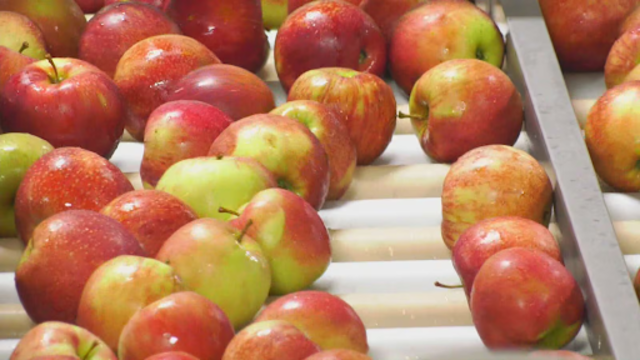
Apples grow at Martin’s Family Fruit Farm in Waterloo, Ont. CTV
Isabella Dalla Ragione spends her days exploring old orchards, forgotten gardens, and quiet hillsides in search of fruits that almost vanished from Italy’s landscape. At 68, she leads a mission that blends science, history, and determination. She hopes to protect old fruit varieties that once fed villages and may now help farmers face a warmer and less predictable climate.
Searching for Clues in the Past
Isabella works like a detective. She studies centuries-old diaries, farm notes, and handwritten records to find hints about long-lost fruits. She also turns to art for guidance. Many Renaissance paintings show baskets of fruit beside the Madonna and Child, and she uses these images to identify shapes, colours, and textures.
Her foundation, Archeologia Arborea, has saved around 150 old varieties from regions like Tuscany, Umbria, Emilia-Romagna, and Marche. She now grows apples, pears, cherries, peaches, plums, and almonds using traditional methods. These older fruits handle heat, frost, and water shortages better than many modern varieties.
One of her favourite stories involves the small Florentine pear. “I’d found it described in documents from the 1500s, but I’d never seen it and believed it lost,” she said. Her luck changed about fifteen years ago when an elderly woman guided her to a single tree hidden deep in the mountains between Umbria and Marche.
Why These Fruits Matter
Many of these old fruits taste richer and more complex than their modern cousins. But after the Second World War, Italy modernized farming, and most traditional varieties disappeared from markets. Large farms now grow only a few types that store well and ship easily. Italy ranks high in global pear production, yet five modern varieties make up most of its crop, and none are originally Italian.
Isabella warns that this narrow focus puts the food system at risk. “There used to be hundreds, even thousands, of varieties because each region, each valley, each place had its own,” she said while pointing to baskets filled with her recovered fruits.
Experts agree. Mario Marino from the UN’s Food and Agriculture Organization said old fruits show strong resistance to extreme heat and drought. But he also noted that some may struggle against certain diseases. He believes the best solution involves crossing old and new varieties to build stronger plants. Marino calls Isabella’s work “urgent” because it protects biodiversity and supplies valuable DNA for future crops.
Keeping Stories Alive
Researchers visit Isabella’s orchards to study the preserved varieties. She also recreates historic gardens as part of a European project. These gardens allow the old fruits to grow in settings similar to their original homes.
Isabella says her work serves practical and cultural goals. “We don’t do all this research and conservation work out of nostalgia,” she explained while picking pink apples in her Umbrian orchard. “When we lose variety, we lose food security, we lose diversity, and we also lose a lot in cultural terms.”
She finds clues in monastery gardens, noble estates, and simple backyard orchards. She once located a rare pear after finding it in the diary of a village band director. But she depends most on older farmers’ stories. As many pass away, so does their knowledge.
She often faces tough choices about where to search next, but she follows one rule. If she learns about a new variety, she acts fast. “In the past if I’ve delayed, thinking ‘I’ll do it next year’, I’ve found the plant has since gone,” she said.