Trump’s administration is ramping up pressure on Venezuela with a major Caribbean military deployment that includes the world’s largest aircraft carrier. (AFP)
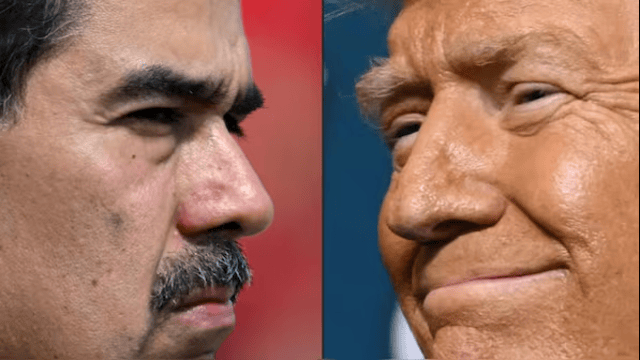
US President Donald Trump has announced a major escalation in Washington’s confrontation with Venezuela. In a dramatic move, he declared President Nicolás Maduro’s government a foreign terrorist organisation and ordered what he called a “total and complete” blockade of sanctioned oil tankers linked to the country.
The announcement signals a sharper phase in US pressure on Caracas. It combines economic, military, and political measures into a single aggressive strategy aimed at crippling the Maduro administration.
A sweeping declaration from the White House
Trump made the announcement through a post on his social media platform, Truth Social. He said the United States would block all sanctioned oil tankers entering or leaving Venezuela.
The president also revealed plans to officially designate Maduro’s government as a foreign terrorist organisation. He cited multiple reasons for the decision, including asset theft, terrorism, drug smuggling, and human trafficking.
According to Trump, the Venezuelan leadership has unlawfully taken US-linked oil fields, land, and other assets. He claimed these resources are now being used to sustain criminal activities.
Military pressure intensifies in the region
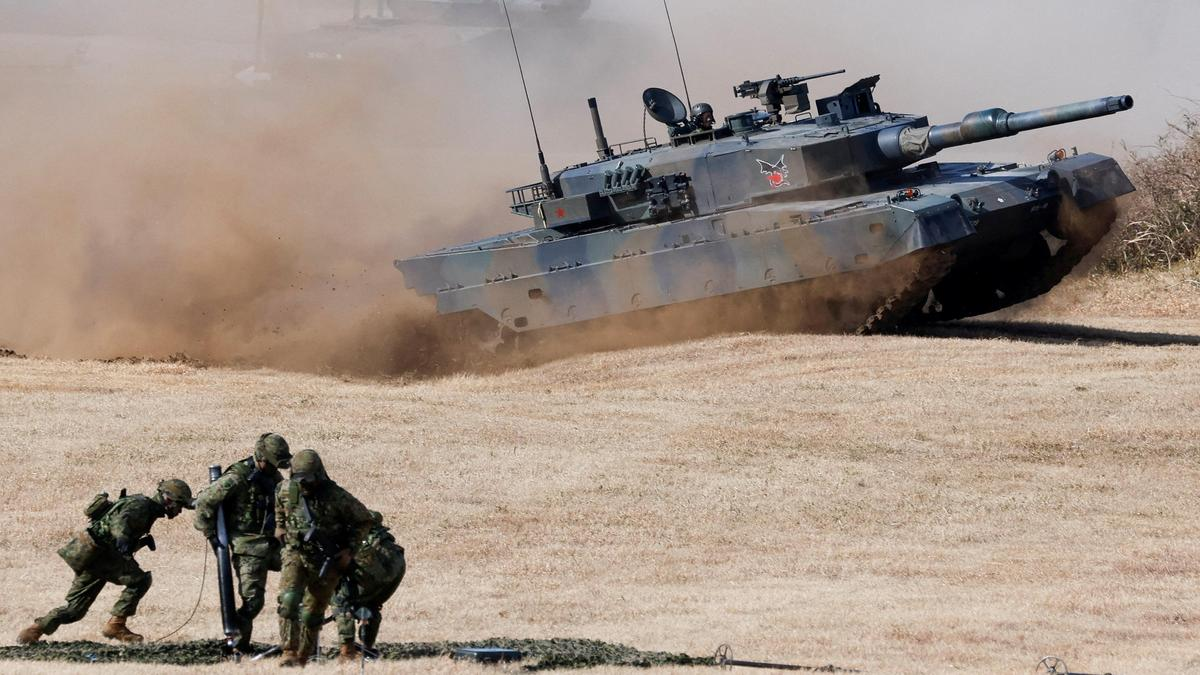
Trump said Venezuela is now surrounded by an unprecedented military presence. He described it as the largest armada ever assembled around a South American nation.
The president warned that the military pressure would only increase. He said the impact on the Maduro government would be overwhelming unless assets were returned to the United States.
While no formal declaration of war was made, the language suggested a clear willingness to escalate further.
Oil at the centre of the conflict
Oil remains the core of the dispute. Trump accused the Maduro government of using oil revenues to finance violence, drug trafficking, kidnapping, and human exploitation.
He alleged that oil extracted from “stolen” fields is funding what he described as drug terrorism. These claims form the backbone of Washington’s justification for tougher enforcement.
Last week, US authorities seized an oil tanker near Venezuela’s coast. Officials said the vessel was carrying sanctioned oil originating from Venezuela and Iran.
Trump later stated that the United States plans to retain the seized oil.
Sanctions tighten around Maduro’s inner circle
The blockade order follows a series of recent sanctions. The administration has imposed penalties on members of Maduro’s family and several Venezuelan businesses.
These measures aim to cut off financial lifelines to the ruling elite. US officials argue that targeting personal networks increases pressure without harming ordinary citizens.
However, critics warn that broader economic actions could worsen Venezuela’s humanitarian crisis.
A growing US military footprint
Alongside economic actions, the US has expanded its military presence in the Caribbean. The Pentagon has deployed the USS Gerald R. Ford, the world’s largest aircraft carrier, to the region.
Its carrier air wing is operating alongside it. The deployment has drawn attention from regional governments and international observers.
Earlier, two B-1 Lancer bombers flew close to Venezuela’s coastline. Flight tracking data confirmed the mission, which was widely seen as a show of force.
Drug interdictions and rising scrutiny
For months, US forces have also carried out strikes against suspected drug-smuggling boats in the Caribbean. The administration says the operations aim to disrupt narcotics flows.
These actions have reportedly resulted in dozens of deaths. Lawmakers in Congress have questioned the legality and oversight of the campaign.
Trump has previously threatened strikes inside Venezuelan territory. So far, those threats have not turned into direct land attacks.
Inside the administration’s strategy
White House chief of staff Susie Wiles offered rare insight into the president’s thinking. In an interview with Vanity Fair, she described the approach as relentless pressure.
She said the strategy is to continue destroying drug boats until Maduro “cries uncle.” According to Wiles, advisers believe sustained force will eventually break the regime.
As tensions rise, the world is watching closely. The next steps could redefine US-Venezuela relations and reshape stability in the region.