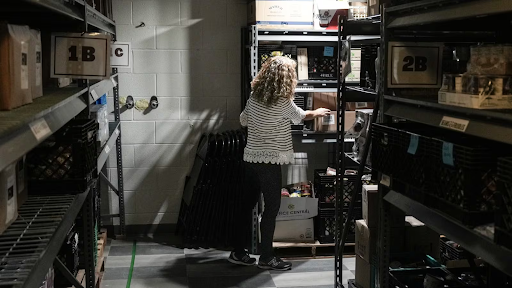
A volunteer works in the storeroom of St. Philip Neri’s Table Food Bank at St Philip Neri Church in Toronto, Friday, Oct. 25, 2024.
More than a year after several Ontario cities declared food insecurity emergencies, hunger remains widespread. Food bank leaders say demand continues to rise, despite increased awareness and donations. The affordability crisis, driven by housing and income pressures, shows no sign of easing.
Emergency Declarations Raised Awareness
Cities including Mississauga, Toronto, and Kingston declared food insecurity emergencies between late 2024 and early 2025. Smaller municipalities like Brantford, Brockville, Orillia, and Hawkesbury followed soon after.
The declarations aimed to highlight growing hunger and push governments to act. Donations increased briefly. Public attention followed. However, food bank usage kept climbing across Ontario.
Food Banks Under Severe Strain
Food bank operators say the system is overwhelmed. Meghan Nicholls, CEO of Food Banks Mississauga, warned the crisis exceeds their capacity.
“We are drowning,” she said. “This is far beyond what food banks were designed to handle.”
Mississauga’s declaration came after food insecurity surged post-pandemic. Rising rents, food prices, and utilities left many unable to cope.
Toronto’s Numbers Tell a Grim Story
In Toronto, the crisis is especially stark. One in ten residents relies on food banks. About 40 percent are children.
Neil Hetherington, CEO of Daily Bread Food Bank, described unprecedented growth. It took decades to reach one million clients. Now, numbers double within a year.
Between April 2024 and March 2025, over one million Ontarians used food banks. Total visits reached 8.7 million, an 87 percent jump since 2019.
Working People Now Need Food Banks
Food insecurity is no longer limited to the unemployed. One in four food bank users has a job.
Hetherington noted a rise among educated professionals. Many have post-secondary degrees. Many work full time. Still, they cannot afford groceries.
In Kingston, 17 percent of food bank clients are employed. The trend signals deeper economic strain.
Declarations Sparked Some Progress
Despite doubts, emergency declarations delivered limited gains. Toronto expanded its school nutrition program. By 2026, 300,000 children are expected to receive daily meals.
In Kingston, donations jumped by $35,000 to $40,000 within one month. Many donors expressed shock at local hunger levels.
Income Supports Lag Behind Reality
Food bank leaders agree on one solution. People need higher incomes and affordable housing.
About 40 percent of Kingston food bank users rely on Ontario Works or ODSP. Benefits have not matched inflation.
Single adults on ODSP receive up to $1,408 monthly. Ontario Works offers $733. Average rent now exceeds $2,270 across Ontario.
Government Defends Its Actions
The Ontario government says it raised ODSP rates by 20 percent since 2022. It also increased earnings exemptions. Minimum wage now stands at $17.60 an hour.
However, the Ontario Living Wage is far higher. In the GTA, it reaches $27.20 an hour. In Kingston’s region, it exceeds $22.
Housing Policy Raises New Concerns
Dozens of food banks oppose Bill 60, Ontario’s new housing legislation. Critics warn it may ease evictions. That could worsen poverty.
Food banks say they cannot absorb further demand. Programs are already stretched to breaking points.
Federal Steps Offer Hope
Federal measures bring cautious optimism. Automatic tax filing helps low-income Canadians. The national school food program is now permanent.
The program could serve 400,000 children annually. Families may save about $800 yearly on food costs.
Crisis Far From Over
Food insecurity emergencies have not solved Ontario’s hunger crisis. Food banks remain overwhelmed.
Operators say charity alone cannot fix systemic poverty. Without stronger income supports and housing stability, hunger will persist.
Ontario’s emergency, they warn, is no longer temporary.