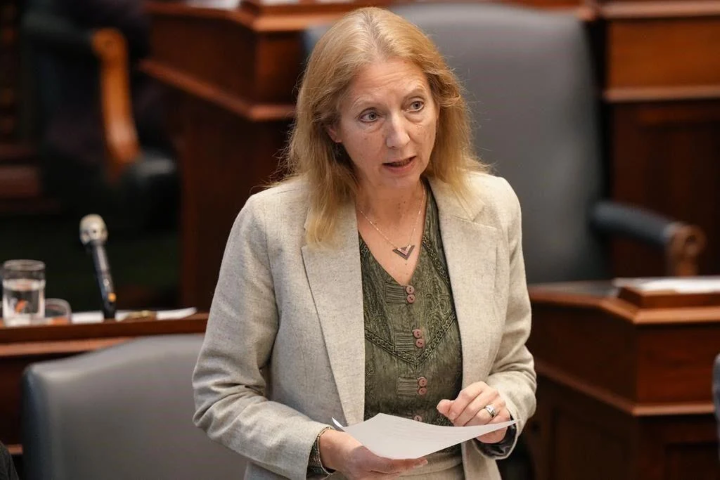
Gelinas attends Question Period at the Ontario Legislature in Toronto, Tuesday, Nov. 28, 2023.THE CANADIAN PRESS/Chris Young
Ontario's move to expand the number of private clinics offering publicly funded cataract surgeries has drawn attention to patient complaints regarding unfair billing practices, according to documents obtained through a freedom-of-information by a press house.
Between 2020 and 2022, the province received a total of 68 complaints related to violations of the law prohibiting medical professionals from billing patients for services covered by the Ontario Health Insurance Plan (OHIP). Notably, 15 complaints concerned charges for eye exams, while 13 were linked to cataract procedures. Additional grievances encompassed various medical services like blood tests and prenatal testing.
NDP health critic France Gelinas suggested that the actual number of patients with similar complaints could be significantly higher, as many individuals might not be familiar with the complaint process.
In response to complaints about charges for cataract surgery, the ministry often cited patient consent to paying for non-insured services. For instance, one patient who paid $2,400 for "cataract extraction with intraocular implant service covered by Ministry of Health" received a $200 credit for a medically necessary lens, but had to cover the cost of a premium lens out of pocket.
Gelinas criticized such instances, arguing that patients undergoing publicly funded surgeries in private clinics are frequently subjected to upselling and may not fully understand the associated out-of-pocket expenses.
Liberal health critic Adil Shamji highlighted the power dynamics between doctors and patients, suggesting that patients may feel pressured to accept doctors' recommendations for additional services without fully understanding the costs involved.
The NDP, Liberals, and Green Party have expressed concerns that the government's expansion of private clinics offering publicly funded procedures may exacerbate patients' vulnerability.
Ontario's Progressive Conservative government aims to expand private clinic offerings for publicly funded tests and procedures, including cataract surgeries and MRIs, as well as hip and knee-replacement surgeries. Health Minister Sylvia Jones emphasized that patients will not have to pay for OHIP-insured services.
The government disclosed reimbursements made to patients who filed complaints under the Commitment to the Future of Medicare Act, totaling approximately $21,790, $3,527, and $18,723 between 2019-20 and 2021-22. Many complaints involved clinics, hospitals, and laboratories.
The government's plan to enhance oversight and quality assurance for these clinics involves bringing them under patient ombudsman oversight and ensuring access to publicly funded services cannot be contingent on accepting additional, uninsured services. Accreditation Canada will develop an oversight program for these clinics. Currently, Ontario hosts over 900 private health facilities, mainly offering diagnostic imaging services.