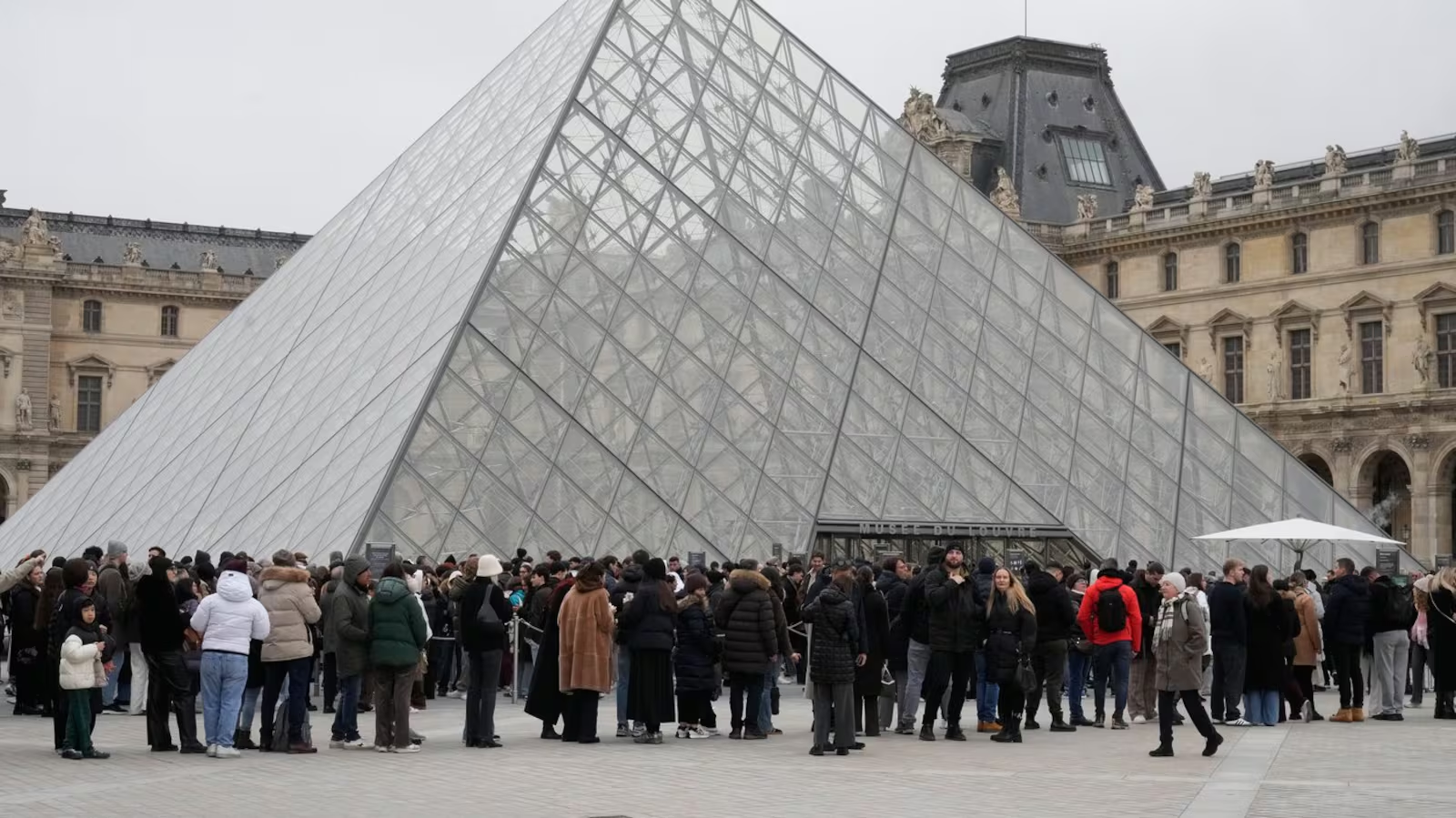
Visitors line up outside the Louvre museum in Paris on Friday, Feb. 13, 2026, as crowds gather at the popular tourist site. AP Photo
France’s most visited museum now finds itself at the centre of a major fraud investigation. A senior official at the Louvre said that at an institution of its size, cases of fraud are “statistically inevitable,” following the discovery of a suspected ticket scheme worth more than 10 million euros over a decade.
Kim Pham, the museum’s general administrator, spoke publicly after prosecutors revealed that nine people face charges linked to the alleged operation. The case has raised fresh questions about oversight at one of the world’s busiest cultural sites.
Massive Scale, Major Challenges
Pham said the Louvre’s sheer size and popularity make it especially vulnerable. The museum spans 86,000 square metres and displays about 35,000 works of art. Each year, around nine million visitors pass through its doors.
“Which museum in the world, with this level of attendance, would not at certain moments have some issues of fraud,” Pham said.
Authorities believe the suspected scheme involved tour guides reusing the same tickets for multiple groups of visitors. Prosecutors said two Chinese tour guides allegedly worked with museum employees to bring in as many as 20 guided groups per day without paying full fees. Investigators estimate losses exceeding 10 million euros.
The Louvre filed a complaint in December 2024, prompting the investigation.
How the Scheme Worked
According to prosecutors, the accused guides reused tickets and split groups to avoid paying a required speaking fee. This fee acts as a commission for guided tours operating inside the museum.
Pham declined to confirm specific figures while the investigation continues. However, he acknowledged that fraud prevention requires constant effort.
“I won’t tell you that we do everything very well and that we did everything well,” he said. “What I’m telling you is that the fight against fraud is an action of every moment.”
A Museum Under Pressure
The ticket case follows a series of recent challenges. Last October, thieves stole French Crown Jewels from the Apollo Gallery during visiting hours. Water leaks damaged historic books, and staff staged walkouts over working conditions and mass tourism.
Some critics argue that the museum struggles to manage its growing popularity. Pham rejected that view, emphasizing the Louvre’s long and complex history.
“It is normal that in this complexity we have difficulties,” he said.
He also rejected suggestions that understaffing led to the alleged fraud. “Staffing is at the right level for those functions,” he said.
Digital Tickets and Scarcity
Pham pointed to the rise of online ticket sales as a major factor. “Ninety percent of tickets today are bought online, on the web,” he said. “So that is where major fraud takes place.”
He mentioned problems such as stolen credit card purchases, resale of free tickets, and fake passes. He also noted that limits on daily visitor numbers can increase demand, making tickets more attractive to scammers.
“When you limit the number of people who can enter a museum each day, you increase the scarcity of the ticket and that brings fraudsters,” he said. “It was like for a concert with a star — it’s when places are limited that it creates even more fraud.”
New Security Measures
In response, the Louvre has tightened ticket controls. Individual tickets now allow two scans, while group tickets permit only one. Staff also conduct additional checks before and inside galleries.
Two museum employees questioned in the case have been suspended during the investigation. Officials stress that they remain presumed innocent until the legal process concludes.
As France continues to investigate, the Louvre faces the challenge of protecting its global reputation while welcoming millions of visitors each year.