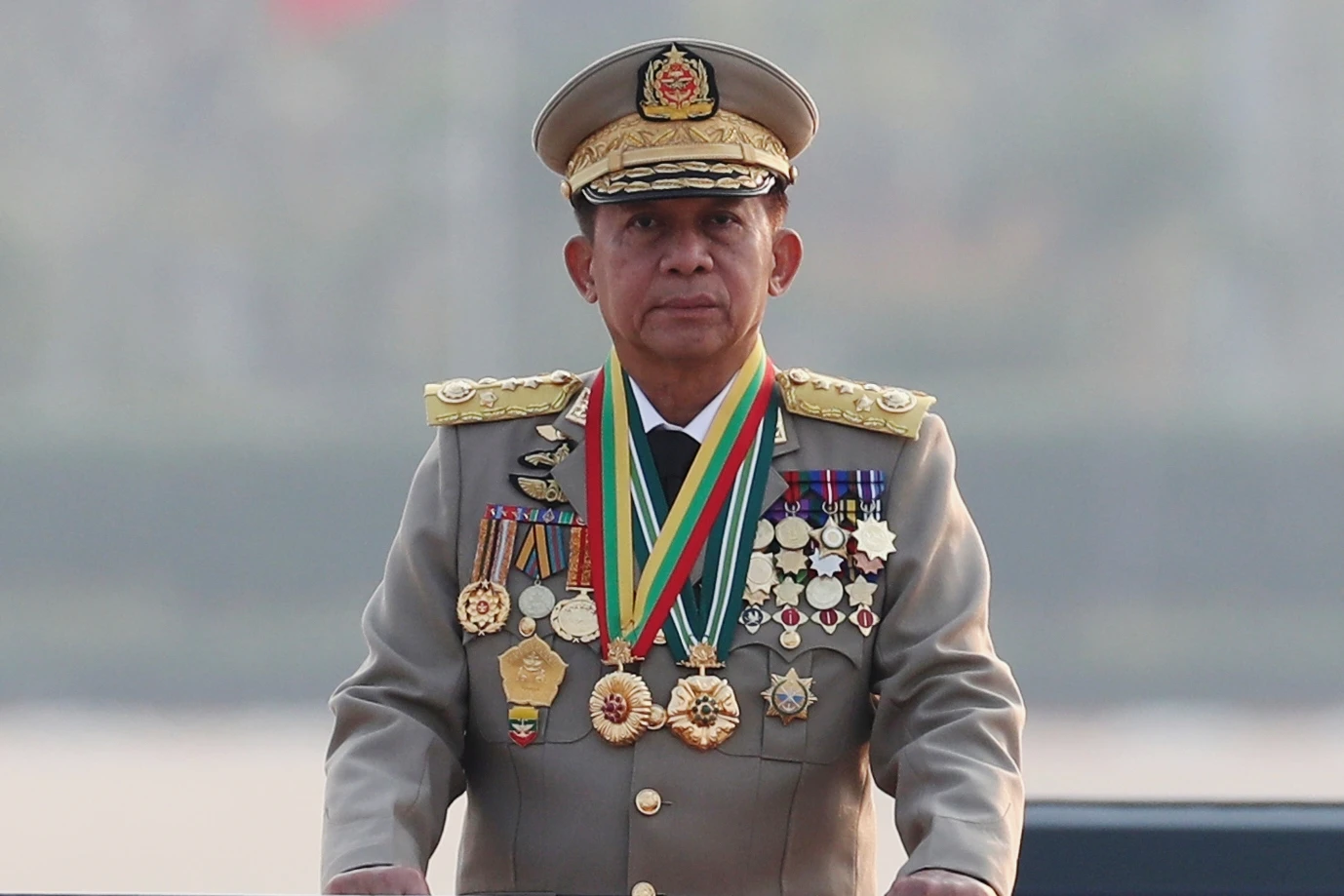
Senior Gen. Min Aung Hlaing, head of Myanmar’s military council, inspects officers during a parade to commemorate Myanmar’s 78th Armed Forces Day in Naypyitaw, Myanmar, March 27, 2023.
Myanmar has entered a new political phase as parliament elected military leader Min Aung Hlaing as president, signaling a shift that appears more symbolic than transformative. While the move suggests a return to civilian governance, many observers argue it effectively cements the military’s hold on power during a period of deep national unrest.
Myanmar Political Transition Raises Questions on Military Control
The Myanmar political transition comes after a parliamentary vote in Naypyitaw, where Min Aung Hlaing secured an overwhelming majority. Backed by military-aligned lawmakers and appointed representatives, his victory was widely expected even before ballots were cast.
Although he stepped down as commander-in-chief to meet constitutional requirements, the leadership transition remains closely tied to military influence. A trusted ally has already taken over the armed forces, reinforcing perceptions that control remains within the same circle.
Supporters of the transition present it as a step toward stability and regional engagement, particularly with Southeast Asian nations that have maintained cautious relations since the 2021 military takeover.
Contested Elections Shape Myanmar Political Transition
The legitimacy of the Myanmar political transition has been heavily questioned due to the conditions surrounding recent elections. Voting took place in phases but was limited to fewer regions due to security concerns, leaving significant portions of the country excluded.
Major opposition parties were either barred from participating or chose to boycott the process, citing unfair conditions. This included the National League for Democracy, once led by Aung San Suu Kyi, who remains imprisoned under charges widely criticized as politically motivated.
As a result, the electoral process has been viewed by critics as lacking credibility, further deepening political divisions within the country.
Opposition Rejects Myanmar Political Transition
Opposition groups have strongly rejected the Myanmar political transition, describing it as an attempt to legitimize military rule under a civilian framework. Leaders of the National Unity Government, which positions itself as the legitimate authority, have vowed to continue resistance efforts.
They argue that the leadership change does little to address underlying issues, including alleged human rights violations and ongoing conflict. For many citizens, the transition has not altered the reality on the ground, where instability and violence persist.
Civil War Overshadows Political Developments
Despite the formal shift in leadership, the Myanmar political transition unfolds against the backdrop of an intensifying civil war. Since the military takeover in 2021, widespread protests have evolved into armed resistance, drawing in pro-democracy groups and ethnic militias.
Large parts of the country remain affected by conflict, with military operations, including airstrikes, contributing to significant civilian casualties. Thousands have reportedly been killed, while many more remain detained in connection with political activities.
These conditions have severely limited governance and disrupted daily life, making the promise of stability under the new administration uncertain.
International Scrutiny Intensifies
The Myanmar political transition has also drawn increased international attention, particularly regarding accountability for alleged human rights abuses. Global organizations and legal bodies continue to examine claims of violations, including actions taken against minority communities.
Investigations at international courts have added pressure on the leadership, raising questions about how the new political structure will interact with ongoing legal challenges. Critics argue that adopting a civilian title may not shield those in power from potential consequences under international law.
Myanmar Political Transition Faces Uncertain Future
As Myanmar navigates this complex transition, the gap between political structure and ground realities remains stark. While the establishment of a presidency suggests a shift toward formal governance, the persistence of conflict and dissent highlights the limitations of the change.
The coming months will be critical in determining whether the Myanmar political transition can lead to meaningful stability or remain a continuation of military dominance under a different framework. For now, the nation stands at a crossroads, with its future shaped by both internal resistance and global scrutiny.