People work on the floor at the New York Stock Exchange in New York, Monday, April 13, 2026. (AP Photo)
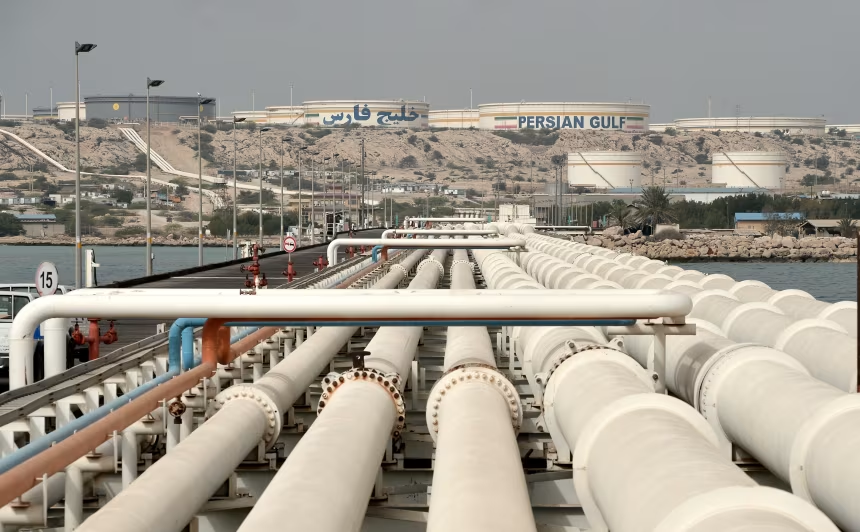
In a significant shift for global markets, oil prices dropped by 9% after Iran announced the reopening of the vital Strait of Hormuz, allowing commercial vessels to resume passage. This development, signaling optimism about the ongoing ceasefire and possible de-escalation of tensions, sent shockwaves through both oil and stock markets.
Oil Prices Drop After Iran’s Announcement
The reopening of the Strait of Hormuz, a crucial passage for crude oil transport, came after Iran’s foreign minister, Abbas Araghchi, declared that all commercial vessels would now be able to pass freely through the strait. This news immediately impacted oil markets, with U.S. crude prices plunging by 9.4%, settling at $82.59 per barrel. Similarly, Brent crude, the international benchmark, dropped by 9.1%, settling at $90.38 per barrel. Despite this sharp drop, oil prices remained above pre-war levels, indicating continued caution in the markets.
The reopening of the strait, which had been a focal point of tensions between the U.S. and Iran, is seen as a positive sign for global oil supply and economic stability. It provides relief to consumers, particularly in areas dependent on oil for transportation, including fuel costs for airlines and other industries.
Wall Street Soars to New Heights
Following the announcement, U.S. stock markets rallied, with the S&P 500 reaching an all-time high. The index surged 1.2%, closing at 7,126.06 points, while the Dow Jones Industrial Average rose 868.71 points, or 1.8%, to 49,447.43. The Nasdaq composite climbed 1.5%, adding 365.78 points to close at 24,468.48.
This surge in stock prices came amid hopes that the easing of oil prices would alleviate inflationary pressures and potentially prompt the Federal Reserve to cut interest rates further. As the yield on the 10-year Treasury bond dropped to 4.24% from 4.32%, expectations grew that lower rates could stimulate consumer spending, particularly in housing and the auto sector.
Airline and Cruise Stocks See Significant Gains
Companies with significant fuel expenses were among the biggest beneficiaries of the oil price drop. United Airlines saw its stock climb 7.1%, while Southwest Airlines jumped 5.1%. Cruise lines, which rely heavily on fuel, also saw strong gains, with Royal Caribbean up 7.3% and Carnival rising by 7%.
In the housing market, builders and suppliers saw their stocks rise on the expectation that lower mortgage rates could boost housing demand. Builders FirstSource rose 5.5%, while homebuilder PulteGroup saw a 5% increase. Carvana, which sells used cars, gained 7% due to the anticipated boost in car sales from lower loan rates.
Global Stock Markets React to Strait of Hormuz Reopening
Iran’s announcement also had a significant impact on stock markets abroad. In Europe, indexes surged, with France’s CAC 40 rising 2% and Germany’s DAX climbing 2.3%. However, in Asia, where markets had closed before the announcement, stocks finished the day weaker. Japan’s Nikkei 225 dropped 1.8%, and Hong Kong’s Hang Seng index fell by 0.9%.
Continued Optimism Despite Uncertainty
While the reopening of the Strait of Hormuz brought a wave of optimism, there remain concerns about the long-term stability of the region. Despite U.S. President Donald Trump’s optimism that the war should be nearing an end, uncertainties remain about how the situation will evolve. The U.S. Navy’s blockade of Iranian ports is still in place, with Trump emphasizing that both sides need to reach a deal before fully lifting restrictions.
The Bigger Picture: Economic Stability and Oil Price Outlook
In the context of a still-recovering global economy, the reopening of the Strait of Hormuz provides temporary relief for both oil prices and the broader financial markets. A sustained decrease in oil prices could help relieve inflationary pressures, benefiting consumers and businesses alike. However, investors remain cautious, as volatility in the geopolitical landscape could easily shift market sentiment in the future.
As for Top Gun and the world of cinema, the impact of Top Gun 3 alongside the economic shifts will likely make for an exciting year of storytelling and real-world drama. For now, the focus is on the return of oil flows through the Strait of Hormuz, and the critical months ahead in global economic recovery.