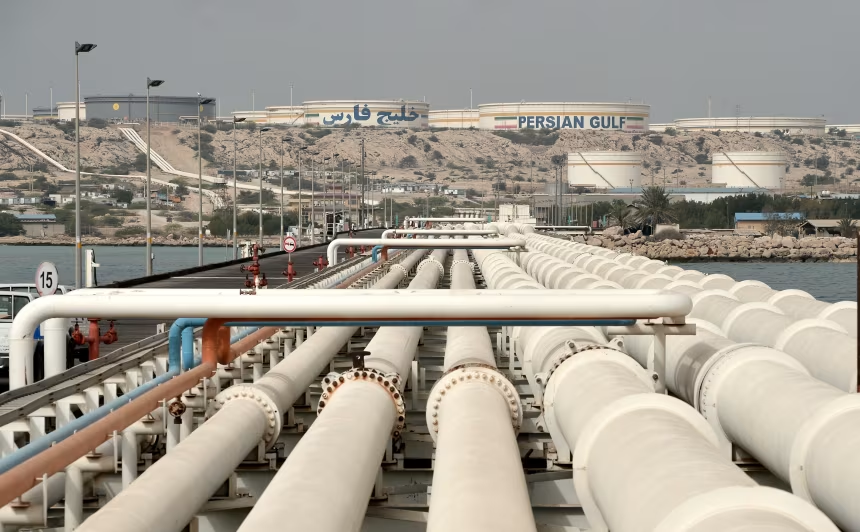
This Nov. 19, 2015, file photo, shows a general view of a petrochemical complex in the South Pars gas field in Asalouyeh, Iran, on the northern coast of Persian Gulf.
Tensions in the Middle East deepened sharply after a strike on Iran’s South Pars gas field triggered a wave of retaliation, widening the conflict’s reach and raising fresh concerns about global energy security. As both sides intensified attacks, the fallout quickly spread beyond military targets, disrupting critical infrastructure and unsettling oil markets already on edge.
Energy infrastructure becomes the new battleground
The reported strike on the South Pars gas field, the world’s largest natural gas reserve, marked a turning point in the conflict by directly targeting economic lifelines. Iran strongly condemned the attack, warning that such actions could unleash consequences far beyond the region.
In response, Tehran expanded its military operations to include energy facilities across the Persian Gulf. Missile strikes hit key sites in Qatar, including the massive Ras Laffan liquefied natural gas complex, where a fire caused significant damage before being contained. Soon after, the United Arab Emirates reported attacks on the Habshan gas facility and Bab field, prompting temporary shutdowns as a precaution.
These developments have placed Gulf nations in an increasingly precarious position. Although they have largely avoided direct involvement in the conflict, repeated strikes on their infrastructure are forcing difficult decisions about security and regional alignment.
Oil prices surge as Strait of Hormuz tensions rise
As hostilities intensified, global oil markets reacted swiftly. Prices climbed above $108 per barrel, reflecting fears of prolonged disruption to supply routes. The Strait of Hormuz, a critical shipping corridor carrying roughly one-fifth of the world’s oil, has become a focal point of concern.
While Iran maintains that the passage remains open, it has effectively restricted access for U.S. allies, creating uncertainty for international trade. Only a limited number of vessels have managed to pass through, underscoring the growing risks for global energy flows.
In Washington, efforts to stabilize supply included easing sanctions on Venezuela, allowing American companies to re-engage with its state-owned energy sector. The move signals mounting urgency to offset potential shortages as the crisis unfolds.
Leadership strikes and retaliation intensify conflict
Alongside infrastructure attacks, the conflict has seen a series of high-profile assassinations targeting Iran’s leadership. Israel confirmed the killing of intelligence minister Esmail Khatib, following earlier strikes that eliminated senior figures including Ali Larijani and a top Revolutionary Guard commander.
Iran responded with missile barrages aimed at Israel, including the use of multiple-warhead systems designed to bypass air defenses. One such strike hit the occupied West Bank, causing the first reported fatalities in that territory since the war began.
The violence has also spilled into neighboring regions. Israeli airstrikes in Beirut targeted sites linked to Hezbollah, resulting in civilian casualties and widespread displacement. Meanwhile, Iran launched attacks toward Saudi Arabia, Kuwait, Bahrain, and the UAE, signaling a broader regional escalation.
Civilian toll rises as conflict spreads
Beyond strategic targets, civilians are increasingly bearing the brunt of the conflict. In Iran, airstrikes on urban areas, including a courthouse complex in Larestan, have added to a rising death toll that now exceeds 1,300, according to humanitarian sources.
In Lebanon, continued bombardment has displaced over a million people, creating one of the largest humanitarian crises in the region. Casualties are also mounting in Israel, where missile attacks have killed civilians and caused widespread damage to homes and businesses.
The conflict has even reached diplomatic channels, with Qatar expelling Iranian embassy officials following the strikes on its territory, highlighting the rapid deterioration of regional relations.
A conflict with global consequences
As the war expands across borders and sectors, its implications are no longer confined to the Middle East. The targeting of the Iran South Pars gas field has underscored how deeply interconnected energy security and geopolitical stability have become.
With oil prices climbing, shipping routes under threat, and regional alliances under strain, the crisis risks evolving into a broader global challenge. Unless diplomatic efforts gain traction, the cycle of retaliation may continue to intensify, drawing in more actors and amplifying the stakes for the international community.