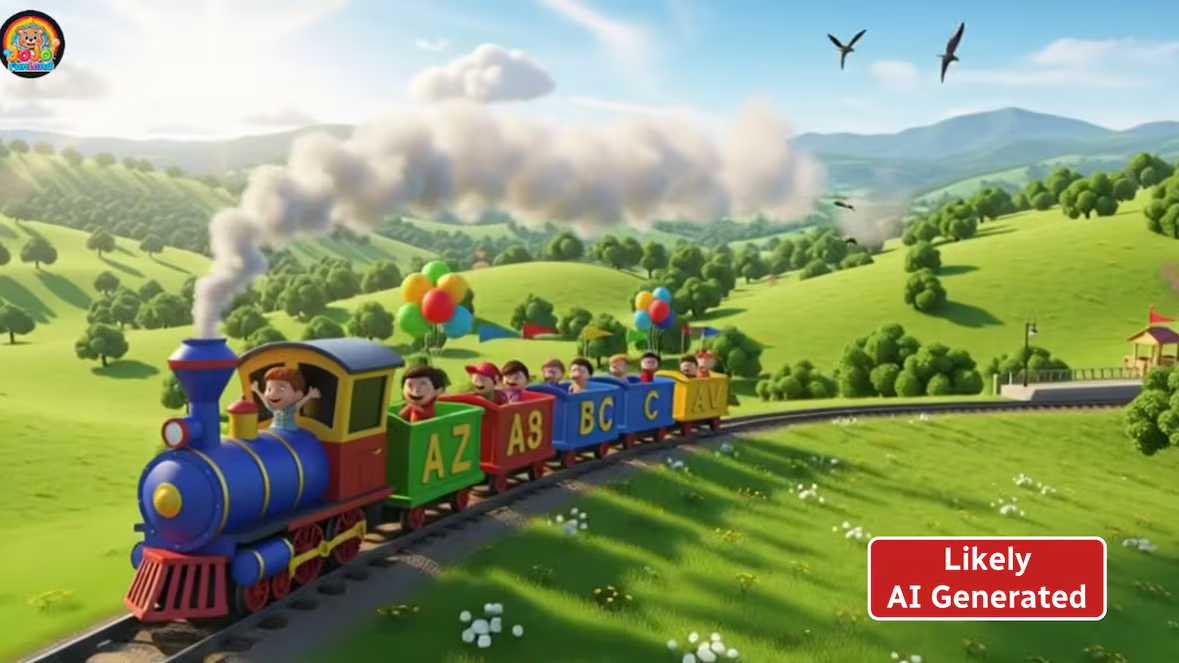
A screenshot taken from a colourful online video aimed at young kids features trains and a jaunty song about learning letters. It also includes classic signs of being AI-generated, like some of those letters appearing garbled at times. (PC: YouTube)
What appears to be cheerful, educational content for young children online may not be as harmless as it looks. Experts are increasingly raising alarms about a surge in AI-generated videos designed for toddlers, warning that these clips may confuse rather than educate.
Across platforms like YouTube, a growing category of content often referred to as “AI slop” is gaining traction. These videos are typically colourful, fast-moving, and filled with familiar-looking characters, but beneath the surface, they often lack structure, consistency, and educational intent.
A New Wave of AI Content Targeting Children
While AI-generated content has been circulating online for some time, specialists say its focus has now shifted toward very young audiences. These videos are designed to hold attention through bright visuals and repetitive sounds, which makes them especially appealing to toddlers and preschoolers.
Concerned about this trend, advocacy groups such as Fairplay have reached out to Google, urging stricter oversight. They argue that such content may overwhelm children’s ability to process information while also distorting their understanding of how the real world works.
How to Recognize AI-Generated Videos
Although these videos may initially seem polished, they often contain subtle flaws that reveal their artificial origin. Objects may change form without explanation, characters may behave unpredictably, and even basic elements like letters or numbers can appear incorrect or nonsensical.
In some cases, creators disclose that their videos include synthetic content, but this is not always consistent, leaving parents with little clarity about what their children are watching.
Why Experts Say It’s a Problem
Early childhood is a critical stage for learning language, developing comprehension, and building a sense of reality. When content is inconsistent or illogical, it can make it harder for children to form meaningful connections.
Experts note that some AI-generated videos are so disorganized that children may struggle to interpret them altogether. Others raise concerns that certain clips may unintentionally demonstrate unsafe behaviour, which young viewers could imitate without understanding the consequences.
Pediatrician Michelle Ponti has strongly criticized such content, emphasizing that children learn best through real human interaction, where communication is responsive and meaningful rather than random and repetitive.
Platforms Respond, But Concerns Remain
With criticism mounting, platforms are beginning to acknowledge the issue. YouTube has stated that it is monitoring low-quality AI content and working to improve labelling systems, particularly for content aimed at children.
However, experts argue that current measures may not go far enough, as questionable videos continue to circulate widely. Calls for stricter regulation, including clearer disclosures and tighter controls on children’s content, are growing louder.
Parents Caught in the Middle
For parents, managing screen time has become more complicated. Even with parental controls, keeping track of every video a child watches is nearly impossible.
Many rely on digital content during daily routines, but the increasing presence of AI-generated material makes it harder to ensure that what children are consuming is safe and beneficial. As a result, avoiding such content entirely can feel overwhelming.
What Quality Children’s Content Looks Like
Experts highlight that effective children’s programming follows well-established principles. It uses simple language, clear storytelling, and intentional repetition to help children understand and retain information.
Programs like Sesame Street are often cited as examples of how structured and thoughtfully designed content can support early learning without overwhelming young viewers.
Is There a Positive Role for AI?
Despite the concerns, specialists do not dismiss AI entirely. When used responsibly, it has the potential to assist in creating engaging and educational content.
The issue lies in how the technology is currently being applied. Algorithms tend to favour fast, attention-grabbing videos rather than those built on educational value, which creates a gap between what AI could achieve and how it is being used today.
With clearer standards and better oversight, experts believe AI could eventually contribute positively to children’s media. For now, however, they stress the need for caution as the technology continues to evolve.