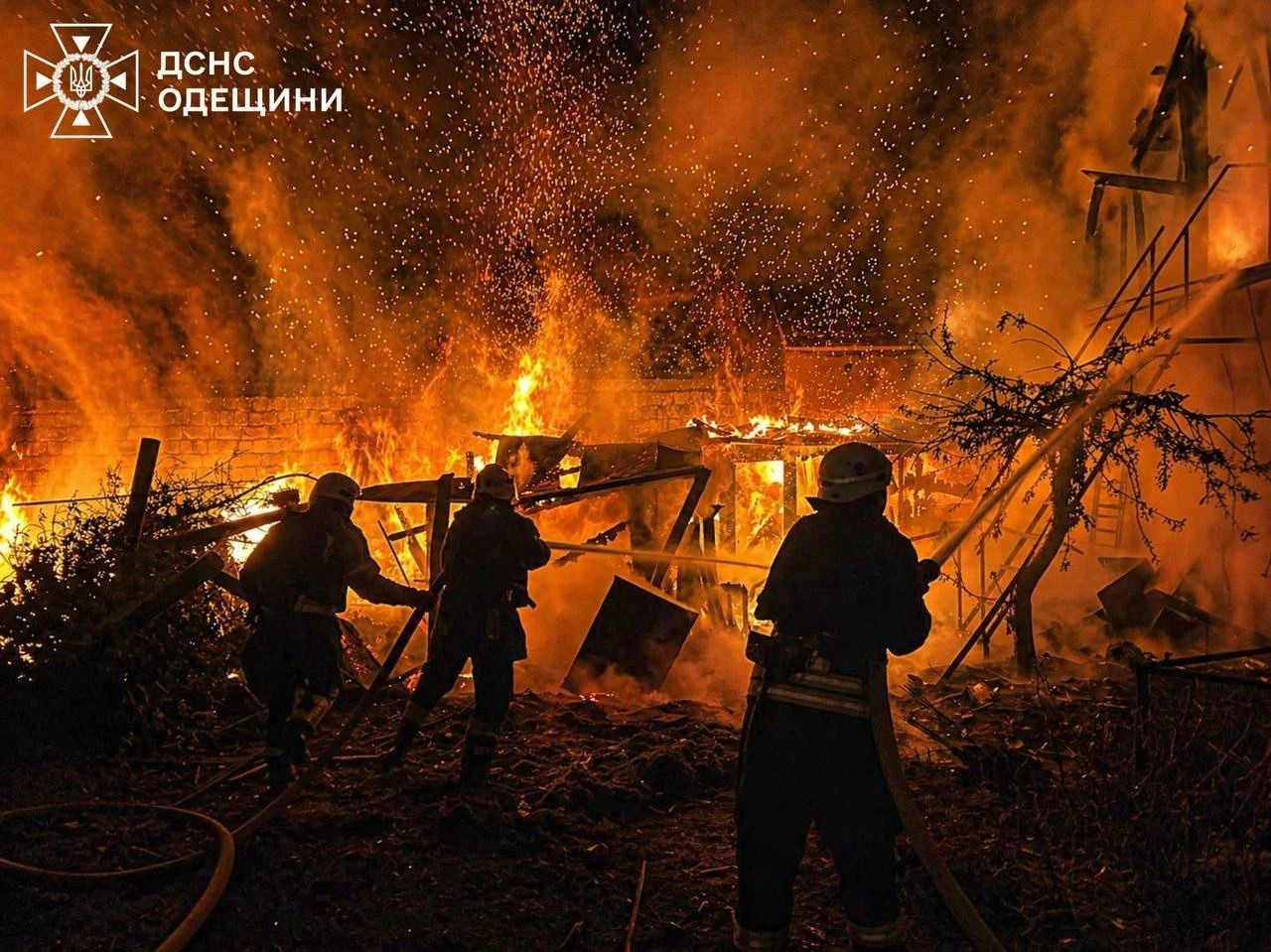
In this photo provided by the Ukranian Emerergency Services on Wednesday, April 29, 2026.
A fresh Ukraine drone attack has reportedly triggered a fire at another Russian oil facility far from the front lines, highlighting Kyiv’s growing long-range strike capabilities. The latest incident took place in Russia’s Perm region, deep in the Ural Mountains, more than 1,500 kilometers from Ukraine.
The strike marks another escalation in Ukraine’s campaign to target Russia’s energy infrastructure, a strategy aimed at weakening Moscow’s economic ability to sustain the war.
Ukraine Drone Attack Reaches Deep Into Russian Territory
Ukrainian security officials said the operation struck an oil pumping station near the city of Perm. According to Kyiv, the site is linked to Russia’s major pipeline operator and plays an important role in transporting crude supplies across the country.
Russian regional authorities confirmed that a drone hit an industrial facility and caused a fire, though they did not specify the exact location or extent of the damage. Local media also reported the blaze, adding to growing evidence that Ukrainian strikes are reaching increasingly distant targets.
President Volodymyr Zelenskyy praised the operation and said Ukraine continues to extend the range and precision of its domestically developed drones.
Energy Infrastructure Becomes Strategic Target
The latest Ukraine drone attack follows another recent strike on the Tuapse oil refinery and terminal near the Black Sea. That facility was reportedly targeted for the third time in less than two weeks, forcing evacuations and raising environmental concerns.
Kyiv appears focused on disrupting Russia’s oil sector, one of the country’s most important revenue sources. By hitting refineries, pumping stations, and storage hubs, Ukraine hopes to create economic pressure while complicating fuel logistics for Russian military operations.
Analysts say these attacks also come at a time when global supply disruptions have increased the strategic value of Russian exports.
Drone Warfare Reshapes the Battlefield
The Ukraine drone attack campaign reflects how modern warfare has shifted toward lower-cost, high-impact technology. While Russia maintains a larger conventional military force, Ukraine has invested heavily in drone development for both defense and offense.
Experts note that Russia’s vast territory creates a difficult challenge for air defense systems, especially when facing repeated drone incursions across multiple regions. This allows Ukraine to exploit gaps in coverage and force Moscow to spread resources more thinly.
Russian officials said air defenses intercepted dozens of drones overnight across several regions and Crimea, but continued strikes suggest vulnerabilities remain.
Ukraine Expands Defense Industry Partnerships
Beyond battlefield use, Ukraine now says it has increased weapons production significantly, creating surplus capacity in some categories. Zelenskyy stated that defense cooperation is already progressing with partner countries in Europe, the Middle East, Gulf region, and Caucasus.
These discussions reportedly include drones, missiles, software, and advanced defense technologies. Ukraine has also presented proposals to the United States for cooperation across air, land, and sea systems.
The growing defense industry marks a notable shift for a country that previously relied heavily on foreign military aid.
Russian Attacks Continue on Ukrainian Cities
While the Ukraine drone attack campaign intensifies, Russia continues launching overnight strikes on civilian areas across Ukraine. Regional officials reported injuries, infrastructure damage, and at least one death linked to recent attacks.
In northeastern regions, homes were damaged and civilians wounded, while southern areas reported hits on infrastructure and hospital buildings. Ukraine’s air force said it intercepted the majority of incoming drones during the latest assault.
Ukraine Drone Attack Signals New Phase of Conflict
The latest Ukraine drone attack on a Russian oil facility suggests the conflict is entering a new stage, where long-range precision strikes carry growing economic and strategic weight. As both sides continue exchanging attacks far beyond the front lines, infrastructure has become as important a battleground as territory.
With drone technology advancing rapidly, future developments may depend as much on industrial capacity and innovation as traditional military strength.