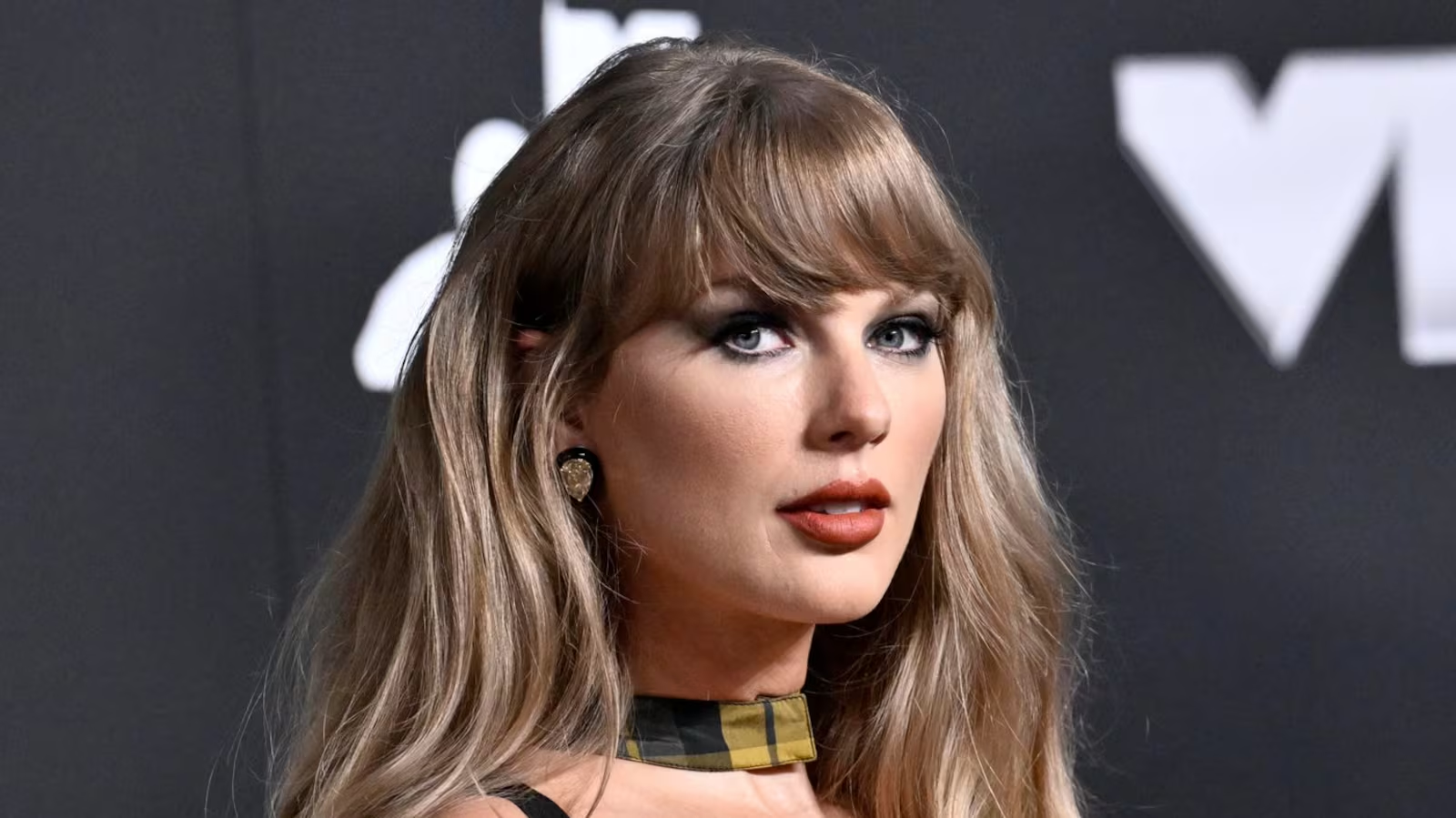
Taylor Swift appears at the MTV Video Music Awards in Elmont, N.Y., on Sept. 11, 2024.
Taylor Swift is making a bold move to protect her voice and image from digital manipulation. The pop superstar has filed trademark applications for her voice and likeness, aiming to block the rise of AI-generated deepfakes that have become a growing concern for celebrities.
Swift’s Legal Protection from AI
On Friday, Swift’s TAS Rights Management filed applications with the U.S. Patent and Trademark Office for two audio clips and a signature image of the singer. The audio clips feature Swift promoting her new album The Life of a Showgirl on platforms like Amazon Music and Spotify, while the image shows her on stage in her iconic sequined outfit with her pink guitar.
This move comes as AI-generated deepfakes—manipulated videos and audio clips that replicate a person’s voice or image—have surged in popularity. These fakes are often used for false endorsements, explicit content, and other purposes without the consent of the person being mimicked. With this trademark filing, Swift is aiming to protect her personal brand from such unauthorized use.
AI and the Threat to Celebrities’ Likeness
The technology behind deepfakes allows users to create realistic images and audio of public figures, even without using their original work. While copyright law has long been used by artists to protect their creative content, AI now creates new challenges. Celebrities like Swift have found that the current laws are not enough to shield them from the growing threat of digital manipulation.
Trademark lawyer Josh Gerben, who highlighted Swift’s filings, explains that these trademarks serve as an innovative solution to address the gap in protection. “While Right of Publicity laws offer some protection, they don’t cover new technologies like deepfakes,” said Gerben. With these trademarks, Swift gains additional control over her voice and likeness in the digital space.
A Smart Move for Celebrities’ Digital Rights
Swift’s decision is part of a larger trend where celebrities are taking legal action to safeguard their images in the age of AI. Similar steps have been taken by figures like Matthew McConaughey, but Swift’s move stands out due to the inclusion of her voice—something not traditionally trademarked.
By trademarking her voice, Swift ensures that AI-generated content that mimics her sound will be under legal scrutiny. Similarly, trademarking her image ensures that manipulated photos or videos can be challenged legally. For Swift, this is not just about protecting her work but ensuring that her identity remains under her control.
Setting a Precedent for the Future
Swift’s legal move could set an important precedent in the entertainment industry. As AI technology continues to evolve, more celebrities may follow her lead in trademarking their likenesses. This could create a new framework for protecting public figures from digital exploitation.
For now, Swift’s action adds a layer of legal protection to her already formidable personal brand. With AI threats on the rise, she’s ensuring that her voice and image remain hers, despite the digital age’s growing challenges.