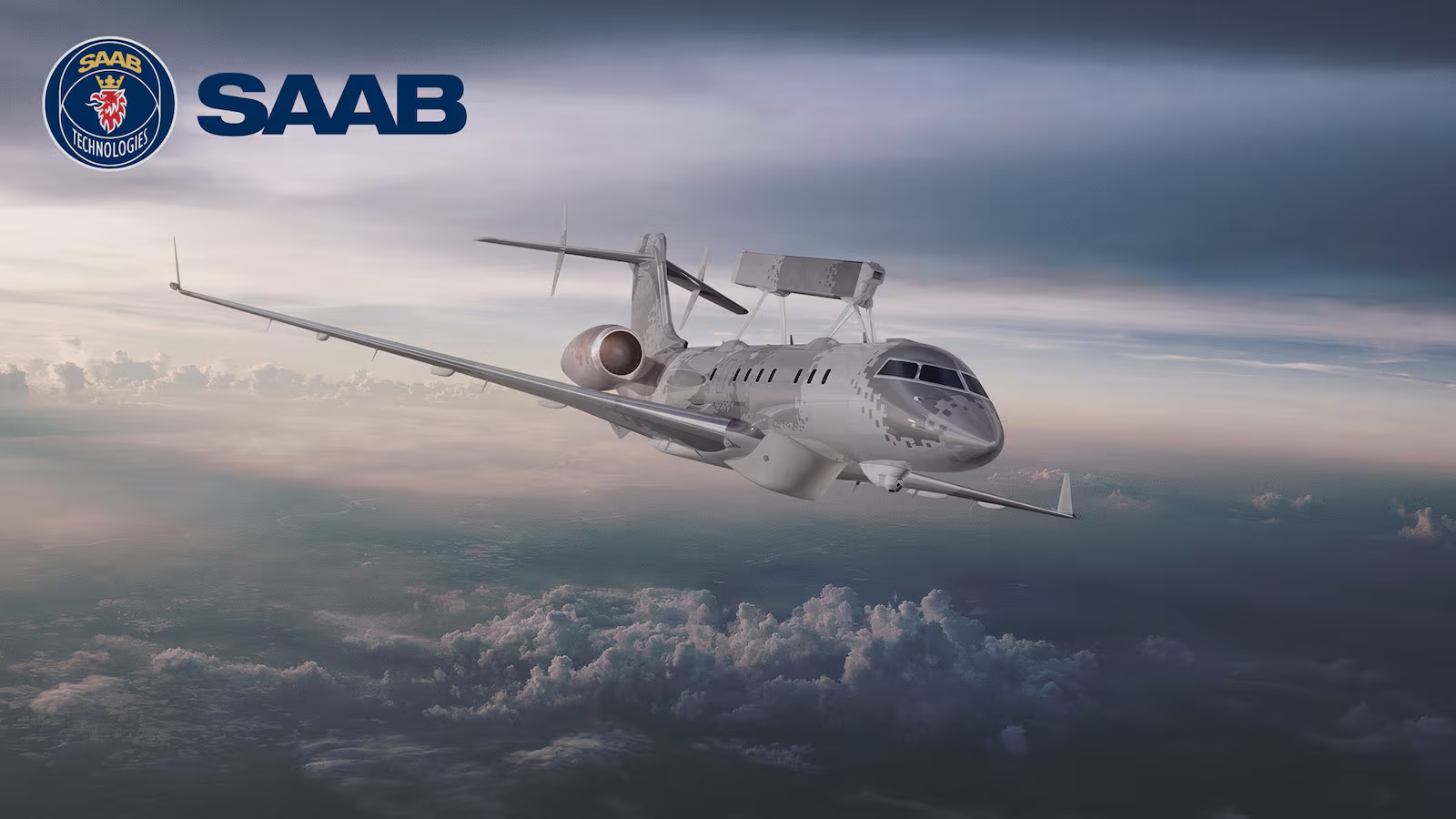
NATO considers Saab-Bombardier's GlobalEye system to replace aging Boeing AWACS fleet. CTV
NATO is reportedly considering a major change in its defence strategy by selecting Canada’s advanced surveillance system to replace its aging Boeing E-3A Sentry fleet. According to reports from European media outlets like La Lettre and Table Briefings, NATO is looking into the Saab-Bombardier GlobalEye surveillance system as the new option for its airborne early warning and control (AEW&C) needs.
Although NATO has not officially confirmed the decision, a NATO official did indicate that the Bombardier-Saab system is under consideration. The official stated that the nations working on the replacement of the current AWACS fleet continue to explore their options with the support of the NATO Support and Procurement Agency (NSPA).
Saab-Bombardier’s GlobalEye: A State-of-the-Art Surveillance System
The GlobalEye system, developed by Saab and mounted on a Bombardier business jet, is designed for long-range surveillance and detection capabilities. It can identify threats in the air, at sea, and on the ground, and operate for over 11 hours. The surveillance system is specifically designed for smooth operations to reduce crew fatigue and extend the lifespan of the mission equipment, according to Bombardier, based in Montreal.
The GlobalEye system’s potential selection would replace NATO’s current fleet of 14 Boeing E-3A Sentries, which are approaching their retirement date after nearly 50 years of service. These AWACS, based on modified Boeing 707 aircraft, were first deployed in the 1980s. As NATO prepares to phase out this fleet by 2035, a new solution is urgently needed.
A Shift Away From Boeing Aircraft
Initially, NATO had selected the Boeing E-7A Wedgetail to replace the E-3A Sentry, but this plan was derailed in 2025 when the U.S. Air Force decided to drop the E-7 Wedgetail from its spending plans. Instead, the U.S. opted for a new space-based surveillance system, forcing NATO to reconsider its options.
If NATO selects the GlobalEye aircraft, it would mark a significant departure from Boeing’s dominance in NATO’s airborne surveillance capabilities. The last time NATO chose a non-Boeing aircraft for this role was in 1982, making this a historic shift for the alliance.
Saab’s Role and NATO’s Procurement Process
Saab, the company behind the GlobalEye, has confirmed it is aware of the reports regarding NATO’s interest in its surveillance system. However, Saab’s press centre head, Mattias Rådström, clarified that while they have provided information to NATO, no contract or order has been placed yet. NATO has not yet made a final decision on its procurement process.
The UAE, Sweden, and France have already purchased the Saab GlobalEye system, which further adds to its credibility as a top-tier surveillance option for NATO.
Lack of Response from Bombardier and Canadian Authorities
CTV News reached out to Bombardier for a statement regarding NATO’s interest in its aircraft but did not receive a response. Similarly, Canada’s Department of National Defence also did not respond to requests for comment on the matter.