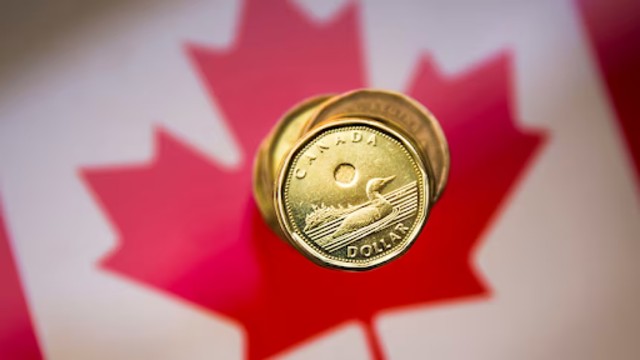
Canada’s economy is doing fairly well right now, according to CIBC economists. Because of that, they believe the Bank of Canada doesn’t need to rush into cutting interest rates just yet. An upcoming election at the end of April could also shape how the current trade tensions develop. (REUTERS/Blair Gable) · REUTERS
As global markets reel from a wave of new U.S. tariffs, Canada’s central bank is expected to hit pause on interest rate changes this April. Economists say the Bank of Canada (BoC) is treading carefully amid a fast-changing trade environment triggered by U.S. President Donald Trump’s recent “Liberation Day” tariff push.
Although Canada avoided the worst-case scenario in the tariff fallout, experts caution that the ripple effects could still weigh heavily on the economy in the months ahead. Uncertainty hangs over not just the direct impact on Canada, but also how other global players will react. All this makes forecasting—and policymaking—more complex.
Karl Schamotta, chief market strategist at Corpay, captured the market mood in a morning note, calling the level of unpredictability “unprecedented” and unlikely to fade any time soon.
CIBC economists Andrew Grantham and Ali Jaffery believe the central bank will wait before making another move. With Canada’s economy relatively stable for now, the BoC has room to observe how things play out, particularly as the country heads into an election later this month—a vote that could influence how trade tensions develop.
But this pause doesn’t mean rate cuts are off the table entirely. The uncertainty around the future of the USMCA (Canada–U.S.–Mexico trade agreement) and Trump’s tariff strategy could still drag on job growth and economic momentum.
Economists at the National Bank of Canada warn that the wide-reaching nature of the new U.S. tariffs—affecting many countries—could stall economic growth in the U.S. and even spark a global downturn. If that happens, Canada is unlikely to be spared.
The BoC, according to TD Bank analysts, will be keeping a close eye on inflation expectations and how governments respond to the turmoil. They believe the bank may lower interest rates by as much as 50 basis points to ease financial pressure, but not much more, given the scale of the policy shock.
BMO’s Sal Guatieri noted that the tariff blow to Canada wasn’t as bad as originally feared. However, that doesn’t mean the country is in the clear. Future tariffs on items like lumber and pharmaceuticals remain a possibility, which could add pressure. On the flip side, more Canadian products could become USMCA-compliant, helping them dodge Trump’s steep 25% border duties.
Economists Derek Holt and John McNally from Scotiabank emphasized the unpredictable nature of the situation. They pointed out that the latest U.S. trade rules offer some structure—non-compliant goods could face a 12% tariff if current border taxes are removed—but also confirmed that tariff-free trade likely won’t return soon.
Royce Mendes from Desjardins Group added that if Canadian and Mexican producers work quickly to meet USMCA standards, they might even gain an edge over other U.S. trade partners, opening new market opportunities.
Meanwhile, Jefferies Financial Group analyst John Aiken said the BoC will likely stick to its cautious tone. With inflation appearing stable and further risks on the horizon, holding the current rate seems the safest choice for now.