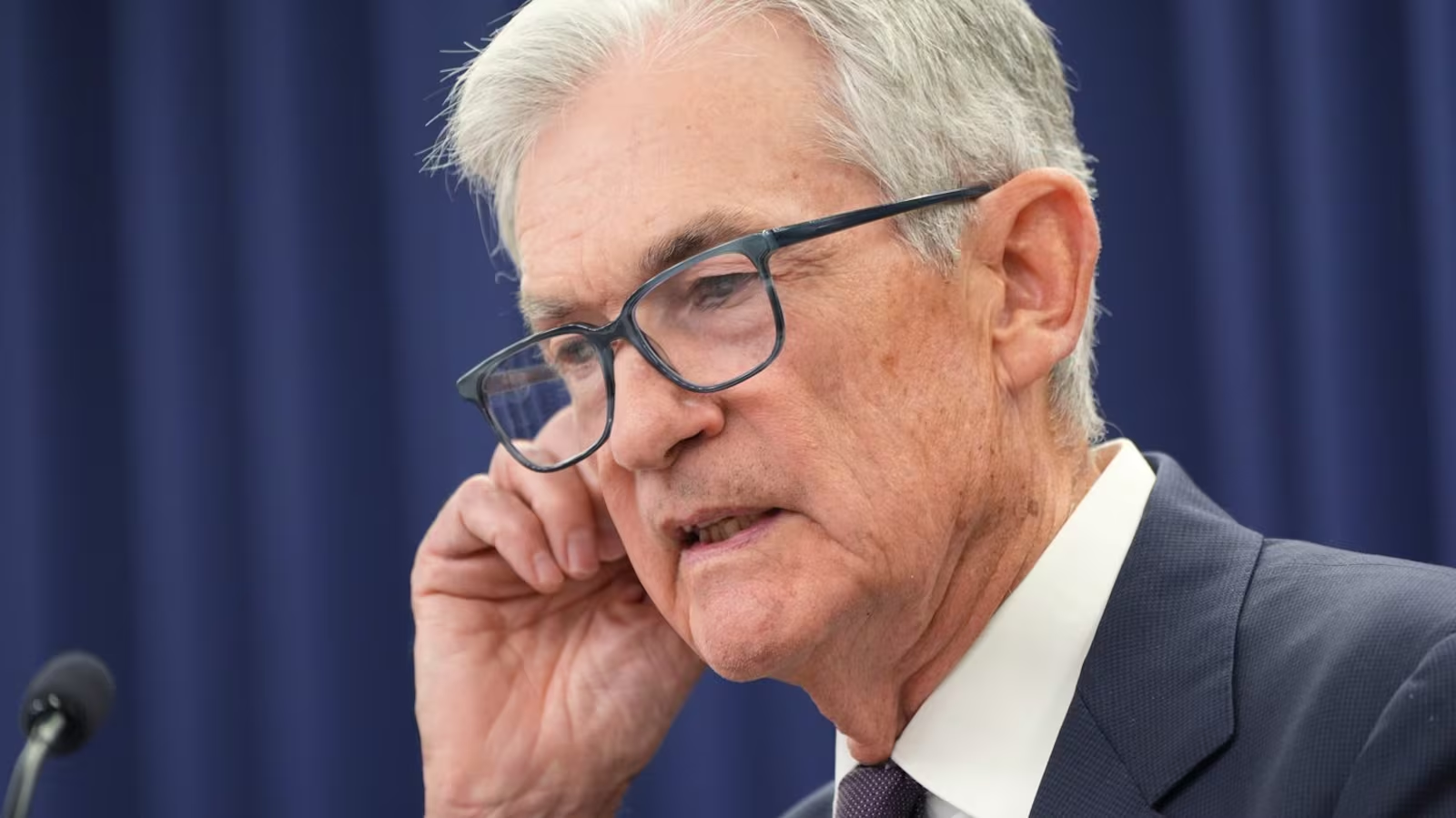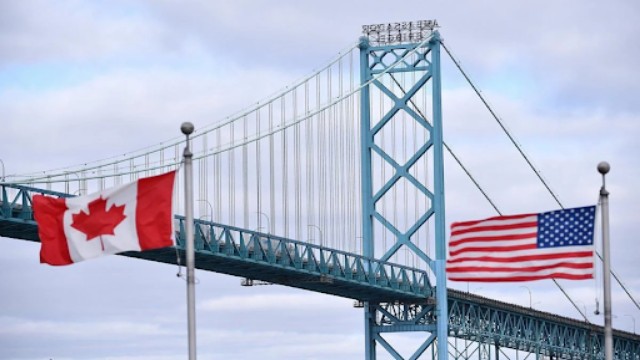
Bank of Canada Governor Tiff Macklem said this week that Canada’s economy is holding up despite U.S. tariffs. Canadian and U.S. flags were seen near the Ambassador Bridge at the border crossing in Windsor, Ontario. (Photo: Rob Gurdebeke / The Canadian Press)
Despite the increasing weight of U.S. tariffs, Canada’s economy is proving to be more durable than many experts expected. While the economic pressure is real, and the signs of strain are there, the worst-case predictions haven't materialized—at least, not yet.
Bank of Canada Governor Tiff Macklem summed it up last week in two words: “some resilience.” That statement came just days before former U.S. President Donald Trump slapped a new 35% tariff on Canadian imports—adding to already steep duties on steel, aluminum, cars, and copper.
Although the pressure is growing, there’s no economic collapse in sight. Economists admit it’s surprising. Marc Ercolao from TD Bank noted that many predicted a much weaker economy months ago. But things are holding steady. “We’re avoiding the worst-case scenario,” he explained.
Second-Quarter Snapshot: Mixed Signals, But No Crash
Statistics Canada shared an early look at how the economy performed in the second quarter. April and May showed slight dips in real GDP, but June bounced back. If these early numbers hold, overall growth for the quarter will be flat—not negative, but not booming either.
Some of the volatility, economists say, is the result of businesses rushing to act before tariffs took effect, creating temporary boosts in early months and softer numbers later.
Still, there's a clear trend forming. Ercolao pointed out that economic activity is starting to flatten. Service industries remain relatively stable, but manufacturing and transportation—both heavily tied to exports—are taking the biggest hit.
Government Response and Consumer Behaviour
To soften the impact, Canada’s federal government rolled out programs to help workers in affected sectors and ramped up spending on defence and infrastructure projects.
Even as job losses mount in some industries, other sectors continue hiring. Confidence among both businesses and consumers is gradually improving, although it remains below pre-tariff levels.
Consumer spending is still inching upward. Macklem confirmed that growth continues, even if modestly. The uncertainty around tariffs is slowing things down, but spending hasn’t stopped.
Last week, the Bank of Canada decided to leave its interest rate unchanged at 2.75%—a sign that officials aren’t panicking. Had they been truly alarmed, Ercolao believes the bank would have slashed rates instead.
Forecasts Improve, But Caution Remains
BMO economists upgraded their third-quarter outlook following recent GDP readings. They now believe Canada will dodge a technical recession this year. Strong domestic travel and recent tax cuts are giving the economy a much-needed lift.
Still, some analysts haven’t ruled out the possibility of a tariff-driven downturn. The Bank of Canada’s latest policy report includes a scenario where current tariffs stay in place. In that case, Canada would keep growing—but at a slightly slower pace.
Macklem was blunt: tariffs mean a less efficient economy. Growth will happen, just not at the same speed.
What’s Next? Eyes on CUSMA and U.S. Moves
BMO's chief economist, Doug Porter, pointed out that Trump’s new 35% tariff may sound scarier than it is. Due to CUSMA exemptions, the real effective tariff on Canadian goods is closer to 7%—only slightly higher than before.
But that could change. The trade agreement is set for renegotiation in 2026. If it expires without a new deal, the full weight of the 35% tariff could hit, making it a powerful bargaining tool—or threat.
The Bank of Canada also modelled a more severe “escalation” scenario: if the U.S. removes Canada’s CUSMA protection and tariffs go global, Canada’s GDP could fall by another 1.25% by 2027. While that outcome would be serious, experts say it’s not catastrophic.
Ercolao added that earlier recession fears were largely based on the speed of tariff implementation. But with delays and changes, businesses have had time to adjust. He believes that’s made a big difference in how Canada’s economy has managed the storm so far.
Had the U.S. gone full force with tariffs from day one, Canada might have faced a deep downturn. But now, with more time to adapt, the country is finding ways to stay on its feet—even if the ground isn’t quite as steady.