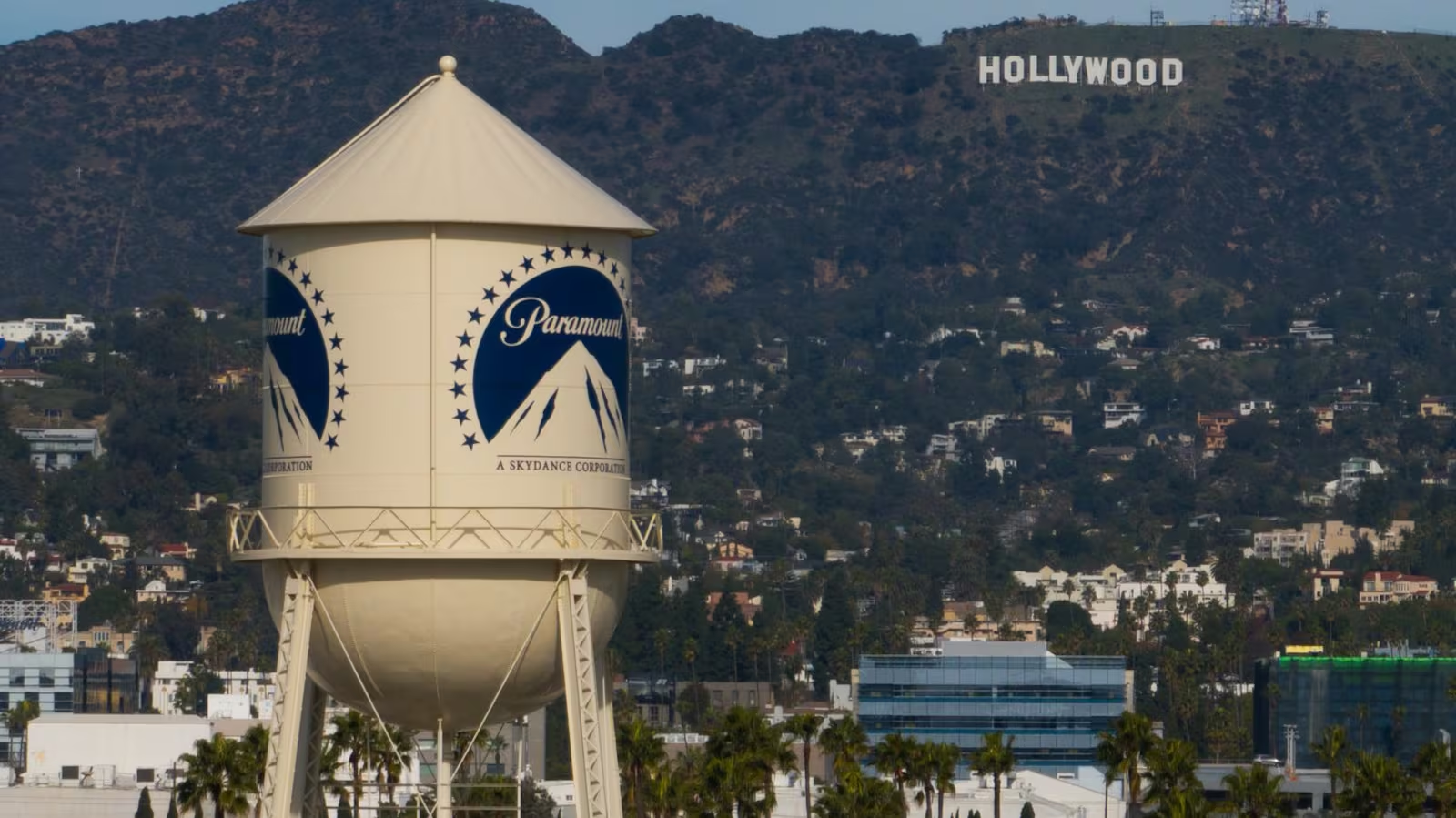
The Paramount Pictures water tower is seen in Los Angeles with the Hollywood sign in the distance. (AP Photo)
Hollywood’s biggest decision-makers and theater owners have gathered in Las Vegas for CinemaCon at a time when the future of moviegoing hangs in the balance.
Despite signs of recovery, the theatrical business is still navigating uncertainty. Box office revenues remain about 20% below pre-pandemic levels, while streaming platforms continue to reshape how audiences consume entertainment. Against this backdrop, industry leaders are confronting a critical question: how to bring people back to theaters—consistently.
A Turning Point for the Big Screen
“This is a defining moment,” said Jerry Bruckheimer, one of the most influential voices at this year’s event. He, along with producers like Emma Thomas and director Ryan Coogler, is now part of a newly formed leadership council under Cinema United.
Their goal is to strengthen theatrical releases and address key issues such as release windows—the period films stay exclusively in theaters before moving to digital platforms.
Industry leaders say collaboration between studios and theater owners is essential if cinemas are to remain a central part of the entertainment experience.
The Merger Everyone Is Watching
A major topic dominating conversations is the potential merger between Paramount and Warner Bros..
While executives from both companies are showcasing upcoming films, the industry is quietly debating what consolidation could mean. Historically, fewer studios have meant fewer theatrical releases—a concern already amplified by pandemic disruptions, labor strikes, and shifting business models.
More than 1,000 filmmakers, including prominent names like Denis Villeneuve and J.J. Abrams, have publicly opposed the merger, warning it could reduce creative opportunities and jobs.
Michael O’Leary, president and CEO of Cinema United, speaks during the “State of the Industry” presentation at CinemaCon in Las Vegas on April 1, 2025. (AP Photo)
Optimism Still Fuels the Industry
Despite the concerns, CinemaCon hasn’t lost its signature energy. Studios are unveiling ambitious slates packed with star power and big-budget productions.
Upcoming releases include films from Christopher Nolan and Steven Spielberg, along with new entries in major franchises like Star Wars, Spider-Man, and Marvel’s Avengers.
Executives say strong content remains the industry’s biggest advantage.
“There’s a real sense of optimism,” said Universal’s domestic distribution chief, pointing to early-year box office gains and audience interest in premium formats like IMAX and 70mm.
Changing Habits, New Opportunities
Audience behavior is evolving, but not disappearing. Families and younger viewers are still showing up, especially for event films and theatrical experiences that can’t be replicated at home.
Recent successes across both franchise and original storytelling suggest that theaters still hold cultural relevance—if the right films reach the right audiences.
The Big Screen’s Enduring Appeal
For many in the industry, the argument goes beyond numbers. It’s about the shared experience of watching a story unfold in a darkened theater, surrounded by strangers.
Emma Thomas described it as a “profound cultural value”—a reminder that cinema is as much about connection as it is about content.
As CinemaCon unfolds, one thing is clear: the industry is at a crossroads. But if history is any guide, Hollywood has faced disruption before—and found ways to adapt.