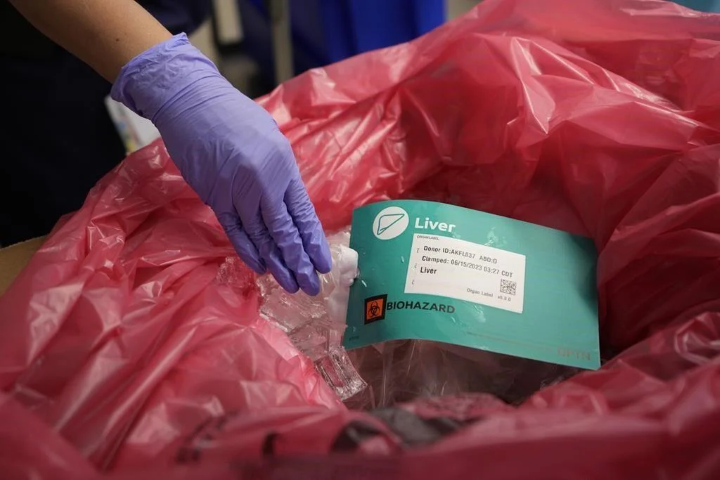
New data shows the list of people waiting for an organ donation in Quebec has decreased, thanks to a 17 percent increase in the number of people who received a transplant and a record number of donors in 2023. A liver is prepared for transport after it has been removed from an organ donor June 15, 2023, in Jackson, Tenn. THE CANADIAN PRESS/AP-Mark Humphrey
Recent data reveals a decline in the number of individuals awaiting organ transplants in Quebec, credited to a 17 percent surge in transplant recipients and a record number of donors throughout 2023.
As of December 31, Transplant Quebec reported 853 individuals on the waiting list, a decrease from 913 individuals recorded on the same date in 2022. The organization's data, released Wednesday, indicated 41 deaths among those awaiting organ transplants last year, marking a decrease of six fatalities compared to the previous year.
Martine Bouchard, the executive director, explained that some candidates are removed from the list due to deteriorating health conditions. However, the significant increase in transplant recipients might also influence the reduced waitlist count.
The number of individuals referred for organ donation rose by nearly 35 percent, totaling 1,156 referrals in 2023. Of these, 270 referrals were deemed admissible, including 21 donors who underwent medical assistance in dying (MAID). An additional 151 referrals from MAID recipients did not meet the qualifications.
Bouchard attributed this surge in referrals partly to the deployment of coordinating physicians in most of the province's healthcare facilities. These physicians collaborate with hospital staff and Transplant Québec, providing training and identifying potential donors.
The 2023 report highlighted that the wait time for lung transplants hit a record low of 57 days on average, while the heart transplant waitlist averaged 32 days, the lowest in a decade.
Organ transplants increased by 20 percent, facilitated by 206 deceased donors who contributed 696 organs, marking a record high. However, Bouchard cautioned that the current resources are strained, posing challenges to sustain this growth.
While Quebec showed improvement, Bouchard stressed that the number of potential donors still falls short of the province's capacity. Quebec recorded 23 deceased donors per million inhabitants in 2023, up from 19.7 the previous year, but lagging behind rates in Spain and the United States.
Bouchard emphasized the need for increased resources throughout the donation and transplant process to achieve rates comparable to those in Spain and certain U.S. jurisdictions.
The Montreal metropolitan region maintained its lead in organ donor referrals per capita, with a rate of 26.3 potential donors per 100,000 inhabitants.