Tim Andrews, who received an experimental pig kidney transplant, now has a human organ. Credit: CNN
Tim Andrews is living proof of a medical first that researchers have long hoped was possible. One year after receiving an experimental pig kidney, the New Hampshire man has now become the first person in the world to successfully receive a human kidney after undergoing a xenotransplant.
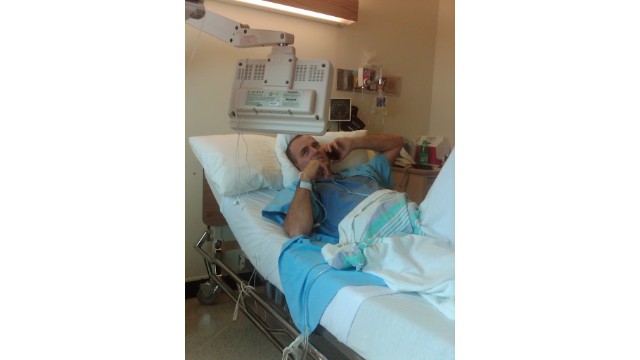
“I’m the first one to cross that bridge,” Andrews said from his hospital bed this week. “Nobody’s ever had a pig kidney and then gone on to get a human kidney. That’s a pretty incredible thing.”
From Last Hope To Landmark Moment
Andrews, 67, has diabetes and advanced kidney failure. Before his experimental surgery, dialysis dominated his life, tying him to a machine several days a week and leaving him physically and emotionally drained. The treatment, meant to sustain life, had become unbearable.
In January 2025, Andrews received a genetically modified pig kidney at Mass General Brigham in Boston. The procedure was part of a cutting-edge effort to explore xenotransplantation — the use of animal organs to address the global shortage of human donors.
The pig kidney worked for 271 days, longer than any previous case. When signs of rejection emerged, doctors removed the organ in October, and Andrews returned to dialysis. His health deteriorated rapidly.
“I didn’t think I’d make it another year,” Andrews said. “I was exhausted. I was sick all the time.”
A Call That Changed Everything
Just before midnight on January 12, Andrews received a call that would change his life. Doctors told him a human kidney — nearly a perfect match — had become available. Surgery was scheduled for the next morning.
The transplant took about three hours. Within days, Andrews was recovering well and preparing to return home. Doctors say his body has shown no signs of rejecting the new organ.
For physicians, the case offers rare insight. Andrews’ pig kidney not only kept him alive but also did not create antibodies that could complicate a future human transplant — a concern long debated in transplant medicine.
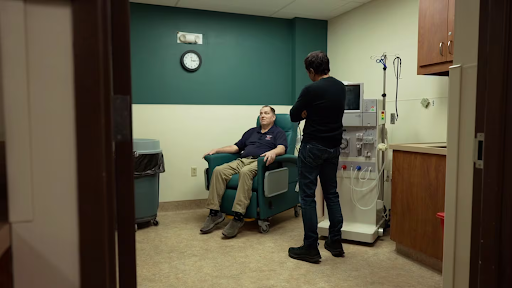
Tim Andrews visited his old dialysis centre.
Why Xenotransplants Matter
More than 100,000 people in the U.S. are waiting for an organ, and the majority need kidneys. Dialysis, while lifesaving, offers limited long-term survival and severely impacts quality of life.
“Dialysis can’t replicate what kidneys do around the clock,” said Dr. Leonardo Riella, Andrews’ transplant physician. “The burden on patients is enormous.”
Riella says xenotransplantation could serve as a critical bridge — keeping patients healthier while they wait for a human organ.
Even in Andrews’ case, where rejection eventually occurred, the pig kidney allowed him to avoid dialysis for nine months. That time, doctors say, likely preserved his strength and improved his chances of surviving a second transplant.
Lessons From Rejection
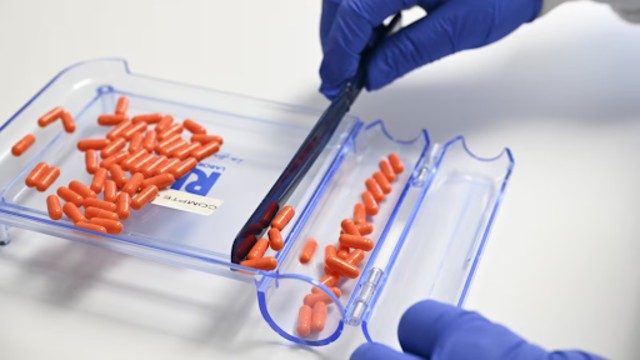
The pig kidney, which Andrews affectionately named “Wilma,” required intensive immune suppression — more than 50 pills a day. Over time, rejection slowly damaged the organ.
Researchers from Mass General Brigham and biotech company eGenesis say studying the rejection process has already improved their understanding of how to fine-tune immune suppression for future patients.
Since Andrews’ initial surgery, two more xenotransplants have been performed, with a formal clinical trial expected to begin soon.
A Future Beyond Dialysis
Experts believe xenotransplantation could eventually move from a temporary solution to a long-term option. Some predict patients may one day alternate between animal and human organs over their lifetimes.
“Our goal,” Riella said, “is to make dialysis obsolete as a long-term treatment.”
For Andrews, the science is personal. He credits the pig kidney with keeping him alive long enough to receive a human one.
“If I hadn’t taken that chance, I wouldn’t be here,” he said. “Now I can think in years, not months.”
A Message Of Gratitude And Hope
Andrews says he plans to spend his life advocating for organ donation. In a message posted online, he thanked the family of his donor, calling their loved one a hero.
“Your gift saved my life,” he wrote. “And it has given hope to millions.”
For medicine, Andrews’ journey marks a turning point. For patients waiting on dialysis, it offers something equally powerful — proof that a bridge to a second chance is no longer theoretical.