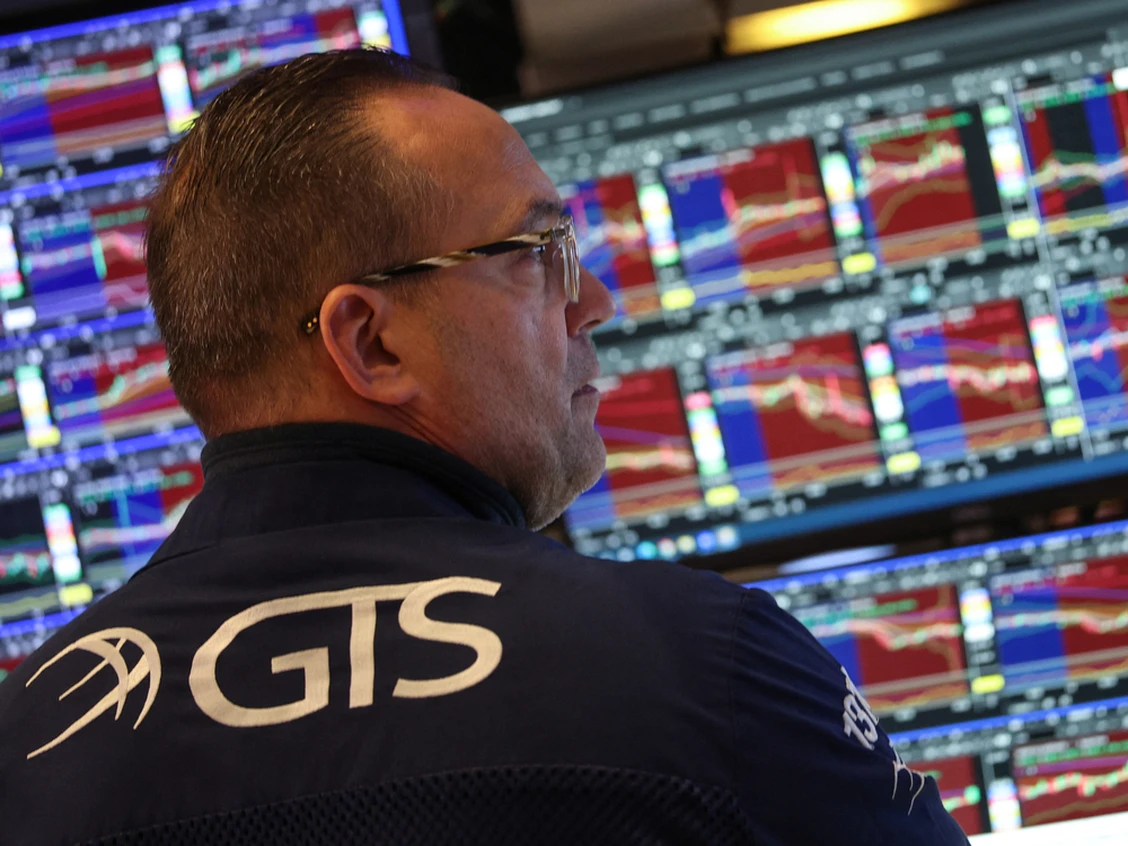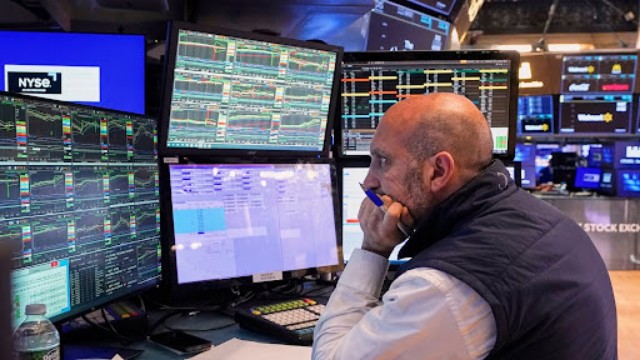
James Denaro, a specialist, is seen at his workstation on the floor of the New York Stock Exchange on Tuesday, May 20, 2025. (Photo: Richard Drew/AP)
Wall Street took a hard hit on Wednesday as rising U.S. Treasury yields and growing concerns over national debt spooked investors. The sharp climb in bond yields weighed heavily on stocks, dragging all three major indexes deep into the red.
The S&P 500 dropped 1.6%, marking its second consecutive loss after breaking a recent six-day win streak. The Dow Jones Industrial Average fell by 816 points, a 1.9% loss, while the Nasdaq slid 1.4%.
Initially, the stock market had only dipped slightly after mixed earnings reports from major retailers like Target. However, things worsened quickly after the U.S. Treasury’s 20-year bond auction results were released. To lure buyers, the government had to offer a 5.047% yield, the highest seen in recent memory. This raised red flags for investors, as it signals that the U.S. government is struggling to borrow money without paying steep interest.
The higher yield in the 20-year bonds triggered a surge across other Treasury bonds, including the commonly tracked 10-year note, which jumped to 4.59%, up from 4.48% the day before. That’s a major move in bond terms, and it signaled deeper economic uncertainty.
According to BTIG’s Jonathan Krinsky, investors are now fully tuning into bond market movements. The 30-year yield also soared above 5%, nearing levels last seen in 2023.
Behind these numbers is a deeper worry: the U.S. government’s debt is rising fast. Proposed tax cuts in Washington are expected to add trillions more to the debt. At the same time, tariffs introduced under former President Trump are still causing ripples. Not only are they expected to raise inflation, but they also increase costs for businesses.
The situation is not unique to the U.S. Governments in developed countries around the world are also borrowing more, pushing their own bond yields higher. With central banks, including the Federal Reserve, reducing their bond holdings, this pressure is only intensifying.
When the government pays more to borrow, everyday people feel the pinch. Interest rates on mortgages, car loans, and credit cards often follow suit. This can cool spending and slow the economy. It also makes stocks less attractive as investors seek safer returns in bonds.
Last week, Moody’s Ratings downgraded the U.S. credit rating, becoming the last of the big three agencies to do so. While analysts at Bank of America said the downgrade itself might not be disastrous, it served as a wake-up call for many investors who had been overlooking the U.S. fiscal crisis.
Retailers were hit hard. Target fell 5.2% after reporting weaker-than-expected earnings. The company also noted that customer boycotts and political pressure led them to scale back some of their diversity and inclusion efforts—actions that came with consequences on both sides of the political aisle. More troubling for Wall Street, Target cut its profit forecast for the full year.
Another retailer, Carter’s, saw a 12.6% drop after slashing its dividend. CEO Doug Palladini explained that the company is bracing for higher product costs due to proposed tariffs and is preparing to invest more in the near future.
All in all, the numbers were gloomy:
- S&P 500 closed at 5,844.61, down 95.85 points
- Dow Jones dropped to 41,860.44, down 816.80 points
- Nasdaq fell to 18,872.64, down 270.07 points
More companies are now warning that the ongoing trade uncertainties and new tariffs are making it nearly impossible to plan ahead. Walmart, for example, hinted it may raise prices if Trump’s tariffs stick around.
While U.S. stocks had started to bounce back after Trump rolled back some earlier tariffs, hopes are now pinned on whether a more permanent solution can be reached through new trade deals.
Elsewhere, the global markets were mixed. London’s FTSE 100 inched up by 0.1% following a report of the highest inflation in over a year in the UK. Meanwhile, Japan’s Nikkei 225 fell 0.6% as export numbers slipped, likely due to trade barriers and tariffs.