Court documents reveal Hudson’s Bay Company’s dire finances, with nearly $1 billion in debt owed to fashion brands, banks, and governments. With only $3 million in cash, the company is struggling to pay its employees.
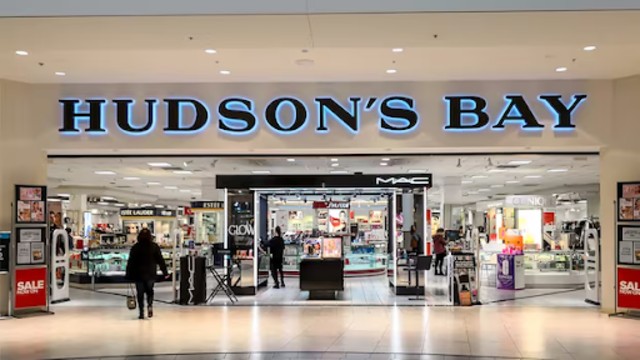
The retail landscape in Canada is about to change drastically as Hudson’s Bay, the country’s oldest company, faces a looming liquidation. Unless a last-minute financial solution emerges, the historic department store chain will begin shutting down operations as early as next week.
The End of an Era
Founded in 1670, Hudson’s Bay has been a cornerstone of Canadian retail for centuries. The company, which operates 80 stores across the country, announced that extensive efforts to secure financing have failed, forcing it to prepare for a full-scale liquidation. Pending court approval on Monday, the process is expected to conclude by June, marking the end of a legacy.
This closure would have devastating consequences, with over 9,300 employees at risk of losing their jobs. The shutdown will also impact three Saks Fifth Avenue stores and 13 Saks Off 5th locations, which operate under a licensing agreement with Hudson’s Bay.
Retail analyst Liza Amlani, co-founder of the Retail Strategy Group, expressed disappointment over the news.
"It’s really, really sad because so many people will be affected. Hudson’s Bay is an iconic brand that holds a special place in Canadians’ hearts. Its absence will leave a huge gap in the market," she said.
A Long-Coming Downfall
Industry experts believe that Hudson’s Bay’s decline was inevitable. Amlani pointed out poor investments in store maintenance, with reports of broken escalators and air-conditioning issues in Vancouver locations. Additionally, inconsistent store hours failed to align with malls, frustrating shoppers.
"Department stores are supposed to be anchor stores—gateways to malls. But when your hours don’t match the mall’s schedule, it’s a huge issue," Amlani explained.
Despite its dire financial situation, Hudson’s Bay remains hopeful. CEO Liz Rodbell emphasized the company’s commitment to finding a solution, highlighting the overwhelming support from customers and employees.
"Our team has worked tirelessly to identify a viable path forward. We are deeply moved by the heartfelt stories customers have shared about what Hudson’s Bay has meant to their families and communities," Rodbell said in a statement.
The Role of U.S. Ownership
Although deeply tied to Canadian history, Hudson’s Bay has been led by American investors for years. In 2008, real estate tycoon Richard Baker acquired the company through his firm, National Realty and Development Corp., for $1.1 billion.
Marketing expert Joanne McNeish, a professor at Toronto Metropolitan University, believes this marked the beginning of Hudson’s Bay’s slow downfall.
"Investment firms are like house flippers—they don’t fix underlying problems. Instead, they extract profit and sell the remaining issues to the next buyer," she explained.
Baker took the company public in 2012, only to privatize it again in 2020, just before the COVID-19 pandemic disrupted global retail markets. Many shareholders remained unconvinced of his leadership, especially as the company’s stock value plummeted while its real estate assets remained valuable.
Massive Debt and Creditor Battles
According to court filings, Hudson’s Bay owes more than $950 million to various landlords, suppliers, and brands, including fashion giants Ralph Lauren, Chanel, Diesel, and Estee Lauder. The company recently sought creditor protection, citing factors such as reduced consumer spending, U.S.-Canada trade tensions, and declining mall foot traffic.
To manage its debts, the company plans to sell off assets, potentially through an auction if multiple buyers emerge. However, due to limited access to emergency funding, the only viable option seems to be a store-by-store liquidation, with a deadline set for June 15.
Union Demands Transparency
The crisis has left Hudson’s Bay employees in limbo. The Unifor union, representing around 320 workers at select locations, has urged the company to honor legal obligations, including severance and benefits.
"Workers’ livelihoods are on the line. They deserve full transparency from HBC," said Lana Payne, Unifor’s national president.
The Fallout for Malls and Retail Spaces
Beyond job losses, a full liquidation would leave massive retail spaces empty across Canada. Hudson’s Bay locations often span multiple floors, making them difficult to replace.
Ontario will be the hardest hit, as it is home to 32 stores and more than half of the company’s workforce. Other provinces affected include British Columbia (16 stores), Alberta (13), Quebec (13), Manitoba (2), Nova Scotia (2), and Saskatchewan (2).
A Legacy in Jeopardy
The potential disappearance of Hudson’s Bay marks a turning point in Canadian retail history. Once a thriving company with deep roots in the country’s past, its struggles highlight the challenges traditional department stores face in today’s evolving market.
While Hudson’s Bay still hopes for a last-minute rescue, the clock is ticking. Unless a financial miracle happens, Canada’s most historic retailer will soon become just another chapter in the history books.