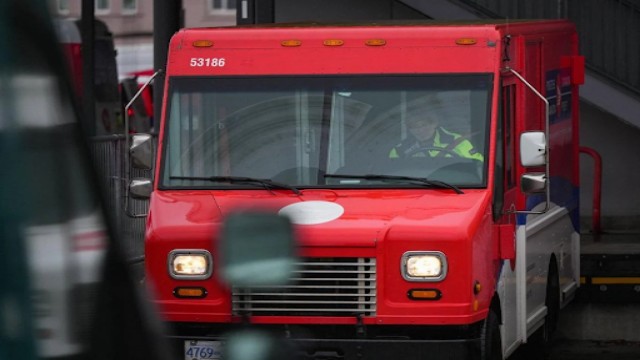
A Canada Post worker is seen parking a mail truck at a delivery center in Vancouver, British Columbia (Photo: Darryl Dyck / The Canadian Press)
Efforts to resolve a deepening dispute between Canada Post and its unionized workers have hit a serious roadblock. Canada Post has formally rejected a proposal from the Canadian Union of Postal Workers (CUPW) that suggested settling ongoing disagreements through binding arbitration.
This comes just days after Employment Minister Patty Hajdu encouraged both parties to move toward arbitration to break the deadlock. Instead of easing tensions, the disagreement appears to have escalated.
Canada Post spokesperson Lisa Liu stated the union’s proposal ignored the recommendations made in a government-commissioned report aimed at modernizing the 158-year-old service. The report had called for key changes like more flexible delivery routes and weekend part-time jobs with equal pay and benefits. Liu said it was “unacceptable” for the union to overlook these ideas in its arbitration terms.
In response, the union insisted its goal is still to return to the bargaining table. But union leaders accused Canada Post of trying to rewrite contracts through government influence, instead of negotiating fairly.
The postal service disagreed, pointing out that the union has not responded to its last formal offer made on May 28. The only communication since then, Canada Post noted, came via federal mediators late last week — and even that was minimal.
To push back, the union is now urging its members to sign a letter to the employment minister. The letter opposes a forced vote on Canada Post’s latest offer — something the corporation requested. The union argues this move would unfairly benefit management and could cause internal strife among workers, depending on how such a vote plays out.
In a message to workers, CUPW president Jan Simpson acknowledged rising tensions, but reminded members that their struggle is with management — not each other.
Canada Post’s most recent offer includes several concessions: an end to mandatory overtime, a signing bonus ranging from $500 to $1,000, and cost-of-living increases that would kick in sooner if inflation rises. However, some elements remain unchanged, including a four-year 14% wage increase and a plan to hire part-time workers for weekend deliveries — a major sticking point for the union.
Last week, Minister Hajdu encouraged both parties to return to the bargaining table while also working on terms for arbitration, suggesting a two-track approach to reach a deal. So far, progress on both paths has stalled.
The union had previously threatened to strike but pulled back from that plan in May. Instead, they launched an overtime ban starting May 23, which remains in effect.
If a strike happens, it would be the second major disruption in less than a year. Postal workers already walked off the job for 32 days during the peak of the holiday season last November and December — part of the same contract battle that remains unresolved today.