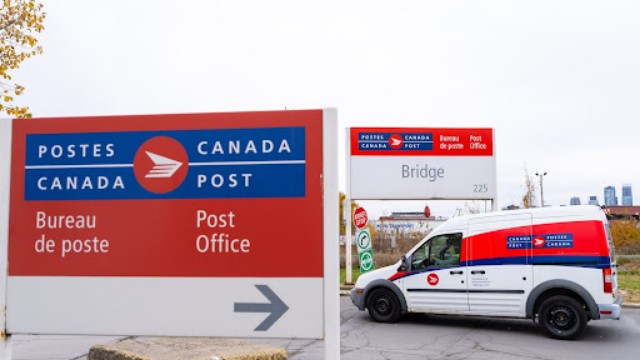
A Canada Post truck is seen leaving its Montreal depot on Monday, November 4, 2024. (Photo: Christinne Muschi/The Canadian Press)
Canada Post has successfully signed a new contract with its second-largest workers’ union, the Canadian Postmasters and Assistants Association (CPAA), while talks continue with its biggest union, the Canadian Union of Postal Workers (CUPW). This development comes after a long 18-month negotiation process.
New Contract Finalized with CPAA
The freshly signed deal affects around 8,500 employees under CPAA, most of whom work in post offices across rural Canada. These workers serve as the backbone of postal services in remote and less accessible regions, often managing operations in smaller communities.
The agreement includes a structured wage increase totalling 11% over the next three years, backdated to the beginning of 2024. Here's the breakdown:
- 6% raise in 2024
- 3% raise in 2025
- 2% raise in 2026
The raise ensures rural postal workers see a more stable income, matching cost-of-living increases and helping to address wage concerns raised during negotiations.
Ongoing Challenges with CUPW
While the agreement with CPAA marks progress, the road ahead with CUPW remains rocky. Canada Post and CUPW have also been in talks for the past 18 months, but are yet to reach common ground. CUPW, the largest union in the postal network, represents approximately 55,000 workers.
Recent updates suggest that negotiations with CUPW are facing serious hurdles. The union has been in a legal strike position, and since May 23, all CUPW members have been under an overtime ban. This has put pressure on Canada Post’s ability to maintain timely services, particularly as talks drag on without a resolution.
What’s at Stake?
The ongoing talks with CUPW hold significant importance for both parties. Postal workers are pushing for improved working conditions, fair pay, and more job security. Meanwhile, Canada Post faces the challenge of balancing these demands while maintaining financial stability in an era where traditional mail use continues to decline.
If no deal is reached soon, the situation could escalate, potentially leading to job actions that may delay mail and package deliveries nationwide. That would especially impact businesses and individuals who still depend on traditional postal services.
Looking Ahead
While the agreement with CPAA provides some relief, the uncertainty surrounding the CUPW negotiations leaves Canada Post in a tight spot. The next few weeks will be crucial, with the public watching closely for updates. A strike or further disruptions could ripple across rural and urban communities alike.