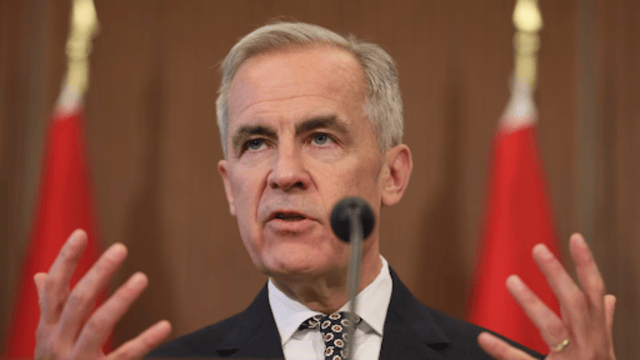
Prime Minister Mark Carney speaks to reporters in Ottawa on June 19, 2025. The Canadian Press
Canada’s Parliament passed a major projects bill Friday evening, just in time to move it forward before Canada Day. Conservatives voted with the Liberal government to push the bill through the House of Commons. The new legislation, called Bill C-5 or the One Canadian Economy Act, now heads to the Senate for final approval.
What the Bill Does
This bill gives the government power to speed up the approval of certain large-scale projects. These are projects considered to be in Canada’s national interest. The goal is to remove delays and cut red tape, especially during economic uncertainty.
Prime Minister Mark Carney explained why the bill moved so fast. “We are in a crisis,” he said. He pointed to places like Windsor and Hamilton where people are already feeling the economic pressure. Carney said the bill helps Canada stay strong and independent during tough global times.
Two-Part Vote in the House
The bill went through two votes because it contains two separate sections. One part focuses on removing trade barriers within Canada. The other part deals with fast-tracking large projects. Some MPs supported the trade section but opposed the project section.
Carney crossed the floor after the vote to shake hands with Conservative MPs Andrew Scheer and Melissa Lantsman, signaling a rare moment of agreement between political rivals.
Premiers Want Input
Premiers across Canada sent in their lists of suggested projects. But no final national list exists yet. Carney said more conversations will happen before any decisions are made. He made it clear that no project will be forced on any province or territory.
There’s already disagreement. Alberta’s Premier Danielle Smith supports a pipeline through B.C. But B.C.’s Premier David Eby says there’s no funding or formal plan for that pipeline. Eby also said that B.C. must play a key role in any future trade plans, calling his province a gateway to Asia-Pacific markets.
Concerns from Indigenous Groups
Some Indigenous leaders and environmental groups have spoken out against the bill. They worry it gives the federal cabinet too much power and may ignore important laws and rights. After pressure, the transport committee removed the Indian Act from a list of laws that could be bypassed.
Carney tried to calm fears by announcing an Indigenous advisory council. This group will make sure Indigenous rights, especially under Section 35 of the Constitution, are respected.
He also promised upcoming meetings with First Nations, Inuit, and Métis leaders. Other federal ministers will join those talks to ensure full consultation.
What’s Next?
The Senate will review the bill before June 27. The House of Commons is now on break until September. Business leaders and politicians hope the bill leads to better infrastructure and job growth, but many still wait to see how it unfolds.