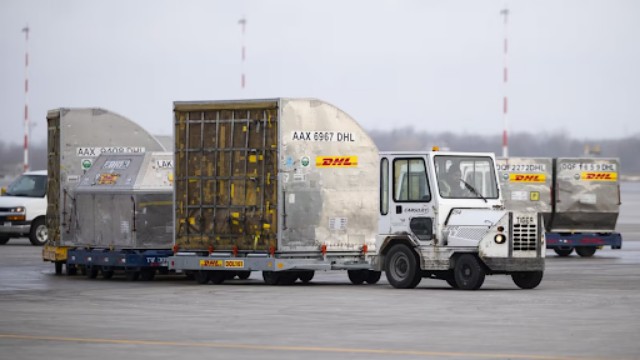
DHL containers are seen being moved across the runway at John C. Munro Hamilton International Airport in Hamilton, Ontario, on Wednesday, March 26, 2025. (Photo credit: The Canadian Press/Nick Iwanyshyn)
After nearly three weeks of disruption, over 2,100 workers at DHL Express Canada have voted in favour of a new contract, officially ending both their strike and the company’s lockout. This development marks a major turning point in a labour dispute that had drawn national attention.
The new four-year deal, supported by 72% of voting union members, comes after prolonged negotiations and rising tensions between the workers and DHL. The workers, who handle duties ranging from driving and courier services to warehouse and clerical tasks, had been off the job since June 8. Hours after a midnight lockout began, they hit the picket lines.
Workers Win Better Pay and Benefits
The new agreement brings substantial gains for the workforce. According to Unifor, Canada’s largest private sector union, the deal includes a 15.75% wage increase, enhanced pensions for hourly employees, and a brand-new pension plan for owner-operators. There are also improved disability payments, added mental-health support, increased severance pay, and updates addressing workplace technology and remote work policies.
“I’m incredibly proud of our national bargaining team,” said Unifor National President Lana Payne in a statement. “They stood firm and earned the respect they deserve.”
Return to Work Starts June 30
DHL Express confirmed in a separate statement that full operations across Canada will resume starting June 30. “We’re thrilled to welcome back our team and will focus on delivering top-quality service to our customers,” the company said.
A Historic Labour Battle
The strike was especially notable because it coincided with the introduction of federal legislation that prohibits the use of replacement workers—commonly referred to as "scabs"—during labour disputes. DHL had reportedly brought in replacement staff during the early part of the strike, a move Payne criticized as undercutting fair wages. Although legal at the time, the new law took effect on June 20, prompting DHL to shut down operations that same morning.
“This was a historic moment for our union,” Payne said. “We became the first test case for Canada’s anti-scab legislation. Our members held their ground, and in the end, they secured a fair deal.”
Delayed Packages, But Progress Ahead
Although no exact timeline was provided for when all workers would return, the union thanked the public for their patience and promised efforts were underway to clear the backlog of deliveries. The strike had affected a wide range of businesses relying on DHL, including major brands like Lululemon, Shein, and Siemens.
Now, with services gradually returning to normal, both the company and its workers are preparing to move forward—hopefully, with a renewed sense of respect and partnership.