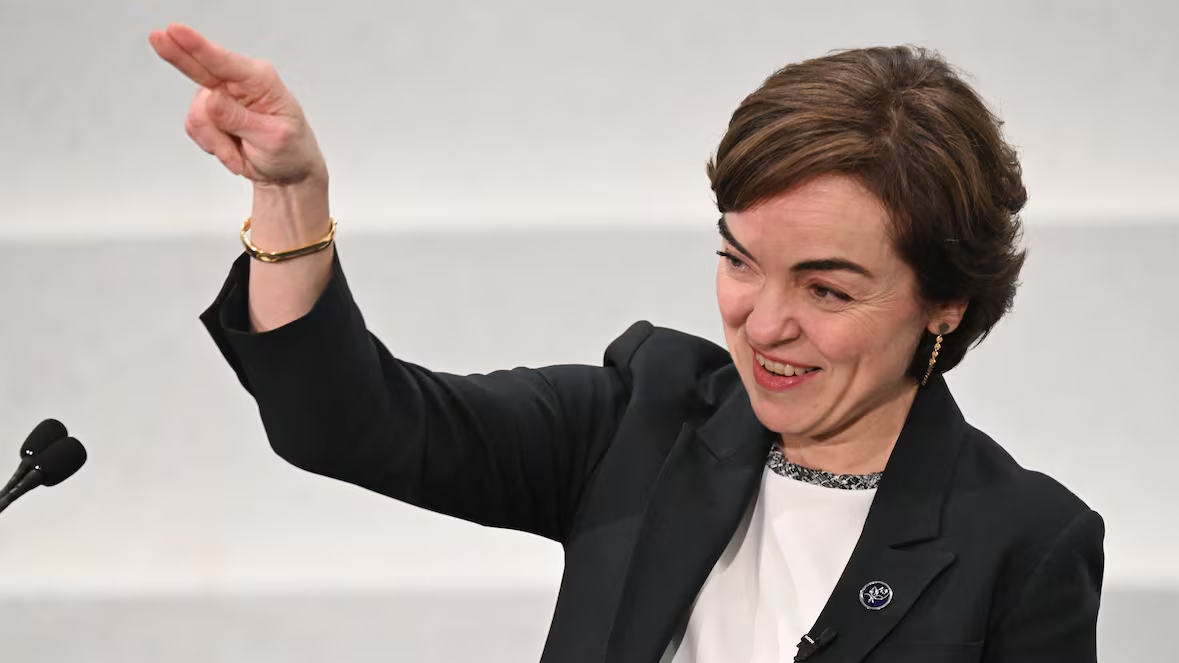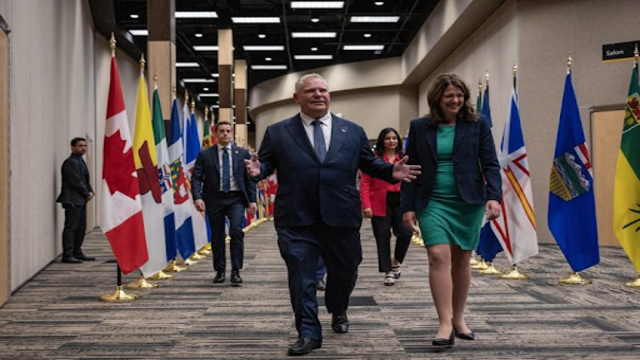
Premier of Ontario Doug Ford, left, and Premier of Alberta Danielle Smith enter the First Minister’s Meeting in Saskatoon on Monday, June 2, 2025. The Canadian Press
Canada’s energy and trade landscape may soon get a powerful jolt, as Alberta Premier Danielle Smith and Ontario Premier Doug Ford unveiled a bold new partnership in Calgary. The two leaders signed a pair of memorandums of understanding (MOUs) on Monday, laying the foundation for energy corridor studies and enhanced interprovincial trade.
Pipelines, Rail, and a Push for Progress
At the heart of the agreement is a shared commitment to exploring new energy corridors. These include potential pipeline and rail routes connecting Alberta’s oil, gas, and critical minerals to Ontario’s James Bay and other strategic locations in the province’s south.
While no routes are confirmed, extensions to current pipelines and new rail links—especially around the mineral-rich Ring of Fire—are on the table. The goal? Attracting private-sector investment while maximizing Canadian supply chains, especially Ontario-made steel.
Premier Ford emphasized the study’s role in mapping out project financing and de-risking opportunities, including public-private partnerships. It’s a strategic move as both provinces seek more economic independence amid rising global uncertainties.
Trade Talks Go Beyond Big Industry
The second MOU took a more everyday turn. Ontario pledged to open its markets wider to Alberta-made beer, wine, and spirits. In return, Alberta committed to purchasing more Canadian-made vehicles for its public fleet—giving a boost to Ontario’s auto industry.
“This isn’t just about business—it’s about building a stronger Canada,” Ford said, addressing the crowd with conviction. “We’ve got to start being self-reliant on each other.”
Smith echoed that sentiment, describing the partnership as a roadmap for long-term investment and national cooperation.
Not Everyone’s Raising a Glass
However, the announcement didn’t land well with environmental advocates. Critics argued the move was less about clean energy solutions and more about political posturing, especially with U.S. politics and tariffs looming large in Canadian conversations.
In a strongly worded statement, Environmental Defence accused the premiers of undermining climate efforts for short-term economic gain. “Clean air, safe water, and climate stability shouldn’t be the cost of growth,” the group said.
Beyond the Press Room: Pancakes and Politics
Earlier in the day, hundreds gathered outside the McDougall Centre for Smith’s Calgary Stampede pancake breakfast. As sausages sizzled and flapjacks flew off the grill, Smith and Ford shared laughs behind the flat-top. The morning ended with a playful gift—a Calgary Stampede belt buckle for Ford, which he waved above his head to cheers from the crowd.
The casual atmosphere couldn’t completely mask deeper tensions, though. Smith acknowledged that Ottawa’s energy regulations remain a sore point. She’s been vocal in her push for the repeal of net-zero targets, the emissions cap, and the West Coast tanker ban. And she believes federal leaders are finally listening.
“We’ve had a decade of bad laws,” Smith said. “But now, they’re hearing how frustrated people really are.”
Critics Call for Real Action
Alberta Opposition Leader Naheed Nenshi weighed in, cautiously welcoming trade talks but criticizing the lack of concrete changes. “If this government truly wants to remove trade barriers, they should start with licensing rules, building codes, and labour standards,” he said.
Until then, Nenshi warned, such announcements may offer more spectacle than substance.
Still, with flashy belt buckles and bold ambitions, Smith and Ford have signalled that collaboration—not just conversation—could be key to shaping Canada’s future.