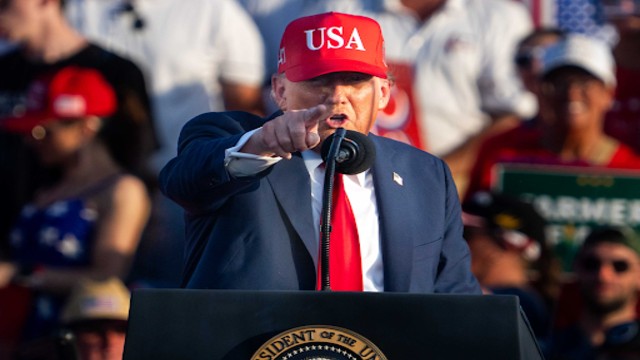
Trump on Democrats: "They hate Trump. But I hate them too. I really do. I hate them" at Iowa on 4th July 2025.
In a political climate already running hot, former U.S. President Donald Trump just added fuel to the fire. During a Fourth of July rally in Iowa, Trump took his usual rhetoric up a notch, openly declaring, “I hate them. I really do. I hate them.” His target? Congressional Democrats.
This wasn’t sarcasm. This wasn’t a throwaway line. This was a direct statement about elected officials—and, by extension, the millions of Americans who vote for them.
Rewriting the Fourth of July Script
Independence Day usually invites unity, reflection, and national pride. But Trump’s take on the holiday went in a completely different direction. At 1:31 a.m., he boasted on social media about the House vote on the GOP’s policy bill, writing: “WOW! 218-2. Has a number like that ever happened before???”
It hadn’t. And not in the way he suggested.
The bill didn’t pass with two opposing votes—it passed 218-214. Trump simply erased the presence of every Democratic vote, reframing the numbers to create the illusion of overwhelming Republican consensus. The implication was loud and clear: in his eyes, Democratic voices don’t count.
From ‘The Art of the Deal’ to the Politics of Division
This kind of language isn’t new for Trump. In 2016, he promised bipartisan cooperation, vowing to get lawmakers from both parties “in a room” to pass real laws—not executive orders. But eight years later, that vision seems like a distant memory.
Instead of compromise, we’re seeing confrontation.
Rather than negotiation, Trump now embraces vilification.
Even during his 2024 campaign, Trump labeled those who opposed him as “evil” and painted Democrats as “the enemy within.” His latest remarks in Iowa only reinforce that he no longer sees Democrats as fellow Americans with different views—but as threats to the nation itself.
The Chilling Echo of Authoritarian Playbooks
Historians and political scientists have long warned about the dangers of demonizing political rivals. It’s a tactic rooted not in democracy, but in authoritarianism. By stripping legitimacy from opponents, leaders open the door to extremism, erode trust in institutions, and destabilize democratic norms.
And when a former president openly says his opposition deserves hatred—on a day meant to honor freedom and unity—it becomes more than just harsh talk. It becomes a warning sign.
Red, White, and Divided
In recent years, Trump has increasingly aligned himself with the grievances of “Red America.” His rhetoric rarely appeals to national unity, and often dismisses large segments of the population. His Independence Day message? You’re either with him—or you’re the enemy.
As Americans reflect on what freedom means, Trump’s words offer a stark reminder: democracy isn’t just about winning votes. It’s about respecting those who lose them too.