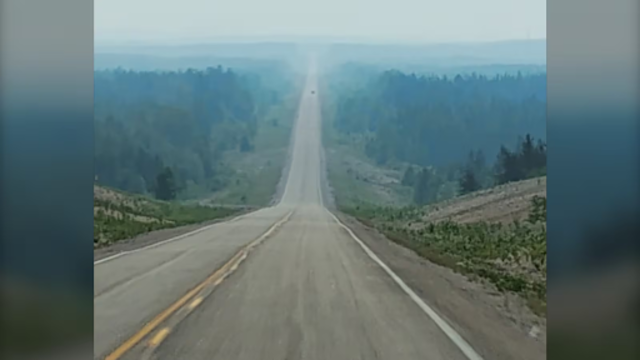
Thick smoke from wildfires in northern Manitoba has led more than 6,000 residents to leave their homes for safety. CTV
Wildfires in northern Manitoba continue to cause serious problems for residents. Hundreds of people have been forced to leave their homes as smoke fills the air, making breathing difficult and health risks high. Many northern communities face poor air quality, forcing urgent evacuations.
Health Risks for Vulnerable Residents
Kathy Ross lives in the Cross Lake community on Pimicikamak Cree Nation. She has asthma and COPD, a lung disease that makes breathing hard. Kathy uses three puffers daily, and the wildfire smoke has made her condition worse.
“It hasn’t been a pleasant experience,” she said. “When I am around smoke, it makes my lungs work harder, and then I end up in either the hospital or a nursing station.”
Cross Lake has three large wildfires nearby, including one over 84,000 hectares to the west. The thick smoke seeps through windows and into homes. Kathy shared how the smoke once caused her to panic and cough badly, even when using her puffers.
Because of her condition, Kathy was flown to Winnipeg for medical care. Pimicikamak Cree Nation Chief David Monias is working hard to evacuate the most vulnerable people.
“Many in our community live with respiratory conditions that make it difficult to breathe even under normal conditions,” he said. “This wildfire smoke has made things worse.”
Evacuations Expand to Other Communities
Nearby Nisichawayasihk Cree Nation has also started medical evacuations. They asked their most at-risk members to leave because of the heavy smoke near Thompson. Priority one includes people with serious illnesses, heart problems, asthma, COPD, and those who often need hospital care.
Jessie Horodecki, the director of the Nisichawayasihk Personal Care Home, said the smoke was thick and harsh. All 24 residents were moved to Winnipeg. Some residents struggled badly with the smoke, even vomiting.
“We have three air scrubbers, and I am super thankful for them, but they can only do so much,” she said. “The smoke is an imminent risk, not just to our residents but to all Priority 1s in our community.”
Expert Warns of Long-Term Effects
Chris Pascoe, a health expert at the University of Manitoba, warned that wildfire smoke is dangerous, especially for children and pregnant people. Breathing the smoke can cause long-term lung problems and increase asthma risks.
He advised people to stay indoors in well-ventilated areas with HEPA filters. If going outside is necessary, wearing N95 masks helps protect from smoke particles. Home air purifiers also reduce smoke effects indoors.
Residents Hope for Relief
Kathy Ross said she feels better away from the smoke but misses her home. About 6,600 Manitobans have evacuated because of the fires and smoke.
“The smoke did affect me, and I am trying to make the best of the situation here,” she said. Everyone hopes the fires will be controlled soon so people can safely return.