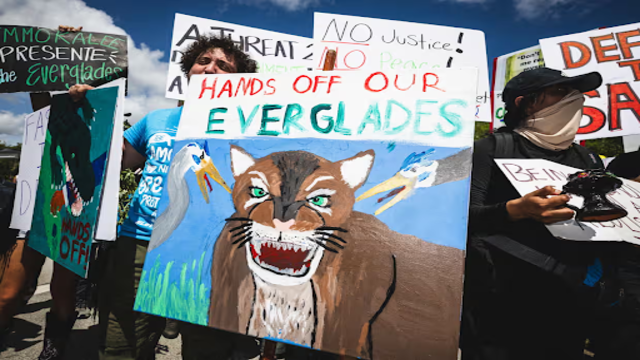
Protesters gathered in Ochopee, Florida, on July 1 to speak out against the immigration detention center. The Guardian
A new immigration jail in Florida’s Everglades, nicknamed “Alligator Alcatraz,” holds hundreds of people. Many detainees have no criminal records or charges. Lawmakers visited the camp and called the conditions “inhumane.”
Claims vs. reality
Former President Trump said the jail only houses “deranged psychopaths” and dangerous people. But a Florida congressman, Maxwell Frost, said one detainee shouted that he is a U.S. citizen. The Miami Herald found a list showing 700 people inside. Out of these, at least 250 had no crime beyond immigration violations.
Authorities refuse to share the full list. Florida officials say all detainees are illegal immigrants. But Frost said the camp is controlled by federal immigration officers, not just the state. “ICE agents are there every day,” Frost said. “ICE decides who comes and goes.”
Poor living conditions
Frost described terrible conditions. The tents get very hot, and food portions are small. Each cage holds 32 people with only three toilets. Some toilets don’t flush. Drinking water comes from a spigot near the toilets, raising hygiene concerns. “It’s a huge cleanliness concern,” Frost said.
Private security guards from various companies watch the detainees. Frost worried these guards lack training to manage the jail safely. Florida officials denied the claims of unsafe conditions and accused media of spreading false information.
Environmental damage and legal battles
Two environmental groups sued to stop the jail’s operation. They said building the camp harms fragile wildlife and pollutes the dark night sky. The jail sits on an old airstrip west of Miami, deep in the Everglades.
The lawsuit names top officials from Florida’s emergency management and the federal immigration agency. The groups want a court order to halt construction and operation.
Funding controversy
The jail cost Florida $450 million to build and run. Governor Ron DeSantis claimed the federal government would repay these costs. But the Justice Department said Florida used state funds and lands for the jail. They denied receiving federal money for it.
This statement conflicts with comments from officials saying federal emergency money helped fund the jail. The environmental group called the Justice Department’s claim “convenient” and pointed out that federal agencies must be involved in immigration detention.
Lawmakers denied entry
Several Democratic lawmakers tried to visit the jail but were refused entry. Florida law allows such visits to check conditions. State Senator Carlos Guillermo Smith criticized this. “What are they hiding?” he asked. He also noted the contrast between their denied visit and Trump’s well-covered visit with the media just days earlier.
Florida’s emergency management department called the lawmakers’ visit a “political theater” and said they had no right to enter since they weren’t acting as an official committee.
Concerns over taxpayer costs
Smith expressed anger that people with no criminal records face harsh detention. He warned that without federal help, Florida taxpayers could pay millions for the jail. This could take money away from schools, public services, and disaster recovery.