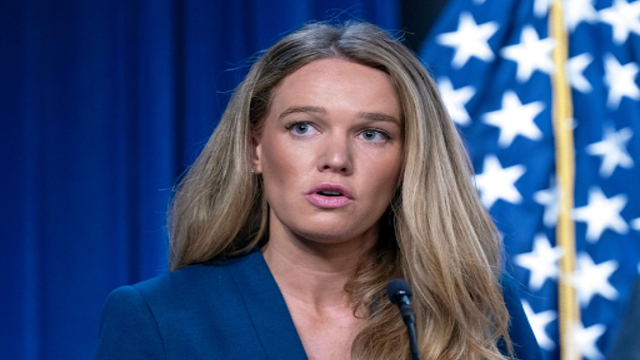
Tricia McLaughlin, a spokesperson for the Department of Homeland Security, said on Tuesday that five migrants had been deported to Eswatini. AP Photo
The United States has sent five foreign-born convicted criminals to Eswatini, a small African country. These men had no links to the country but were deported there under a U.S. program. Officials in the U.S. say their home countries refused to take them back.
The five men came from Vietnam, Jamaica, Cuba, Yemen, and Laos. They had all been convicted of serious crimes, including murder and child rape. U.S. authorities also claimed one of them was a known gang member.
They boarded a deportation flight and landed in Eswatini this week. An American official called the men “barbaric” and said they had harmed local communities for too long. She said they were now off American soil.
Eswatini holds the men temporarily
Eswatini’s government confirmed their arrival. Officials described the men as “prisoners” and said they were being held in secure prison units. However, Eswatini does not plan to keep them permanently.
Authorities said the men would be sent back to their original home countries. A timeline was not shared. The Eswatini government also said it would work with the United Nations to make sure the process is handled fairly and safely.
U.S. expands third-country deportations
This move is part of a wider U.S. program. The goal is to deport people—even to countries they don’t belong to—if their home countries refuse to accept them.
Last month, the U.S. deported eight men to South Sudan. That country also took custody of the men but has not said where they are now.
Many nations have refused to take back citizens who commit crimes in the U.S. Some refuse entirely, while others decline to accept those with criminal records.
African nations under pressure
The Trump administration wants to strike more deportation deals with African countries. In recent meetings, leaders from some West African countries discussed the issue with U.S. officials.
Some countries, like Nigeria, have rejected the idea of accepting deportees from other countries. Others, including Rwanda, are reportedly in talks with the U.S. about possible agreements.
Experts believe some countries may agree to these deals in exchange for better trade deals, aid, or visa access for their citizens.
Eswatini's role and political climate
Eswatini, once called Swaziland, has a population of about 1.2 million. It lies between South Africa and Mozambique. The country is one of the world’s last absolute monarchies, ruled by King Mswati III since 1986.
Political parties are mostly banned there. The country has faced criticism for silencing activists and jailing those who push for democracy.
Despite these issues, Eswatini insists the U.S. deportation deal does not threaten its national security. Officials said the deal came after months of talks.