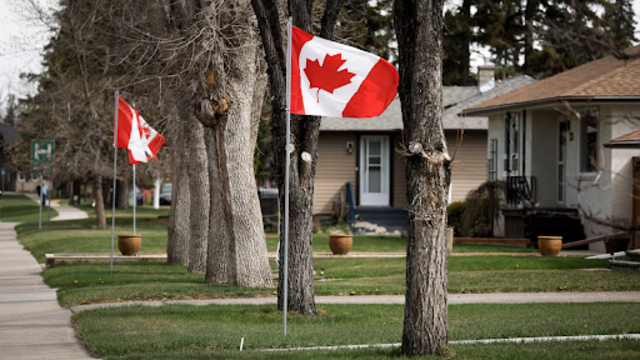
Rows of Canadian flags were displayed along a street in High River, Alberta, on Wednesday, May 7, 2025. CTV
A new report released Thursday shows that many Canadians who receive social assistance still live in deep poverty. The report, called Welfare in Canada, 2024, looked at how much help people get from the government in all 10 provinces and 3 territories.
The study focused on different household types. These included:
- A single person who can work
- A single person with a disability
- A single parent with one child aged two
- A couple with two children aged 10 and 15
Some provinces had extra household types studied as well.
Most still below the poverty line
The report found that 98% of the households studied earned less than Canada’s poverty line in 2024. Even worse, 73% of them were in “deep poverty,” which means they earned less than 75% of what is needed to live above the poverty line.
“It’s not just that people are poor, it’s that they are deeply poor,” said lead author Jennefer Laidley.
Laidley believes the country should give people on assistance enough money to live above the poverty line.
Single adults suffer the most
Single adults, especially those with disabilities, had the lowest income levels. Households with children received more help because they qualify for child benefits, both from federal and provincial governments.
Laidley said the system doesn’t support single adults well and that they make up most of the people on social assistance.
Where you live makes a difference
The report also found big differences in support depending on where someone lives. Each province and territory has its own poverty line. For example, in 2024, a single person’s monthly poverty line was:
- $2,194 in Newfoundland and Labrador
- $2,221 in Ontario
- $2,381 in Alberta
- $3,265 in Northwest Territories
- $4,319 in Nunavut
The amount of help people receive varies across the country. In Nova Scotia, a single parent with one child received only 57% of the poverty line income. Ontario was just a little better at 58%. Prince Edward Island provided the most support at 84%.
For single adults with disabilities, the least help was given in Alberta (under the Barriers to Full Employment program), followed by New Brunswick and Nova Scotia. The most help was found in Newfoundland and Labrador and Alberta under the Assured Income for the Severely Handicapped (AISH) program.
Canada’s poverty problem
In 2023, about 10.2% of Canadians—around 4 million people—lived below the poverty line. Although 59% of households saw their support rise slightly, the increases were too small to lift them out of poverty.
Laidley said more still needs to be done. Better support, higher benefit rates, improved tax credits, and extra income sources are all needed.
“There’s a lot of work to be done,” she said. “It’s not just about growing the economy, it’s about helping people.”