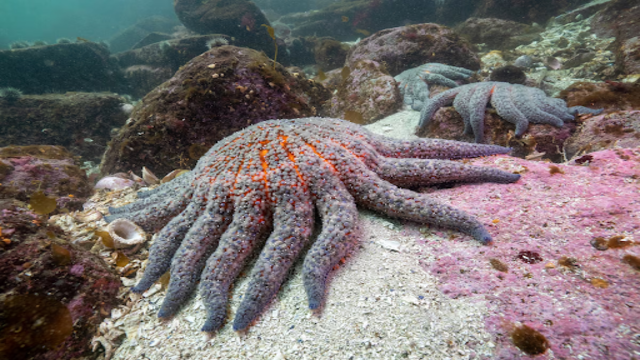
Since it first appeared in 2013, a deadly illness has wiped out billions of sea stars, hitting over 20 species. Sunflower sea stars have suffered the most from this fast-spreading disease. The Globe & Mail
Sunflower sea stars, once common across the Pacific coast, have almost vanished. These large, colorful creatures used to cling to rocks during low tide. But in 2013, something strange began. A mysterious disease started killing them off. Their bodies turned soft and melted into mush. Since then, billions have died. Scientists called it sea star wasting disease.
Over 20 species have been affected. But sunflower sea stars suffered the most. Their numbers have dropped by 90 percent. Experts now list them as critically endangered.
A Major Discovery
After years of research, scientists have finally found the cause. A bacterium from the vibrio family is responsible. These bacteria are also found in some seafood-related illnesses and cholera.

The report highlights a possible link between rising ocean temperatures and the sea star disease. Warmer waters along the Pacific coast may be making vibrio bacteria more active, which could be driving the spread of the illness. The Globe &b Mail
Dr. Alyssa Gehman, a marine disease expert in British Columbia, led the research team. Her lab successfully isolated and grew the bacteria. This allowed them to confirm its role with confidence.
“This is exciting,” said Dr. Gehman. “We now have something we can study and understand better.”
How They Cracked the Case
The team followed a process used since the 1800s. First, they found sea stars that were completely healthy. Then they injected them with fluid from sick stars. The fluid spread the disease. But if they heated the fluid or filtered it, it no longer worked. That ruled out viruses and pointed to live bacteria.
Finding the exact bacteria took time. Sick sea stars contain many kinds of bacteria, not just the harmful one. But in early 2024, while reviewing data over a Zoom call, the researchers spotted one standout. A strain of Vibrio pectenicida showed up in high numbers. This strain is known to harm scallop larvae. It seemed like the likely suspect.
At that moment, the team knew they were close.
A Late-Night Mission
To confirm their theory, they needed more infected material. That was hard to find during winter. But one lab dealing with an outbreak reached out. So Dr. Gehman and her team jumped in a car, drove four hours, took a ferry, and collected samples at night using headlamps.
Back at the lab, they ran many tests. Each time, the results pointed to Vibrio pectenicida as the cause.
Hope for the Future
The discovery brings new hope. Knowing the exact bacteria can help protect sea stars in labs. Healthy sea stars could be raised and then released back into the wild.
The study also links the outbreak to climate change. Vibrio bacteria grow faster in warm water. Rising ocean temperatures may have helped the disease spread.
Sea stars play a big role in the ocean. They eat sea urchins, which helps protect kelp forests. Without sea stars, urchins overrun these areas, destroying habitats for many marine animals.
Dr. Gehman didn’t expect such a big breakthrough when she started in 2020. But now, with the cause confirmed, the path forward is clearer.