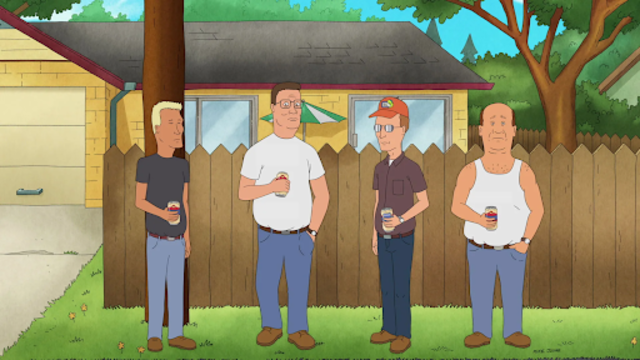
Hank returns looking to connect with old friends Boomhauer, Dale and Bill. The Hollywood Reporter
After more than a decade, King of the Hill is making a comeback — and it's doing so with purpose. The beloved animated sitcom, which first aired on Fox in 1997, has found new life on Hulu. But this isn’t just another nostalgic reboot. According to showrunner Saladin K. Patterson, there’s a deeper reason for the revival — one rooted in culture, comedy, and timing.
A Revival Sparked by Fans
The seed for the return was planted back in 2017 during a San Francisco Sketchfest table read. Co-creators Mike Judge and Greg Daniels were floored by the crowd’s excitement. Fans weren’t just reminiscing; they wanted to know how the Hill family was doing now.
That reaction confirmed what Patterson calls the most important question: “Why now?” For him, the answer was clear — the world has changed, and so has the meaning of middle ground.
Hank Hill’s Return From Abroad
In the new series, Hank Hill returns home after working in Saudi Arabia for 10 years. But the town of Arlen, Texas — and the country — isn’t the same.
“Hank hasn’t changed,” Patterson explains. “But the cultural middle he once represented is now viewed as extreme by some.” This shift becomes the show’s new comedic tension — one that explores how society sees Hank, and how he responds in return.
Social Commentary Over Politics
Though often labeled political, King of the Hill was never about party lines. It focused more on cultural shifts, family values, and generational clashes.
Patterson emphasizes that the reboot continues this tradition. The stories center on relatable struggles: raising kids, navigating evolving gender norms, and dealing with assumptions people make about others based on appearances or past beliefs.
Comedy Rooted in Misunderstanding
At the heart of King of the Hill is irony. One memorable example from the original series has Hank saying, “What kind of country is this where I can only hate a man if he’s white?”
That line, while jarring, reveals the show’s signature humor — layered, uncomfortable, but thought-provoking. In the new series, that tension continues. Hank constantly finds himself misunderstood, judged by modern standards for values that haven’t shifted much since he left.
Adapting to a New Era of Streaming
The reboot’s release model has changed, too. Instead of weekly episodes, Hulu dropped all 10 episodes at once. This forced the writers to be more efficient with storytelling.
With only 10 episodes instead of 22, arcs like Bobby and Connie’s relationship had to move faster. But Patterson sees this as a creative advantage. “We had to be more deliberate about which moments to show,” he says. “It’s about choosing what matters most.”
A New Home Under Disney
The show’s move from Fox to Hulu — and under Disney — brought some constraints. While King of the Hill never relied on shock humor, Disney’s stricter content standards meant certain language had to be toned down. F-bombs were removed, though milder curses stayed.
Despite that, Patterson insists the show’s soul remains intact. “We weren’t looking to push the envelope,” he says. “We were focused on staying true to the characters.”
Honoring the Original, Embracing the Present
Reboots often face the challenge of balancing nostalgia with relevance. But King of the Hill finds that balance by staying grounded in its characters.
The show still follows Hank, Peggy, Bobby, and their neighbors — but through a lens shaped by today’s world. As voice actor Toby Huss puts it, “It’s like revisiting old friends. You let them sit in your life again, half an hour at a time.”
Final Thoughts: Why King of the Hill Matters Now
Saladin K. Patterson believes King of the Hill was never just a sitcom. It was a mirror — reflecting the small-town American experience with humor and heart.
Now, in a more polarized era, Hank Hill’s return serves a bigger purpose. Not to preach, but to explore. Not to shock, but to understand. And maybe, just maybe, to bring a bit of common sense back to the middle ground.