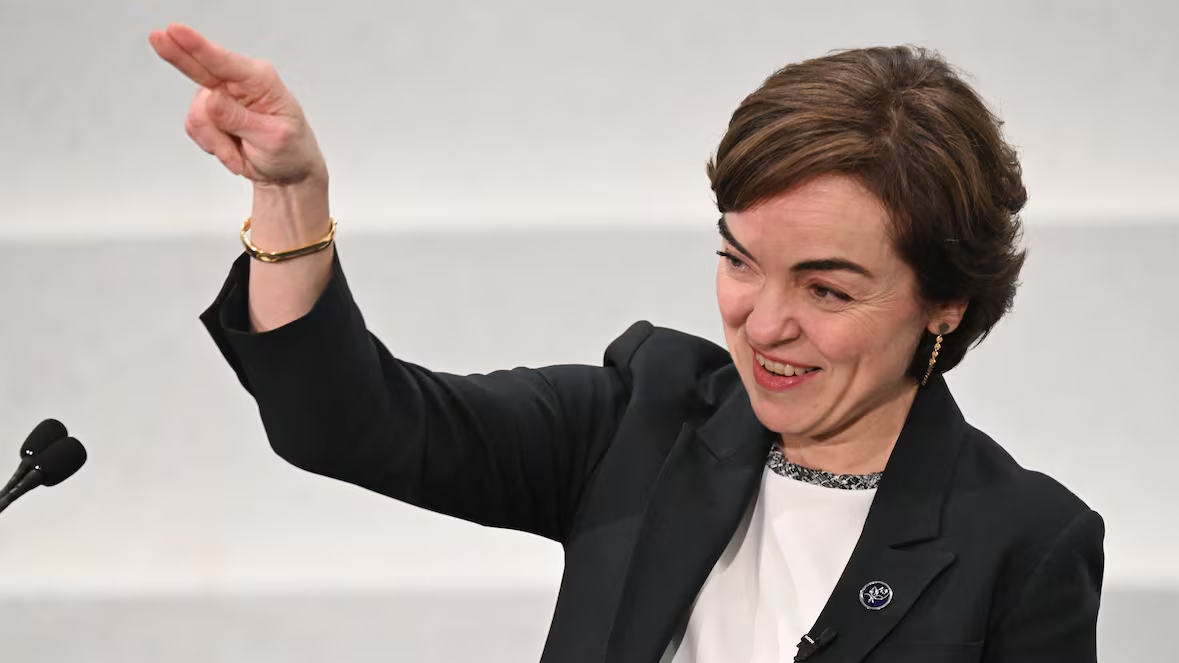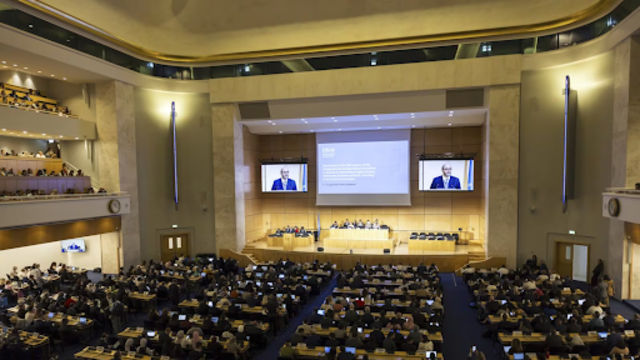
Luis Vayas Valdivieso, chairing the talks on plastic pollution, delivers opening remarks at the latest round of global negotiations held at the UN's European headquarters in Geneva on Tuesday, August 5, 2025. AP
World leaders gathered in Geneva on Tuesday to try to finish a new global treaty. Their goal is to stop the growing plastic pollution problem. This is the sixth time they’ve met, and many hope it will be the last.
The big question: Should countries reduce how much plastic they make? Oil-producing nations say no. Others argue it’s the only way to fix the crisis.
A Treaty Within Reach
Luis Vayas Valdivieso leads the treaty talks. He said no one wants plastic waste. But countries still haven’t agreed on how to stop it.
He hopes this 10-day meeting in Geneva will change that. “The world can finally agree to stop plastic pollution,” Vayas said. “It’s hurting nature, oceans, rivers, and people—especially the poorest.”
Angelique Pouponneau, from a group of small island nations, said her country, Seychelles, sees plastic everywhere—in fish, on beaches, and in the sea. “This is our last chance,” she warned.
A Growing Problem
UN officials say plastic pollution is out of control. Between 19 and 23 million tons of plastic end up in water every year. That number could rise by 50% by 2040.
Many countries want to redesign plastic products and improve recycling. But about 100 nations say that’s not enough. They want to cut plastic production and limit toxic chemicals too.
Panama’s negotiator Debbra Cisneros said, “We need to fix the problem at its source. If not, we’ll end up with a weak deal that won’t help.”
What Big Companies Want
Around 300 big companies—including major retailers and soft drink brands—also support reducing how much plastic gets made. They say global rules would help avoid confusion between countries.
But some nations, including Saudi Arabia, disagree. They say plastic production is not the problem. Instead, they support better recycling.
The U.S. also doesn’t support a production limit. On Tuesday, it suggested removing language from the draft treaty about controlling the full life cycle of plastic. That could block future rules about how much plastic gets made.
Tough Talks Ahead
Every country must agree for anything to be included in the treaty. Some leaders want to allow voting, in case full agreement isn’t possible. But countries like India, Saudi Arabia, and Iran oppose that.
Some suggest a middle ground. Countries could choose to join certain parts of the treaty. That could avoid a deadlock.
Others warn that such a deal would be too weak. “If we water it down, it won’t work,” said Cisneros.
Greenpeace, on the other hand, wants a 75% cut in plastic production by 2040. “We can’t recycle our way out of this,” said Greenpeace’s Graham Forbes.
Thousands Take Part
People from governments, businesses, environmental groups, and Indigenous communities are in Geneva. Over 80 ministers joined the meeting, which runs until August 14.
Frankie Orona, from a Native American group, said plastic production poisons land, water, and air. “We’re here because we’re the ones being hurt,” he said.