“Alien: Earth” Launches a Chilling, Wild Ride You Didn’t See Coming. FX
A familiar spacecraft, a doomed crew, and deadly alien lifeforms—FX’s Alien: Earth kicks off just as fans would expect. But creator Noah Hawley doesn't linger in the shadows of the past. Instead, he carves out a bold new prequel that honors the Alien legacy while exploring uncharted territory of consciousness, control, and survival.
Welcome Back to the Weyland-Yutani Nightmare
The show opens on the USCSS Maginot, a Weyland-Yutani spaceship floating in eerie silence. A groggy crew emerges from cryosleep, sharing light banter before things turn predictably dark. A crewmember pokes around alien specimens—and you know what happens next.
While these moments echo Ridley Scott’s original 1979 Alien, they’re only a teaser. The real story unfolds on Earth.
A Synthetic Soul in a Dying World
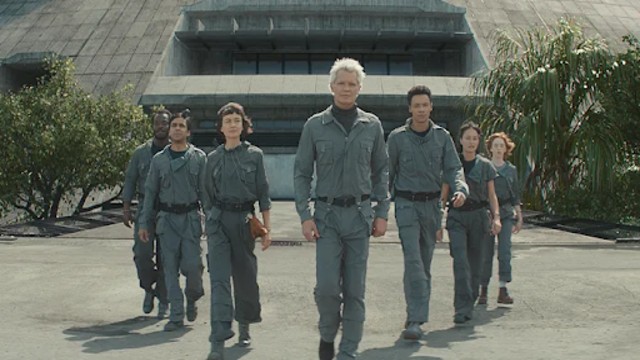
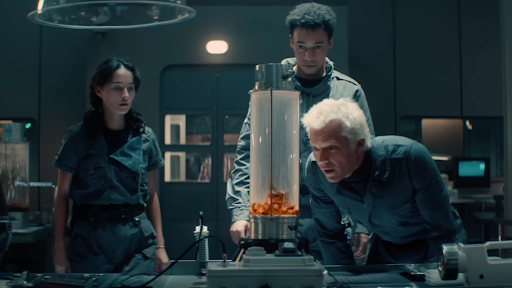
Set in 2120, just two years before the events of Alien, Earth is now divided among five mega-corporations. One of them, Prodigy, has a plan to outsmart death. On a remote Southeast Asian island dubbed Neverland, 12-year-old Marcy—dying from illness—has her consciousness uploaded into a synthetic adult body. The result? Wendy (Sydney Chandler), a hybrid being with strength, speed, and the potential for immortality.
But Wendy isn’t alone. She’s one of six prototypes. When the Maginot crash-lands nearby, they’re sent on a rescue mission led by Kirsh (Timothy Olyphant), a colder, older-generation synthetic.
What they find is horrifying. The ship was carrying a zoo of alien creatures—yes, including xenomorphs.
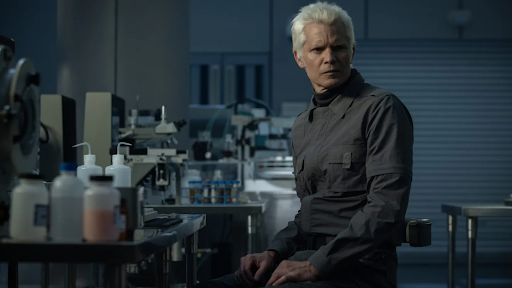
Timothy Olyphant in 'Alien: Earth.' FX
A Tech Mogul With No Moral Limits
Enter Boy Kavalier (Samuel Blenkin), Prodigy’s founder and a character you’ll love to hate. His smug arrogance rivals that of real-world tech giants, and he’s obsessed with using the aliens for power and prestige. Think Zuckerberg meets Musk—only worse.
Blenkin plays the villain with greasy perfection. His barefoot bravado and smug one-liners make you wish a face-hugger would do its job sooner.
Children in Adult Bodies, Fighting Monsters
The hybrids, nicknamed after Peter Pan’s Lost Boys (yes, really), may look like adults, but inside they’re still scared, impressionable kids. Their performances—especially Chandler as Wendy—capture the tension between raw innocence and superhuman potential.
Each of them brings something different to the group. Slightly (Adarsh Gourav), Curly (Erana James), and Tootles (Kit Young) are standouts, lending the show emotional depth beneath the sci-fi chaos.
Among the real adults, Alex Lawther shines as Hermit, Wendy’s human brother. Babou Ceesay delivers quiet gravitas as Morrow, the hardened security officer of the Maginot.
Horror, Humor, and Heavy Questions
Yes, there’s blood—lots of it. FX doesn’t hold back on the gore. But there’s also philosophy. Alien: Earth wrestles with big questions: What makes someone human? Should science override morality? Can synthetic beings have rights?
The show doesn’t sugarcoat the answers. In this brutal world, hybrids are tools, not people. And the humans controlling them? Often worse than the monsters.
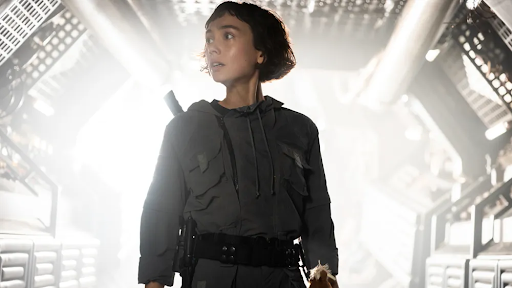
FX's Alien: Earth Sydney Chandler as Wendy. FX
A Visually Striking, Audibly Dark World
The production is stunning. Andy Nicholson’s set design gives every scene a tactile, lived-in feel. And the show’s dark rock playlist—think Pearl Jam, Tool, Black Sabbath—wraps each episode in grunge and gloom.
New alien creatures add fresh horror, including a tentacled beast with an eyeball head (its kill move is pure nightmare fuel). The xenomorphs are as terrifying as ever, but these new additions bring fresh terror to the screen.
A Slow Burn That Explodes in the End
The early episodes take their time. It’s a slow simmer, full of exposition and world-building. But stick with it. Around episode four or five, the pace snaps into high gear, and chaos erupts.
By the finale, the monsters have fed, the story comes full circle, and viewers are left thoroughly shaken—and satisfied.