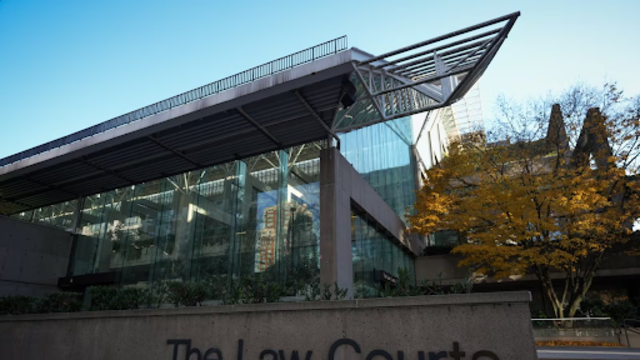
The Law Courts building in Vancouver, which houses both the B.C. Supreme Court and the Court of Appeal, is pictured on Thursday, November 23, 2023. (The Canadian Press)
The B.C. Supreme Court has told the federal government it must change the Indian Act by April 2026 so it follows the Charter of Rights and Freedoms. The decision comes after a lawsuit from families affected by past rules that denied them Indian status.
The court said the act unfairly punished people whose parents or grandparents gave up their status. Known as “enfranchisement,” this process often forced families to give up benefits and identity. The ruling confirmed that this violated Charter rights.
The Case Behind the Decision
Lawyer Ryan Beaton represented the plaintiffs, including Sharon Nicholas. Her grandfather gave up his Indian status in 1944 to keep his children from being forced into residential schools. Because of this, Nicholas and her family also lost their status.
Nicholas has spent decades fighting for change. She began working on the issue more than 40 years ago and brought it to court in 2021. Beaton said the ruling was a huge victory for her.
“She’s an incredible person,” Beaton said. “She taught me so much about her family’s history and how the Indian Act hurt them.”
Why Families Renounced Status
Many Indigenous families gave up their legal status because of the severe restrictions attached to it. Beaton explained that people with status could not vote, could not own certain types of property, and their children were forced to attend residential schools.
For many, giving up status seemed like the only way to escape these conditions. But the law then cut their descendants off from rights and benefits, including access to treaty settlement funds.
Government Response
What makes this case unusual is that the federal government did not fight it. Officials admitted that the Indian Act’s registration rules went against the Charter. Because of that, there was no trial, and the case moved quickly toward a ruling.
The government also agreed that the act’s provisions caused disadvantage, prejudice, and discrimination that lasted for generations.
What Happens Next
Parliament has until April 2026 to fix the law. The court said the solution should apply across the country, not just in B.C.
Meanwhile, a class-action lawsuit has been filed in Federal Court. It seeks damages for people who lost out on benefits because of the old rules. The case could affect between 5,000 and 10,000 people.
Beaton said Parliament tried to fix the law in the past but failed. “The plaintiffs had to push this change through the courts when Parliament didn’t act,” he said.
The ruling marks a major step for families who have been waiting decades for recognition and justice.