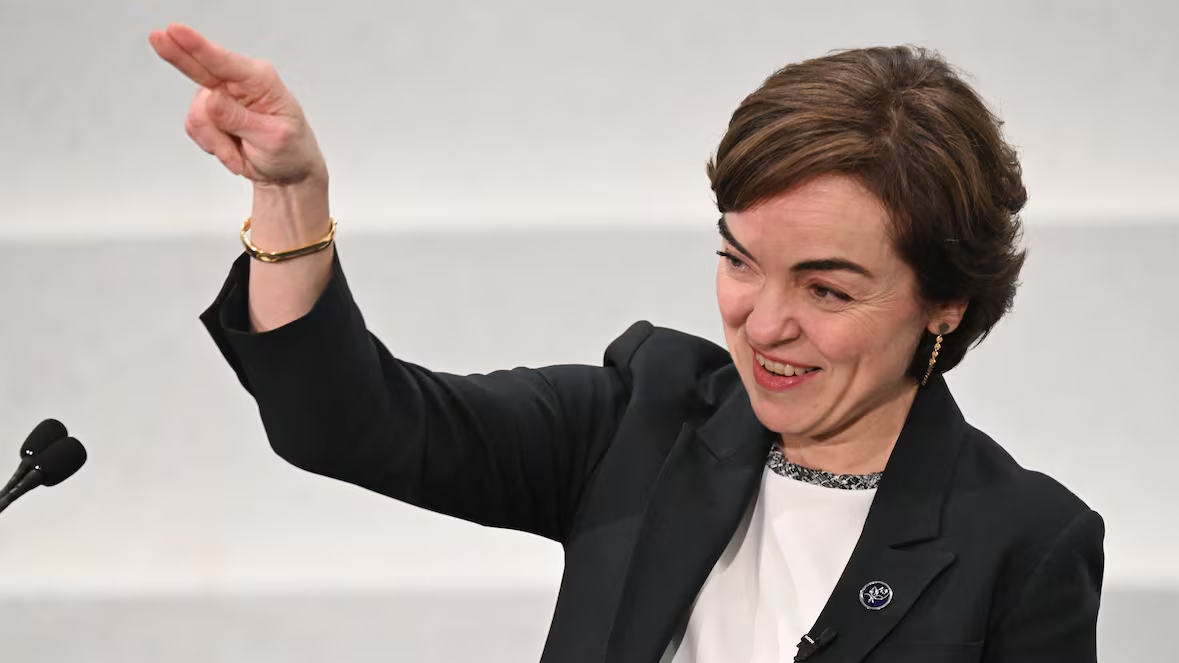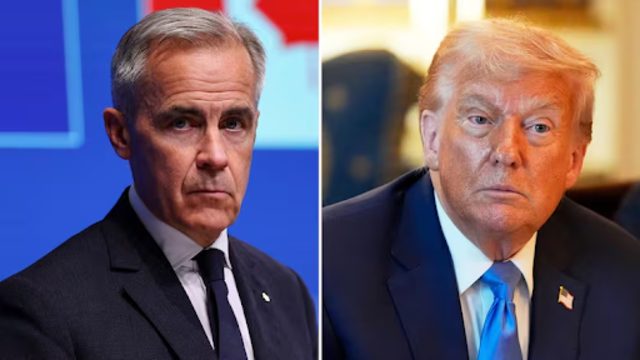
Prime Minister Mark Carney spoke with U.S. President Donald Trump on Thursday about several issues. Following the call, Carney announced the removal of certain tariffs on American goods. (Reuters/The Associated Press)
Canada will remove all retaliatory tariffs on U.S. goods covered by the Canada-U.S.-Mexico Agreement (CUSMA) by September 1. Prime Minister Mark Carney confirmed this on Friday, saying the government will keep tariffs on steel, aluminum, and autos while negotiating a stronger trade relationship with the U.S.
Carney stressed that 85 per cent of Canadian trade with the U.S. remains tariff-free, which he called a strong advantage for Canadian workers. “As we work to address outstanding trade issues with the U.S., it is important we do everything we can to preserve this unique advantage for Canadian workers and their families,” he said.
Context of the Trade War
The announcement comes amid a continuing trade war. The U.S. imposed tariffs on Canadian steel, aluminum, autos, copper, lumber, and energy. Canada retaliated three times, including on $60 billion in U.S. consumer goods. The 35 per cent U.S. tariff only affects goods not covered under CUSMA.
Carney previously hinted that removing counter-tariffs could help Canadian industries navigate the ongoing trade tensions. U.S. President Donald Trump expressed support for Carney, saying, “We want to be very good to Canada. I like Carney a lot. I think he's a good person and we had a very good talk yesterday.”
CUSMA Discussions and Industry Consultations
Carney said the tariff removal will help intensify discussions with the U.S. to tackle trade challenges in key sectors still affected by tariffs. Industry consultations will begin next month to prepare for the official CUSMA review next year.
Dominic LeBlanc, responsible for Canada-U.S. trade, said easing retaliatory tariffs helps reduce tensions ahead of the review. He added, “We have to get to that conversation in the most coherent posture possible, and the prime minister's decision today very much lines up in that way.”
Economic Focus and Nation-Building Projects
Carney also highlighted the government’s plan to strengthen Canada’s economy. Initiatives include expanding trade with other countries, doubling home-building, and investing in national defense. New nation-building projects like highways, railways, ports, pipelines, and critical infrastructure will be selected soon.
Reactions and Criticism
Conservative Leader Pierre Poilievre criticized the decision, saying Carney made “generous concessions” to the U.S. without securing anything in return. “Either Carney admits he was wrong, or he lied during the election campaign,” Poilievre said, adding he would have demanded full tariff removal if he were prime minister.
Ontario Premier Doug Ford supported Canada’s efforts but warned that further action may be needed for steel, auto, forestry, and copper industries.
The Canadian Federation of Independent Business welcomed the tariff removal as relief for small businesses, though they urged compensation for already paid tariffs. Unifor, the largest private-sector union, called the decision a mistake, warning it could encourage more U.S. trade aggression.