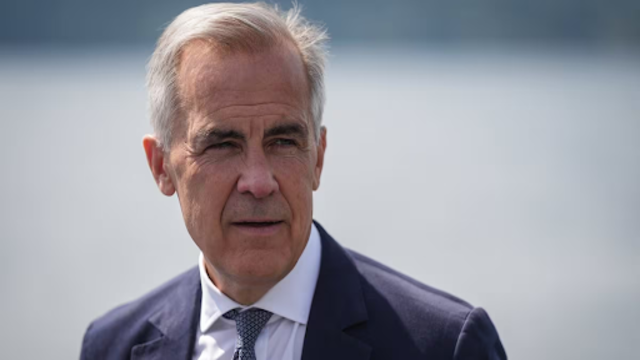
Prime Minister Mark Carney said Canada will lift tariffs on certain U.S. products included in the CUSMA deal, but tariffs on steel and aluminum will remain. CTV
Prime Minister Mark Carney announced Friday that Canada will remove certain countertariffs on American goods included under the free-trade deal with the United States and Mexico. He said this step comes as both countries prepare to deepen talks on trade, investment, and security.
The decision followed a cabinet meeting and a direct call with U.S. President Donald Trump the day before. Carney confirmed that the move aims to match U.S. trade measures but stressed that tariffs on steel, aluminum, and auto imports remain in place.
Focus on Key Industries
Carney highlighted that Canada’s priority remains the protection of major industries, especially steel and aluminum. He noted that the U.S. tariffs on those sectors remain much higher, at 50 per cent, while Canada continues to hold its countertariffs at 25 per cent.
Reporters pressed Carney about whether Canada might raise its own duties to match the U.S. levels. He refused to commit but said he would not rule out the option in the future.
“We’ll look at everything,” Carney said, adding that the government is supporting industries through investments, retooling, and market diversification.
U.S. Reaction to Canada’s Move
Trump welcomed the announcement, calling it “long overdue.” Speaking from the Oval Office, he described his call with Carney as “a very good conversation.” Trump also said he liked Carney personally and called him “a good person,” while repeating his belief that tariffs are drawing business back to the United States.
A White House official echoed Trump’s comments, saying the administration looks forward to more talks with Canada about trade and national security concerns.
Opposition Criticism
The decision sparked sharp criticism in Ottawa. Conservative Leader Pierre Poilievre accused Carney of giving in to Trump and abandoning his campaign promise to deal with the U.S. president “with elbows up.”
“His elbows have mysteriously gone missing,” Poilievre told reporters. He argued that Carney had either misled Canadians during his election campaign or backed down under pressure.
Poilievre refused to say if he wanted Canada to raise tariffs to U.S. levels but stated his preference would be to see Washington lower its duties so free trade could resume. He also pledged to push for the elimination of the industrial carbon tax, which he says drives up costs for Canadians.
Looking Ahead
CUSMA, the free-trade deal between Canada, the U.S., and Mexico, comes up for review next year. Carney said his government is already preparing for negotiations.
In the meantime, Ottawa has promised more support for industries hurt by tariffs and has encouraged provinces to diversify markets. Some provinces have already pulled U.S. alcohol from liquor stores, while fewer Canadians are travelling south.
Despite tensions, Carney said both countries now see chances to expand cooperation in trade and security.