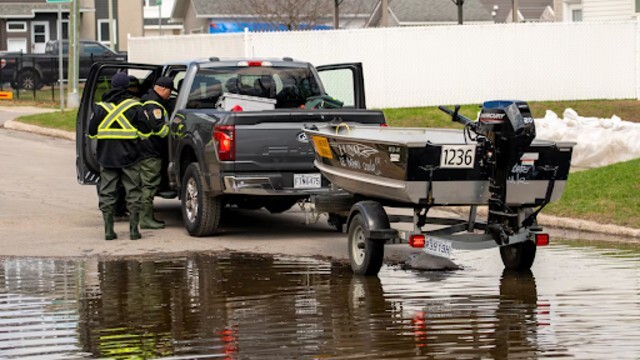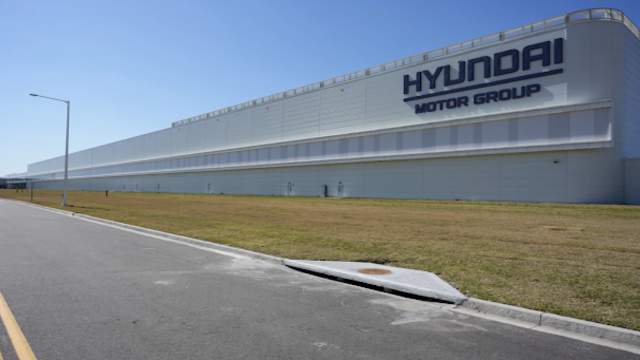
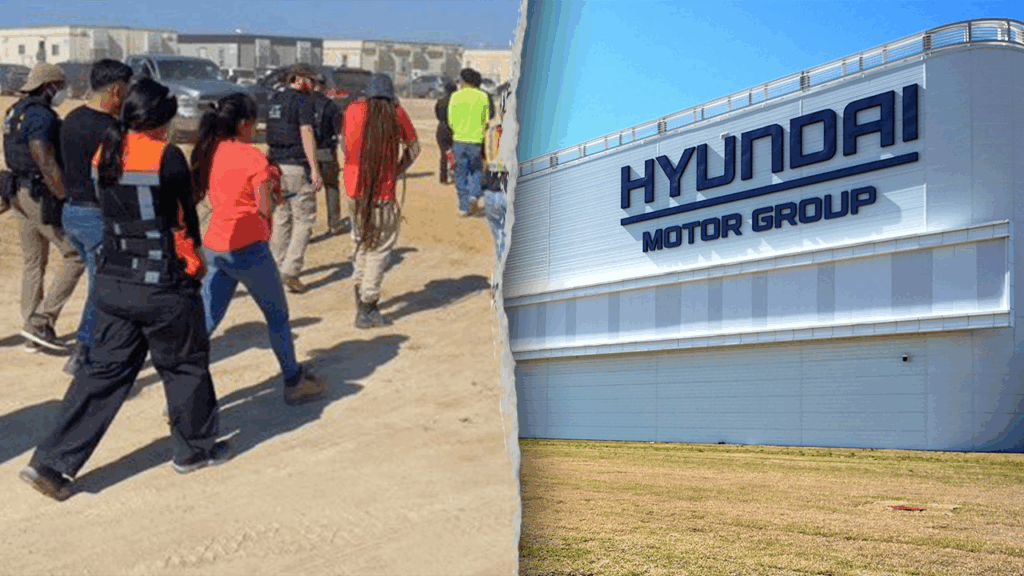
The Hyundai Motor Group Metaplant America is seen on March 26, 2025, in Ellabell, Ga. (AP Photo)
Nearly 500 workers were detained this week in a sweeping raid at Hyundai’s massive electric vehicle plant in Georgia, marking the largest workplace enforcement action of President Donald Trump’s second term.
The unprecedented operation has triggered diplomatic unease between Washington and Seoul, raising questions about how the U.S. balances its push for domestic manufacturing with its aggressive immigration crackdown.
Hundreds Held in Federal Sweep
Immigration and Customs Enforcement (ICE) agents moved into the 3,000-acre facility, detaining 475 people accused of working unlawfully. Officials confirmed that around 300 of those taken into custody are South Korean nationals. The workers are being held at a federal facility in Folkston, Georgia, while authorities determine their next steps.
Homeland Security Investigations described the raid as the “largest single-site enforcement operation” in the agency’s history. Special agent Steve Schrank stressed that the action was not a random sweep.
“This was a multi-month criminal investigation,” Schrank said at a press briefing. “We gathered evidence, conducted interviews, reviewed documents, and secured a judicial warrant before entering the site.”
Videos circulating on social media show federal agents lining up workers and announcing the search warrant before escorting them away.
Trump Defends Enforcement
President Trump defended the raid, linking it to his broader immigration agenda. Speaking from the Oval Office on Friday, he said ICE was “just doing its job.”
“They were illegal aliens, many who came in under Biden,” Trump claimed. “We want a strong, stable workforce, but we also need to protect American jobs. Not everyone working there was the best kind of person.”
The remarks underscored a central conflict of Trump’s presidency — courting foreign investment while cracking down on undocumented labor.
Seoul Expresses Concern
The large number of South Korean nationals detained has unsettled Seoul. South Korea’s foreign ministry issued a statement expressing “concern and regret” and urged the U.S. to respect the rights of its citizens.
“The economic activities of Korean investment companies and the rights and interests of Korean citizens must not be unfairly infringed upon,” the ministry said. Diplomats have been dispatched to Georgia, while Seoul also raised the matter with the U.S. embassy in South Korea.
Hyundai Distances Itself
Hyundai Motor Company issued a statement saying it was “closely monitoring” the situation. The company stressed that Hyundai itself directly employed none of the detained individuals.
“As of today, it is our understanding that none of those detained are Hyundai employees,” the statement read. Production at the facility reportedly remains unaffected, though LG Energy Solutions, Hyundai’s partner in the site’s battery joint venture, has paused construction work.
A Project of National Importance
The Georgia plant, operational for just a year, has been touted as the state’s largest economic development project. Governor Brian Kemp celebrated the investment as a milestone for local job creation, highlighting its expected workforce of 1,200 employees.
Trump himself has pointed to major foreign investments in U.S. manufacturing as proof of his economic strategy, even while imposing tariffs to pressure companies to produce domestically. South Korean firms have pledged billions in American projects in recent years, partly to avoid trade barriers.
Immigration Enforcement Drive
The raid reflects Trump’s renewed nationwide crackdown on undocumented labor since returning to office. His administration has dramatically increased workplace raids, arguing that unauthorized workers undercut American wages.
While many of those detained in such operations are from Latin American countries, this week’s raid shows a wider reach. The scale and location of the enforcement have amplified its impact — targeting a flagship site for U.S.-Korea industrial ties.
As the U.S. pushes for more foreign investment in critical industries like electric vehicles, the clash between immigration enforcement and economic partnership may only grow sharper. For now, hundreds of workers remain in detention, and a diplomatic storm brews between two long-standing allies.