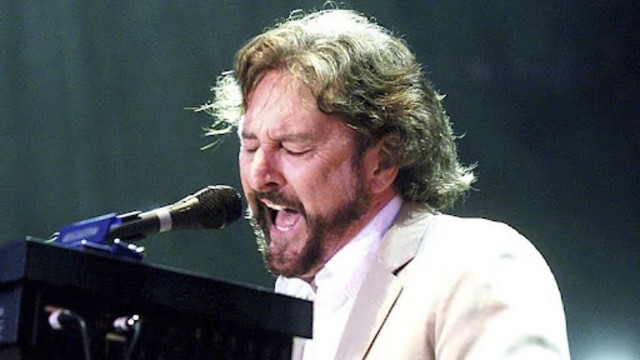
Rick Davies performs on keyboards and vocals during Supertramp’s concert in Budapest on June 28, 2002. Image: AP photo
Rick Davies, the legendary co-founder of Supertramp, has died at the age of 81. The musician, singer, and pianist lost his long battle with multiple myeloma, a blood cancer he had been fighting for more than ten years.
The band confirmed the news on their official website, remembering him as the steady force behind their most iconic songs.
A Life Shaped by Music
Born in Swindon, England, on July 22, 1944, Davies grew up surrounded by music. He learned both drums and piano during his early years and played with small British bands in the 1960s.
In 1969, he placed a small ad in Melody Maker magazine, promising a “genuine opportunity for good musicians.” That simple ad would change his life forever.
Among the respondents was Roger Hodgson, a singer and guitarist with a very different background. Together, they formed what would soon become Supertramp. The band’s name came from a 1908 book, The Autobiography of a Super-Tramp, by Welsh writer W.H. Davies.
Finding Their Sound
Supertramp’s first two albums had little commercial impact. Their second record, Indelibly Stamped, even drew more attention for its risqué cover than for the music itself.
By 1973, however, the band solidified its lineup. With Bob Siebenberg on drums, Dougie Thomson on bass, and John Helliwell on saxophone, the group was ready to evolve.
In 1974, Supertramp released Crime of the Century, which put them on the global map. Davies’ track Bloody Well Right became a U.S. top-40 hit, while Hodgson’s Dreamer reached the top 20.
The Yin and Yang of Supertramp
Davies and Hodgson could not have been more different. Davies came from a working-class background and wrote with a tougher, more cynical edge. Hodgson, in contrast, had a private school upbringing and often explored spirituality and idealism in his lyrics.
The partnership drew comparisons to Lennon and McCartney. Producer Ken Scott once remarked that their dynamic reminded him of The Beatles’ creative contrasts.
Though they rarely co-wrote songs, their combined talents blended pop melodies with progressive rock. Hodgson delivered hits like Give a Little Bit, The Logical Song, and Take the Long Way Home. Davies countered with songs such as Goodbye Stranger, which he both wrote and sang.
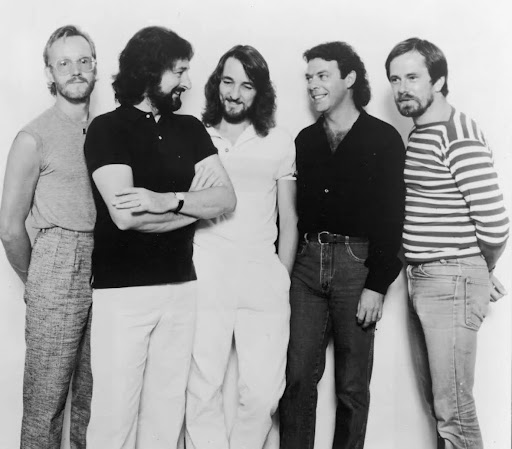
Supertramp’s classic lineup in an undated promotional photo: John Helliwell, Rick Davies, Roger Hodgson, Bob Siebenberg, and Dougie Thomson. Image: Getty Images
Global Fame and Growing Strain
By the late 1970s, Supertramp had become one of the biggest touring bands in the world. Their 1979 album Breakfast in America was a blockbuster, selling over 20 million copies. Only giants like Pink Floyd, the Bee Gees, and Michael Jackson outsold it that year.
But success came with cracks. Touring exhaustion weighed heavily on Davies. In 1979, he admitted struggling to write while constantly on the road.
Their next album, Famous Last Words (1982), failed to match earlier success. Hodgson soon departed, and Davies carried the band forward with Helliwell. Supertramp released two more albums in the ’80s and their final studio record, Slow Motion, in 2002.
Behind the Scenes
Like many great bands, Supertramp faced legal disputes. Hodgson resisted the others performing his songs after he left, and disagreements over royalties often resurfaced. As recently as last month, a court ruling involved Hodgson and fellow members Bob Siebenberg, Dougie Thomson, and John Helliwell.
Remembering Rick Davies
Despite the conflicts, fans and bandmates remember Davies for his music and his warmth. In their tribute, Supertramp honored him as “the voice and pianist behind our most iconic songs” and praised his “resilience, devotion, and love for his wife, Sue,” with whom he shared more than fifty years.
Rick Davies leaves behind a timeless legacy. His voice, his piano, and his songs remain woven into the soundtrack of generations.