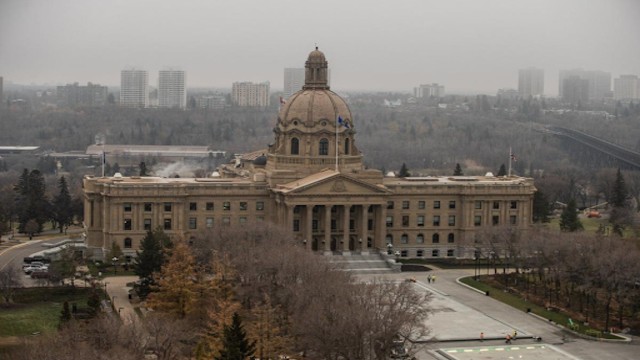
The Alberta Legislature in Edmonton, on Thursday October 31, 2024.
Alberta’s plan to include mandatory citizenship markers (Alberta citizenship ID plan) on provincial identification cards has sparked sharp criticism. Immigration experts and opposition leaders are warning that the move could lead to privacy risks and discrimination.
Premier Danielle Smith announced Monday that the measure is aimed at streamlining services and preventing election fraud. She argued it would simplify the process for Albertans accessing benefits while ensuring the integrity of the voting system.
Critics Question the Need
Zool Suleman, a Vancouver-based immigration lawyer, said the United Conservative Party government has not explained what problem this change is meant to address. He warned that requiring more personal details on everyday identification creates “a creeping demand” that should concern all Canadians.
“There’s a hovering fear being inflamed — that people are voting or accessing services they shouldn’t,” Suleman said. “The proposed solution seems to be tighter identification rules that reveal more about who you are.”
Suleman cautioned the government against using the policy to single out newcomers or those with temporary status. He noted Canadians already have secure ways to prove citizenship, including passports, birth certificates, or citizenship cards.
Risk of Profiling
Currently, proof of citizenship or residency is already part of applying for social programs. Under the new proposal, only Canadian citizens would have a notation added to their provincial ID. Permanent residents and other non-citizens will not have.
Suleman said this difference could become problematic. “Once officials get used to seeing citizenship on an ID card, the absence of that information may itself be used to profile people,” he warned.
Government Defends Move
Service Alberta Minister Dale Nally rejected the criticism of the citizenship ID plan. According to him, the change is about convenience, not discrimination. “This is simply about putting citizenship on driver’s licences to make applications for benefits easier,” Nally said. “It will also reduce the need to carry multiple cards.”
The government plans to introduce legislation this fall, with the changes expected to take effect next year.
In addition to citizenship ID, the province also intends to add Alberta health card numbers to driver’s licences. Smith said there are currently more than 530,000 registered health care numbers than there are people in the province, and integrating the numbers could help identify inaccuracies.
Health officials explained that discrepancies may stem from individuals moving away without cancelling coverage, or from Albertans who died outside the province but whose records were not updated. Some evidence also suggests former residents continue to use their Alberta health cards.
Opposition Seeks Clarity
Opposition NDP immigration critic Lizette Tejada said the government has failed to provide a clear explanation for the new requirement. She called the move unnecessary and potentially harmful for many Albertans.
Elections Alberta confirmed on Monday that only three reprimands related to ineligible voting were issued since the 2023 provincial election — a number critics say hardly justifies the sweeping change.
Meanwhile, Smith’s Alberta Next panel continues touring the province, seeking support for proposals that include establishing a provincial immigration system and limiting access to social services for newcomers not approved by the province.