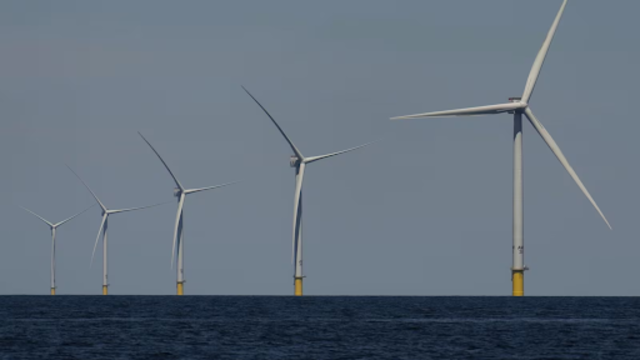
Wind turbines turn at the Vineyard Wind 1 offshore wind farm, off Massachusetts coast, Saturday July 19, 2025. (Photo: THE CANADIAN PRESS)
Canada and Nova Scotia made new moves this week toward their first offshore wind project. Ministers issued “strategic direction” to a joint regulator to begin planning and public consultation.
Joint Action Begins
The two governments tasked the Canada‑Nova Scotia Offshore Energy Regulator (CNSOER) to start a prequalification process. They want to gather input from Indigenous communities and the public. Then they will call for bids on land parcels set aside for wind farms.
“These steps help ensure the projects remain environmentally responsible and sustainable,” a government statement said.
Turning Wind into Opportunity
Energy Minister Tim Hodgson said, “Now is the time to harness our powerful wind potential, turning it into prosperity and new opportunities for our communities.” He described these efforts as building long-term benefits—not just for today, but for future generations.
Sean Fraser, Atlantic Canada Opportunities minister, echoed that sentiment. He said people in Atlantic Canada, strong winds, and ambition all line up now. He promised good jobs, new investment, and clean, reliable energy for all families.
Challenges and Timeline
Officials still need to resolve some details. They plan to clarify federal investment tax incentives and the role of the Canada Infrastructure Bank in financing the needed infrastructure.
They expect the first offshore projects could start within five to ten years, an ambitious timeline. Nova Scotia’s Energy Minister Trevor Boudreau also said it’s a nation-building effort. He hopes the strong offshore winds will translate into clean energy reaching markets that need it.
Canada and Nova Scotia will manage this under laws known as the Canada‑Nova Scotia Accord Acts. That gives both levels of government shared control over offshore projects.