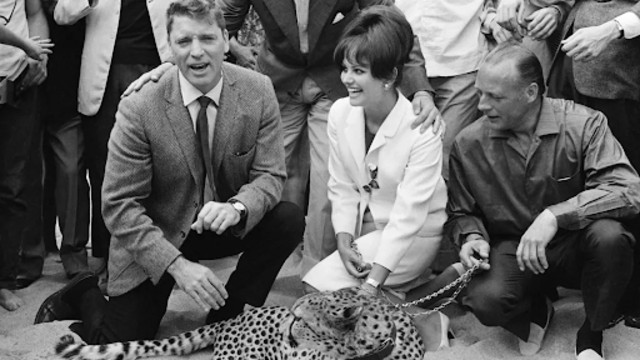
Cardinale (C) alongside actor Burt Lancaster (L) in a presentation of the Visconti's The Leopard, 1963. Getty Images
Claudia Cardinale, the Tunisian-born Italian actress who captivated audiences in films like The Leopard, 8½, and The Pink Panther, has died at the age of 87.
Her agent, Laurent Savry, confirmed that she passed away in Nemours, France, surrounded by her children. “She leaves behind the legacy of a free and inspired woman, both as an individual and as an artiste,” Savry said.
From Tunis to Stardom
Born in Tunis in April 1938 to Sicilian parents, Cardinale grew up speaking French, Arabic, and Sicilian dialect. Her path to cinema began unexpectedly. At 16, she won a local beauty contest that named her “the most beautiful Italian woman in Tunis.” The prize was a trip to the Venice Film Festival, where directors and producers encouraged her to pursue acting.
Initially reluctant, she considered becoming a teacher. Her father urged her to “give this cinema thing a go,” a choice that changed her life forever.
Early Struggles and Hidden Pain
Cardinale’s early years in the industry were far from glamorous. As a teenager, she faced a traumatic assault that left her pregnant. With the guidance of a mentor, she secretly gave birth in London and later introduced her son Patrick to the world as her younger brother.
Language was another barrier. Her strong accent, shaped by her multilingual upbringing, was deemed unsuitable for Italian cinema. In her early films, her voice was dubbed by other actors until she mastered the craft herself.
Breakthrough Roles and International Fame
Cardinale’s career soared in the 1960s, when she starred in Federico Fellini’s Oscar-winning 8½ and Luchino Visconti’s epic The Leopard. Both roles cemented her status as one of the brightest stars of Italian cinema’s golden age.
“Visconti wanted me brunette with long hair. Fellini wanted me blonde,” she once recalled, highlighting the contrasting visions of two of cinema’s greatest directors.
Hollywood soon came calling. She charmed global audiences with her role in Blake Edwards’ The Pink Panther and Sergio Leone’s Once Upon a Time in the West, sharing the screen with legends like Henry Fonda and Charles Bronson. Critics hailed her as “the embodiment of postwar European glamour.”One of her fondest memories came from The Pink Panther set. Actor David Niven once told her, “Claudia, along with spaghetti, you’re Italy’s greatest invention.”
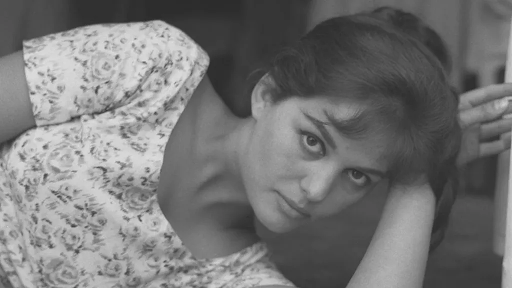
Claudia Cardinale posing in Venice in 1958. Getty Images
A Life in Film and Advocacy
Beyond the screen, Cardinale lived passionately. After separating from film producer Franco Cristaldi in the early 1970s, she began a lifelong partnership with Neapolitan director Pasquale Squitieri, with whom she had a daughter, Claudia.
Even into her 80s, Cardinale remained active, appearing in the Swiss TV series Bulle in 2020. Her career spanned six decades, filled with unforgettable roles and characters she once described as “more than 150 lives — prostitute, saint, romantic, every kind of woman.”
Her influence extended beyond cinema. In 2000, she was named UNESCO Goodwill Ambassador for her advocacy of women’s rights. Two years later, she received a lifetime achievement award at the Berlin Film Festival.
Tributes Pour In
Italy’s Culture Minister Alessandro Giuli paid tribute to her, calling her “one of the greatest Italian actresses of all time” and praising her as a symbol of “Italian grace.”
With her passing, cinema loses not only a legend of the screen but also a woman whose journey reflected resilience, beauty, and strength.