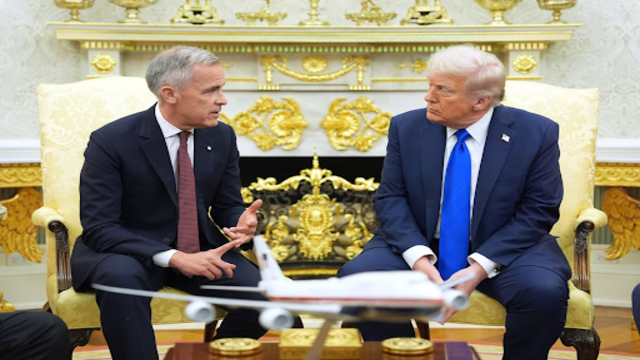
Prime Minister Mark Carney spoke with U.S. President Donald Trump during their meeting at the White House in Washington on Tuesday, October 7, 2025. AP Photo
Prime Minister Mark Carney met with U.S. President Donald Trump for two and a half hours at the White House on Tuesday, but the two leaders left without striking a deal.
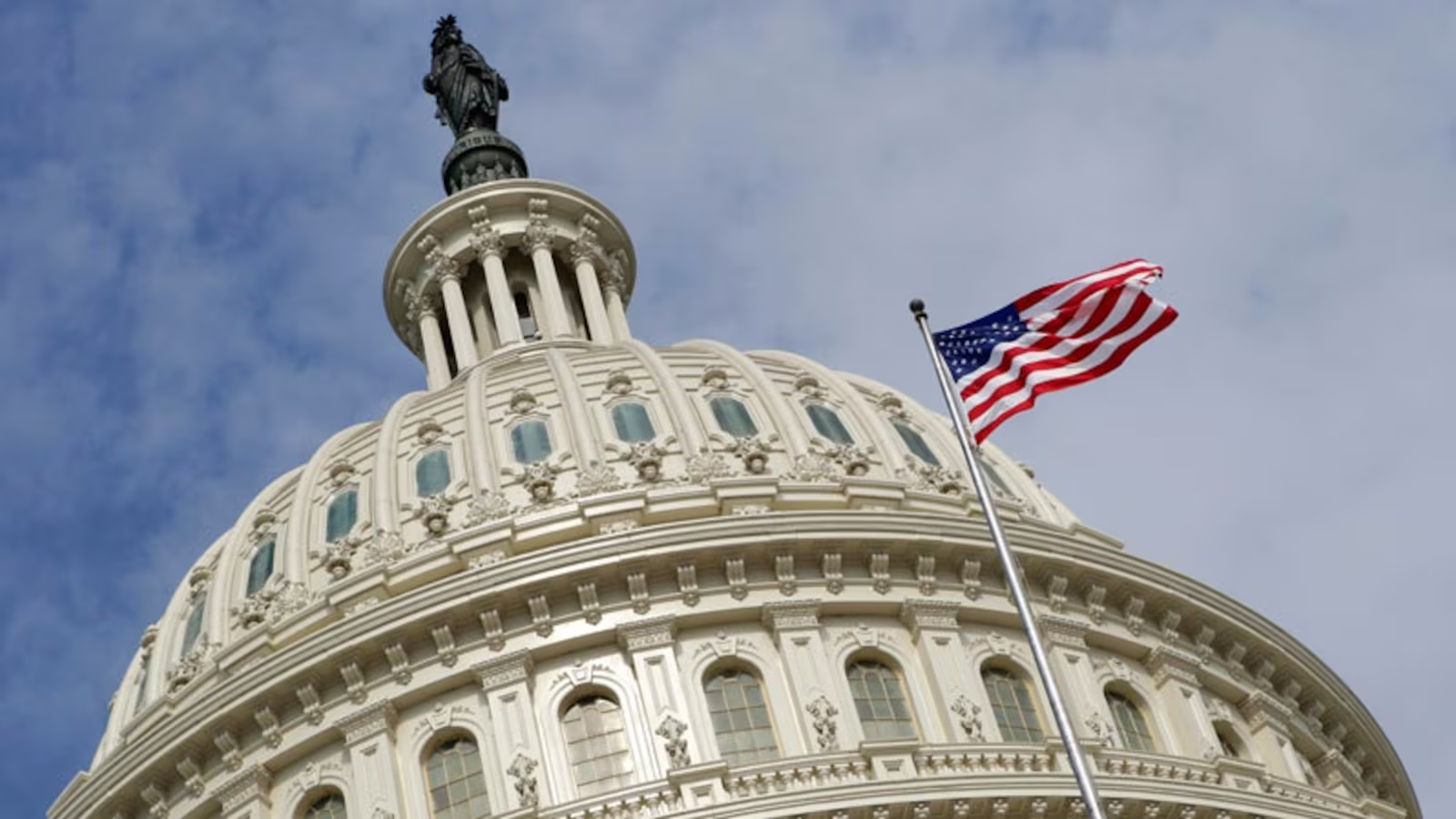
The meeting, held in the Oval Office, marked their second in-person discussion since May. Both sides have been negotiating a new economic and security agreement as tensions continue over tariffs and trade barriers.
After the meeting, Canada-U.S. Trade Minister Dominic LeBlanc described the talks as “positive” and “effective,” though no specific progress was announced. “We leave Washington with the sense that the U.S. administration is ready to structure something that benefits both countries,” LeBlanc said.
Trump’s “Merger” Remarks Stir Reactions
Once again, Trump hinted at his controversial idea of a Canada-U.S. “merger,” joking that the two nations might one day become one. “From the beginning, I’ve liked him,” Trump said of Carney. “We have natural conflicts, but also a strong relationship.”
Carney responded by calling Trump a “transformative president,” praising his leadership during his second term. Trump quickly added, “And the merger of Canada and the United States,” drawing laughter from those in the room.
The president has repeatedly made comments about annexing Canada, claiming he could use “economic force” to make it happen. Canadian officials have dismissed the suggestion as political posturing, though the remarks continue to dominate headlines.
Tariffs Still Cloud Trade Talks
Trade remains the most contentious issue between the two countries. Since February, the U.S. has imposed sweeping tariffs on Canadian goods, citing border security and economic protection. While some duties have been reduced under the Canada-U.S.-Mexico Agreement (CUSMA), new ones on steel, aluminum, and copper remain.
Trump told reporters he planned to “talk about” the tariffs during the meeting but did not offer specifics. “It’s a complicated agreement,” he said. “We have natural conflict, but we also have mutual love.”
Carney’s team, which includes ministers Anita Anand, Melanie Joly, and Tim Hodgson, said discussions would continue through the week. LeBlanc said he expected more meetings “perhaps as soon as this evening.”
Canada Makes Concessions
In recent months, Canada has softened several policies to ease tensions. Carney’s government dropped the digital services tax, introduced a $1.3-billion border plan, and appointed a fentanyl czar to address U.S. security concerns. Canada also moved up its timeline to meet NATO defence spending goals.
Despite these moves, the U.S. continues to target key Canadian exports, including lumber and vehicles. Trump has also hinted at tariffs on heavy-duty trucks.
Political Pressure Mounts at Home
Back in Canada, opposition leader Pierre Poilievre urged Carney to secure a deal, accusing him of offering “excuses and photo ops” instead of results. “If you only return with broken promises, you fail our workers,” Poilievre wrote in an open letter.
In Ontario, Premier Doug Ford criticized the ongoing dispute, calling it a “shame.” He said, “America relies on Canadian steel, aluminum, and lumber. The way to create jobs and fight inflation is to make a deal with Canada.”
Ford compared the drawn-out trade fight to “a kid getting punched in the face every day.” He added, “If there’s no deal, it’s time to hit back.”