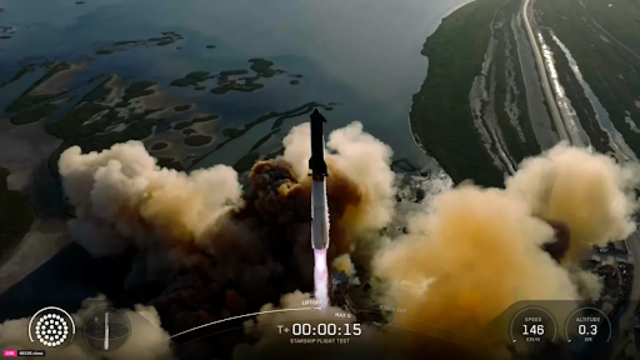
SpaceX launched its massive Starship rocket on its 11th test flight from Starbase in South Texas on October 13, 2025. SpaceX
A fiery glow lit up the Texas sky on October 13 as SpaceX’s Starship roared off the pad for its 11th test flight. The massive silver rocket, the most powerful ever built, climbed smoothly from the company’s Starbase site in South Texas. Cheers erupted from the ground as it marked another big step toward human travel to the moon and Mars.
“This is really the first time I’m going to be outside and watching the rocket,” said Elon Musk before liftoff. “It’s going to be much more visceral.”
A Historic Milestone
The 11th test was more than just another launch. It was the final mission for this version of Starship, known as Version 2. The next model, taller and stronger, will take its place soon. The test began at 7:23 p.m. Eastern time, as the 33 engines of the Super Heavy booster sent the rocket skyward with stunning force.
Just over two minutes later, the booster separated from the upper stage, Ship 38. Four minutes later, Super Heavy splashed down safely in the Gulf of Mexico, earning loud cheers from the SpaceX team. “Congrats to the whole SpaceX team,” said propulsion engineer Jake Berkowitz. “That was incredible!”
Testing for the Future
The Ship continued its flight, reaching about 192 kilometres above Earth. It released eight mock Starlink satellites, relit one of its Raptor engines in space, and began its return through the atmosphere. After a bright reentry, it splashed down gently in the Indian Ocean, wrapping up a picture-perfect test.
This flight tested a new landing burn method using 13 engines at first, then five for better control. The booster used in this mission had already flown once before, showing growing confidence in reusability. Engineers also removed some heat-shield tiles to study how the ship handled extreme heat during descent.
From the Moon to Mars
Starship is not just another rocket. SpaceX built it with the dream of carrying humans to Mars and building a new world there. Musk founded the company in 2002 with that goal in mind. NASA also plans to use Starship to land astronauts on the moon for the Artemis 3 mission, set for 2027.
The rocket can carry up to 165 tons of cargo into space and is designed for quick reuse. SpaceX plans to catch future boosters with special arms called “chopsticks” to prepare for multiple flights in a single day.
Looking Ahead
This launch also came on the one-year anniversary of SpaceX’s first successful Super Heavy catch. The company now prepares for the next generation of Starships. Version 3 will stand slightly taller, while a future model, Version 4, will be even larger with more engines.
As the final flames faded over Starbase, Musk’s team looked ahead with pride and excitement. “We promised maximum excitement,” said Berkowitz after the splashdown. “And Starship delivered!”