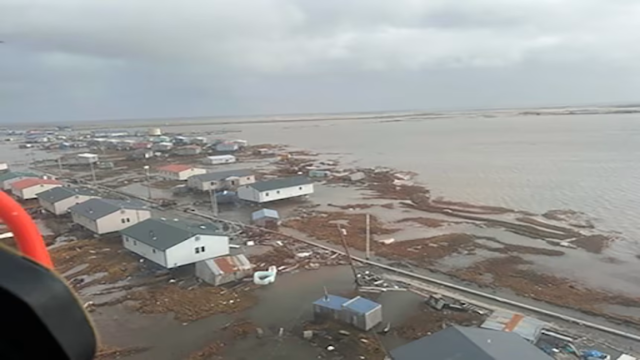
Floodwaters surrounded the village of Kipnuk, Alaska, as seen from a U.S. Coast Guard flight on October 12. Officials reported that water levels rose to 14.5 feet on Sunday — more than two feet higher than the major flood level — leaving much of the community submerged and residents struggling to cope with the damage. US Coast Guard
A powerful storm that once was Typhoon Halong tore through western Alaska, destroying homes and forcing hundreds to flee. The violent winds, which reached speeds over 100 mph, swept across small coastal villages, flooding entire communities and pushing houses off their foundations. Officials said the storm unleashed record-breaking storm surges that left families stranded and searching for safety.
One Dead, Two Still Missing
Tragedy struck the village of Kwigillingok where rescuers found one woman dead on Monday. Authorities are working to notify her family. Two residents from the same community remain missing as search efforts continue. Over the weekend, rescue teams saved at least 51 people and two dogs from Kwigillingok and the nearby village of Kipnuk. About 1,400 others found shelter in community centres and tribal facilities. Officials confirmed late Monday that everyone in Kipnuk is now safe.
Villages Struggle to Recover
The affected areas lie more than 400 miles southwest of Anchorage. Both Kwigillingok and Kipnuk endured severe flooding and strong winds overnight. Alaska State Troopers said at least eight homes were pushed from their foundations. Officials are still assessing the full extent of the destruction. Many roads remain underwater, making it difficult to reach some isolated families.
Massive Search and Rescue Effort
Dozens of agencies have joined the rescue operation. Teams from the Alaska Air National Guard, Army National Guard, and US Coast Guard have been on the ground and in the air since Sunday. Maj. Gen. Torrence Saxe said about 60 to 80 soldiers are currently assisting, with up to 200 expected by the end of the week. “It’s the largest response I’ve seen in quite some time,” he said.
Helicopters pulled several residents from rooftops surrounded by floodwaters. “If you imagine the worst case scenario, that’s what we are dealing with,” said US Coast Guard Capt. Christopher Culpepper. The storm scenes reminded rescuers of Hurricane Katrina as people clung to rooftops, waiting for help.
Record-Breaking Floods
Wind gusts reached 107 mph in Kusilvak and 100 mph in Toksook Bay, according to the National Weather Service. The fierce winds drove seawater inland, causing dangerous flooding. In Kipnuk, water levels hit 14.5 feet on Sunday — more than two feet above the major flood stage and higher than the record set in 2000.
The storm, which once roared across the Philippine Sea as Typhoon Halong, weakened as it crossed the North Pacific but still carried immense power. It swept across northern Alaska late Sunday before moving into the Arctic Sea early Monday.
Relief and Recovery Ahead
Governor Mike Dunleavy declared a state disaster for the affected regions and promised swift help. “Every effort will be made to help those hit by this storm. Help is on the way,” he said. Federal and local officials are working together to deliver aid and assess long-term recovery needs.
Senator Dan Sullivan said federal emergency teams are coordinating with local authorities and that the ongoing government shutdown will not affect relief efforts.
As floodwaters slowly recede, families in western Alaska face a long road to recovery.